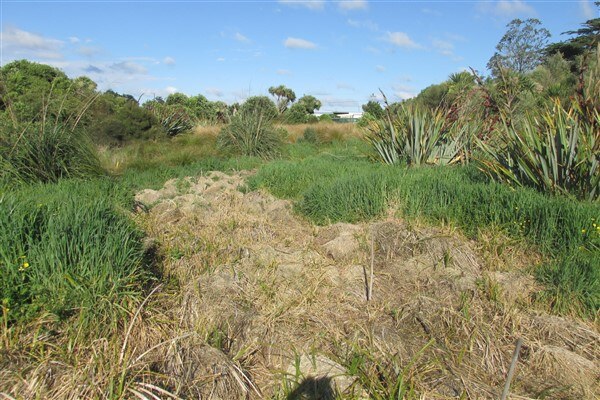
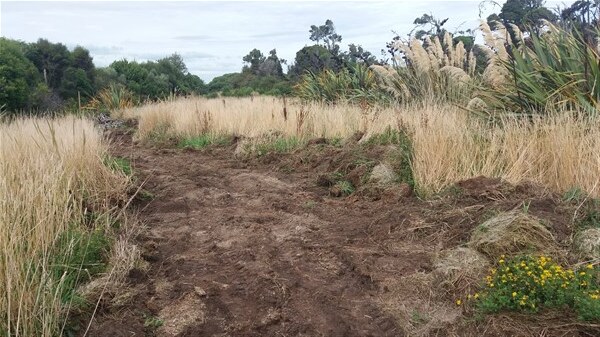
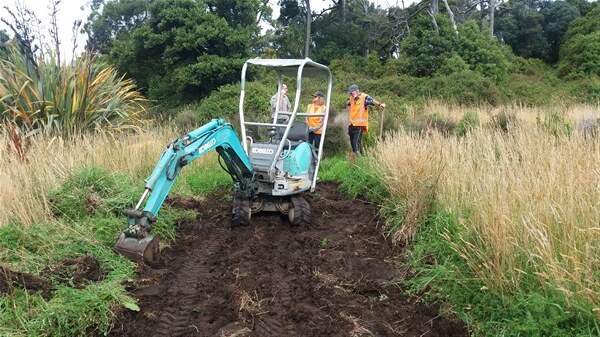
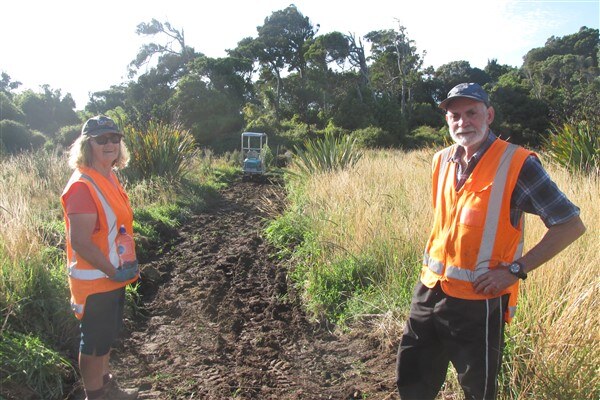
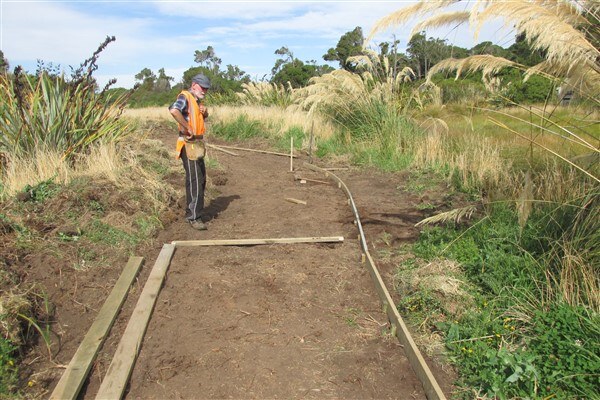
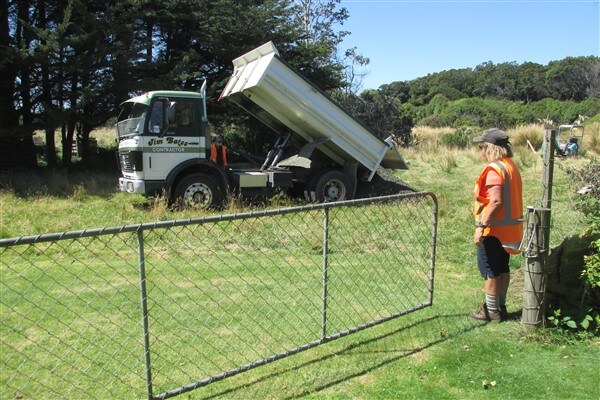
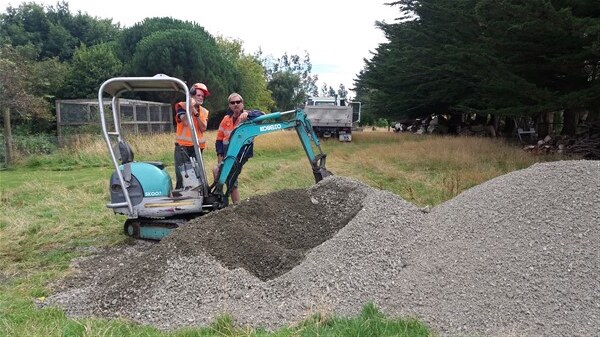
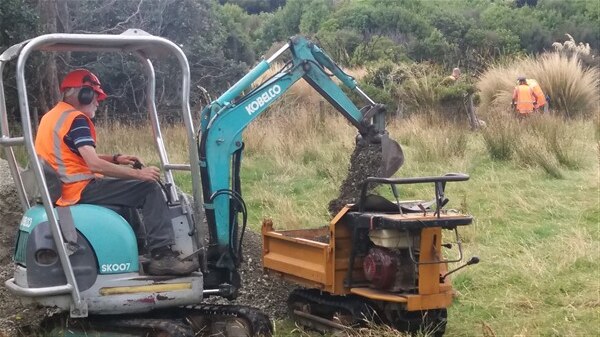
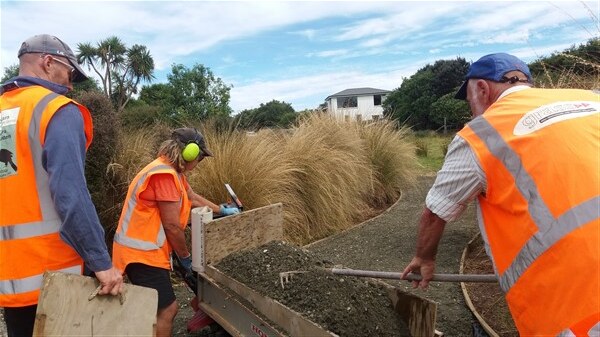
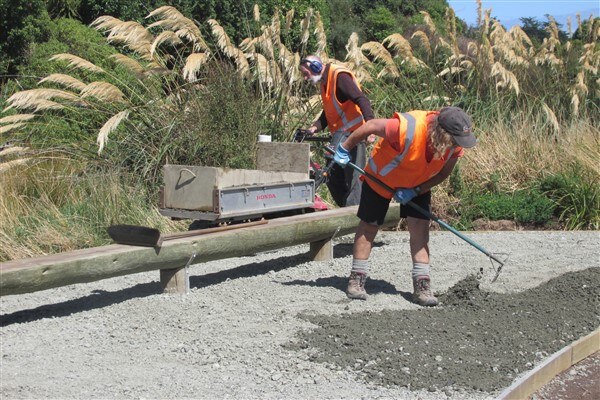
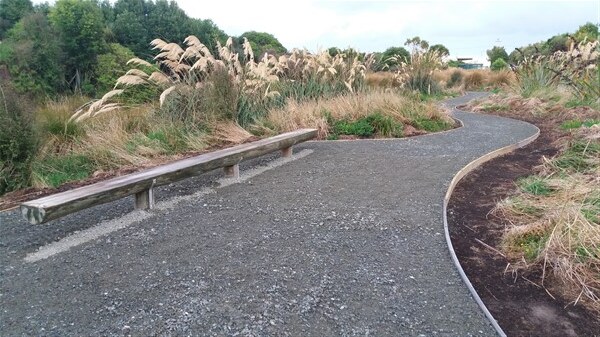
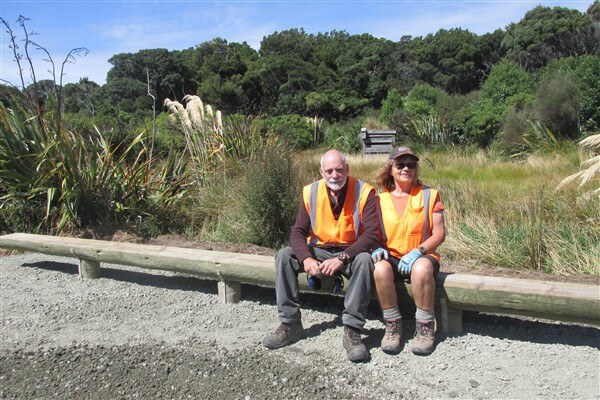
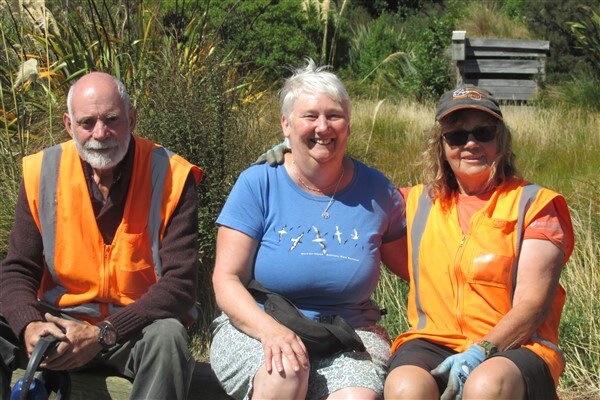
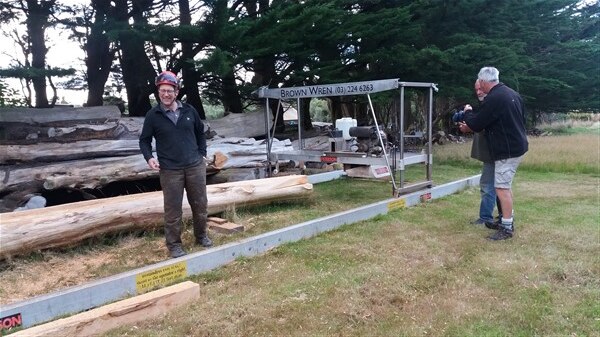
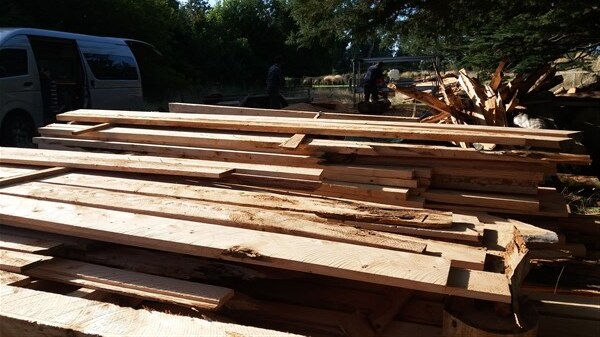
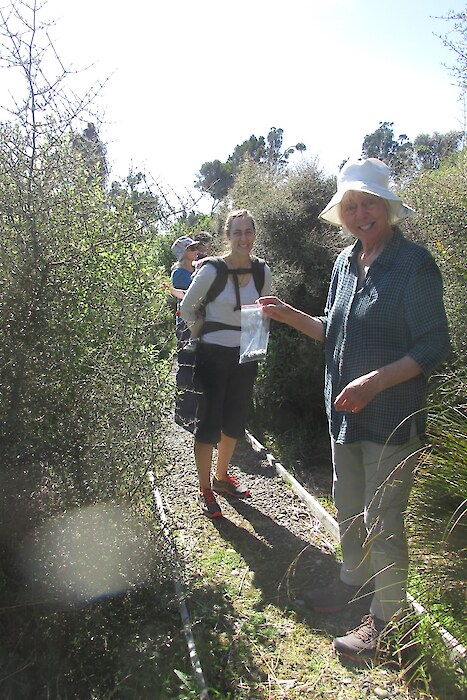
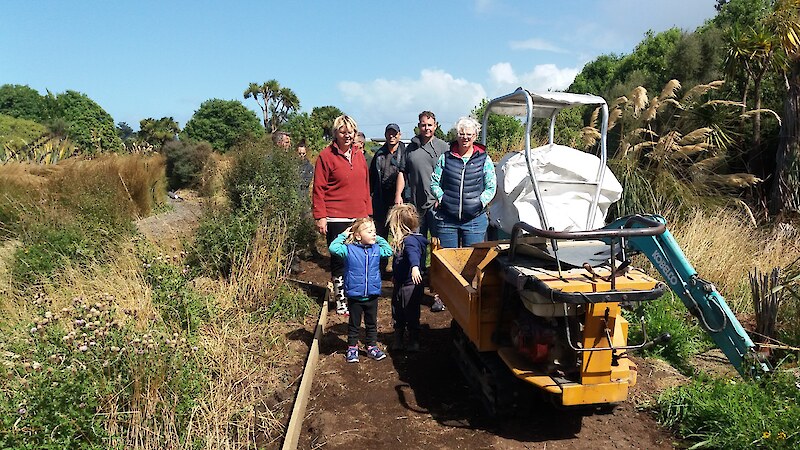
A few weeks ago our place was a flurry of activity – timber, mini digger, track machines, big loads of gravel and two very industrious “track doctors” - Phil and Joan Fluerty. A beautiful new track is now in place along the ditch side of our second pond in the covenant area. It gives better access and space for school and other groups as well as a quiet place for contemplation where a seat was gifted to us. There was quite a lot of volunteer help as well with setting up the route and later helping with gravelling, but most of the credit must go to Phil and Joan. Thanks also to QEII National Trust for a contribution to the track costs. Another construction type job came hot on the heels – Gary Brown and his portable sawmill and help from Stephen Elford cutting into planks the macrocarpa we had felled years ago – for our next project – watch this space!
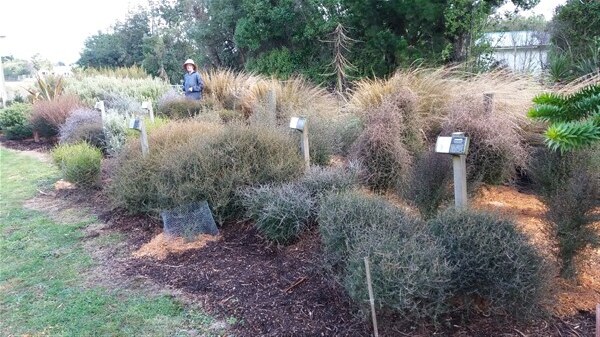
We also had Liz Meek staying for a week helping out with Threatened Plant work – the shadehouse was cleaned out and plants re-potted, the shrub border weeded and mulched, some un-named Melicytus potted, seeds cleaned and a host of other jobs caught up on!
Posted: 4 March 2019
Seeds are being collected and cleaned each week until around June. First were the tussocks, toetoes, Carex and other grasses. Then the fruit bearing plants Mingimingi and other Coprosmas, Makomako (wineberry), Pseudopanax (five finger, lancewoods), Pate (seven finger), Corokia, Astelia (bush flax). Then dry seeds of rata (from last years flowering), lowland ribbonwood, kowhai, flax and manuka and Hebe to come. All seeds need some attention even if its only separating them from their seedcoats, but it takes quite a lot of time – particularly the fruity seeds. To learn about the various seeds and methods come along on a Friday morning.
Chris
Posted: 4 March 2019
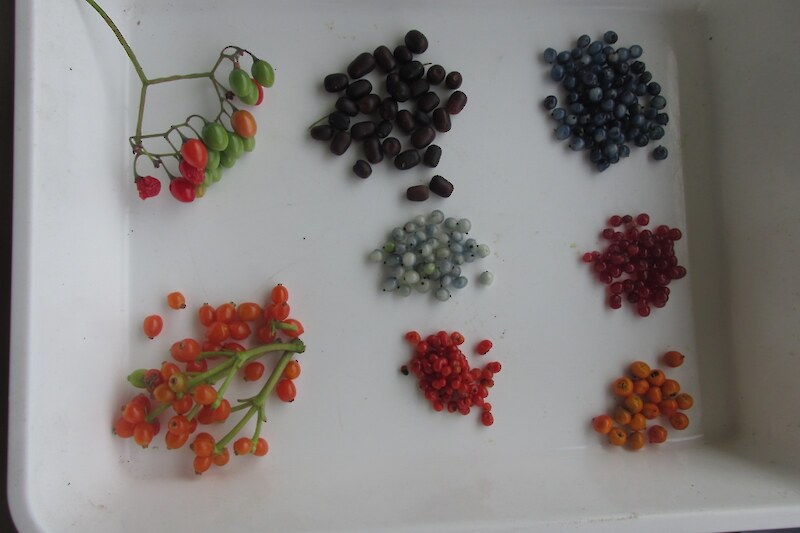
I often think seed collecting is a bit like searching for jewels! Once you get your eye in, there they are – beautiful, sparkling, translucent orbs of colour. The photo below has some of the seeds I collected on Saturday 2 February 2019. Can you identify any of the species – and guess the odd one out? Its not native and its actually poisonous so you would be well advised to learn about it and certainly not eat it. The others are natives, mainly in the coffee family.
Come along to the Nursery on a Friday morning in the next few weeks to learn more about seed collecting, by doing it! And come and see our new track and take part in other nursery activities, and dont forget to bring some kai!
Chris
Posted: 11 February 2019
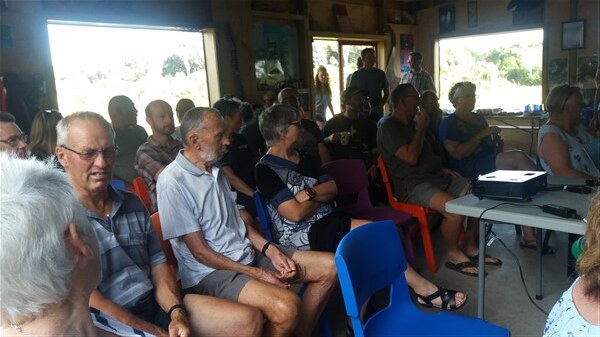
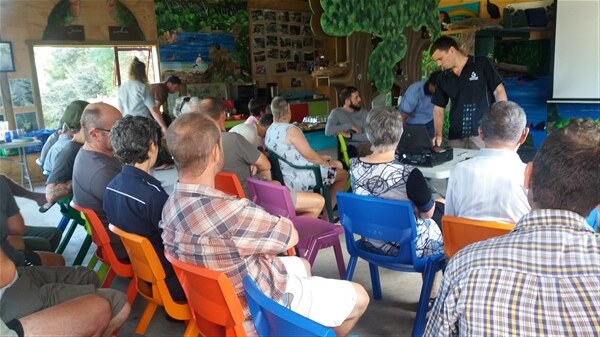
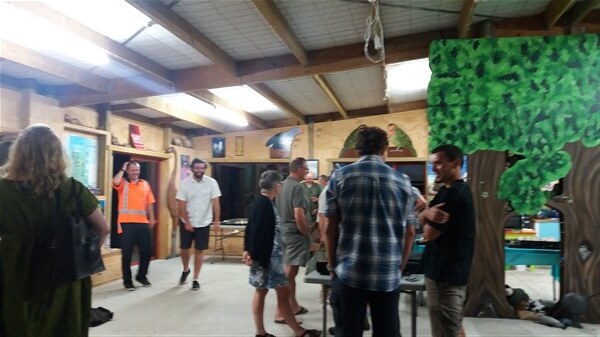
A Predator Free 2050 community group evening was well attended on 30 January 2019. Around 45 people came along to the Education Centre and listened to some very interesting speakers – the evening was organised by Environment Southland and DOC.
First speakers were two Otago University Students researching pest issues on braided rivers and in the alpine region. This was followed by food and drink and networking and then Ed Chignell Chief Exec of Predator Free 2050 Limited - https://pf2050.co.nz/ gave a presentation.
Ed outlined the landscape scale projects that had been funded around the country to date - Taranaki, Hawke’s Bay, Wellington, Waiheke and Dunedin and shared some amazing videos of those projects. The videos can be viewed at https://pf2050.co.nz/project/
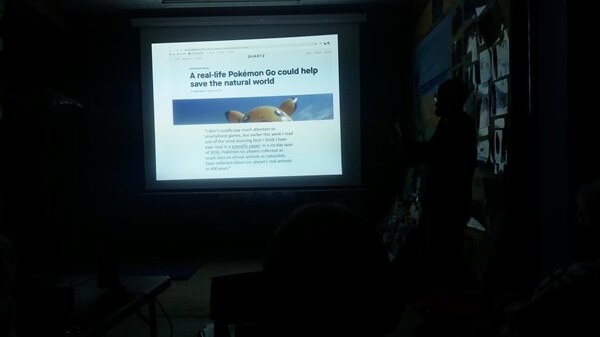
Following on was Rhys Millar from Predator Free Dunedin who gave a positive but honest talk on the process of getting such a project off the ground and the steps involved in joining many individual projects together into a landscape wide project – including setting up a new overarching Charitable Trust, fundraising, getting collaborators and the actual work on the ground. Lots of food for thought. To complete the night Willy Gamble from Stewart Island Restoration Charitable Trust (SIRCET) showed all the good work that group are doing to free Stewart Island of animal and plant pests and the technology they are using to log catches and track weeds. In typical Willy style he introduced quite a bit of humour into his talk, including some fascinating statistics from Pokemon! (see photo below).
Earlier in the day the speakers had addressed the Southland Predator Free forum organised by DOC and Venture Southland. At that meeting Ed ad Rhys gave talks with the addition of Al Bramley of Zero Invasive Predators (ZIP) who spoke about the new technologies and current learnings, which were fascinating.
Well done DOC, Environment Southland and Venture Southland for bringing the speakers to Southland.
Chris
Posted: 2 February 2019
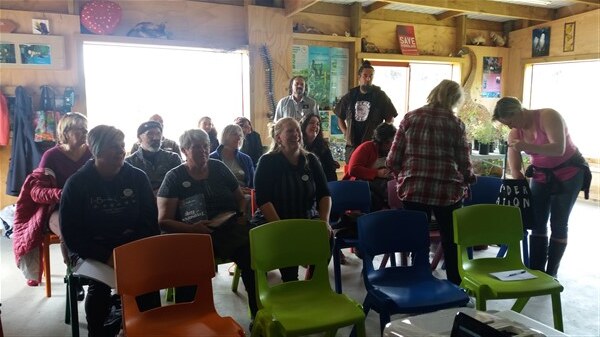
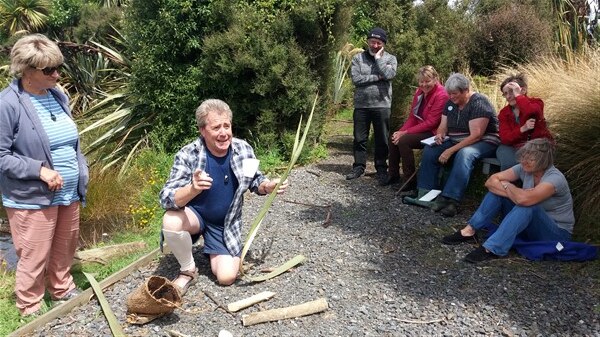
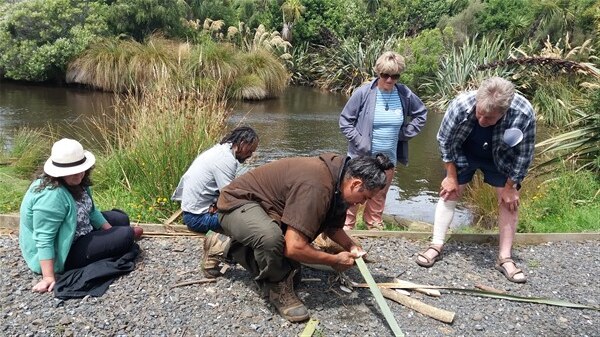
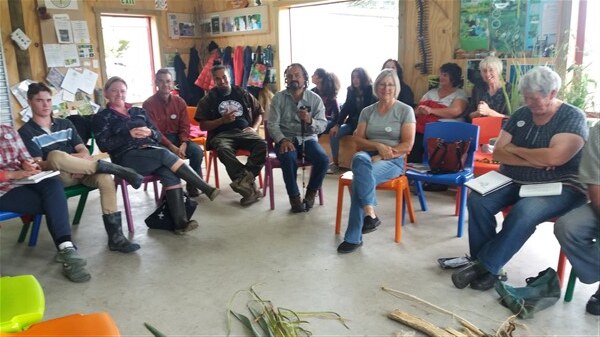
The workshop with Rob Tipa on traditional uses of native plants was well booked up weeks before the weekend, such that we have a waiting list for another course!
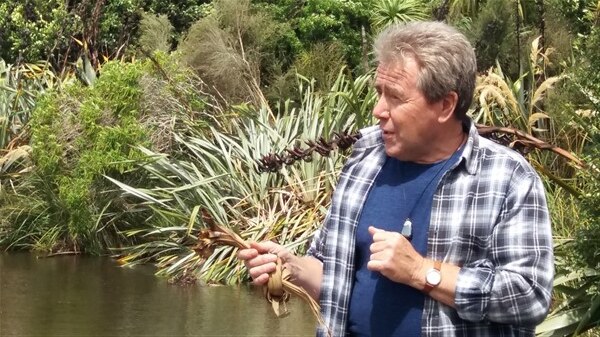
Rob and Stella travelled from Dunedin and gave a lovely introduction to their philosophy, their journey and their lifestyle on the Otago Peninsula. Rob explained his ancestry, his love for native plants and his journalistic background that led him to producing his book “Treasures of Tane” last year. The book is a great mix of traditional uses, plant identification, stories and historical aspects all put together in very readable fashion with great photos. “It makes native plants and their stories accessible to everyone, rather than locked away in reference sections of libraries” he said.
Stella then gave everyone a look at their very steep and challenging section in Otago and explained the history of their garden there – they bought the view! - looking across the Otago Harbour towards Quarantine Island. The garden is a mix of cottage plants, natives, and plants which hold the moisture on a very dry steep site which they garden organically. Rob is also a beekeeper and they look after a gully of bush next to their section. Contour paths built around the cliff enable them to garden the very steep section which they first had to clear of invasive weeds.
Then we went over to Rances restoration and pond area where Rob talked about and demonstrated ways in which early Maori used native plants – for survival. Such was the usefulness of harakeke (flax) that when Europeans said they didn’t have flax in their country local Maori could not see how they could live without it! More stories and demonstrations, with great help from Jade, followed both out in the bush and back in the building, including fire starting (that wasn’t covered in Chris’ health and safety plan!) with mahoe logs and totara sticks.
We all shared some kai and chatted amongst eachother and we are all keen to see Rob and Stella back sometime soon.
Nga mihi
Chris
Posted: 2 February 2019