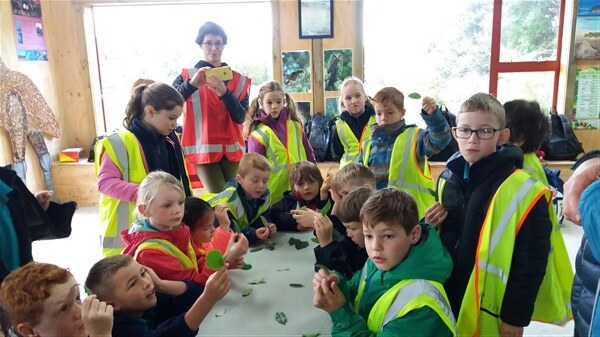
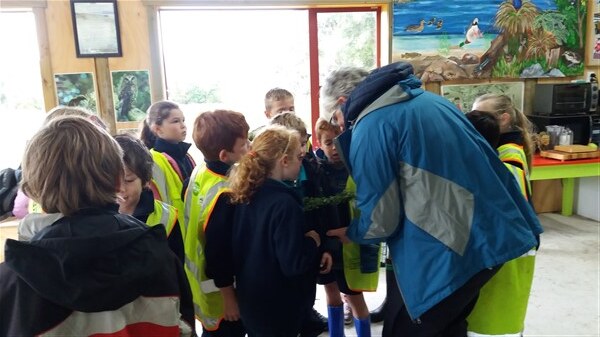
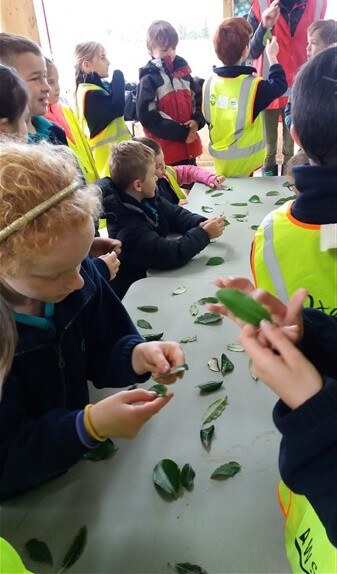
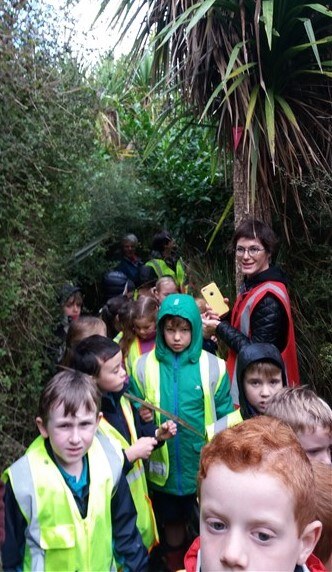
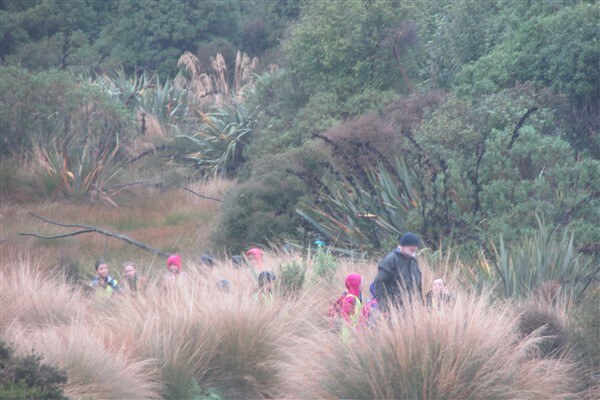
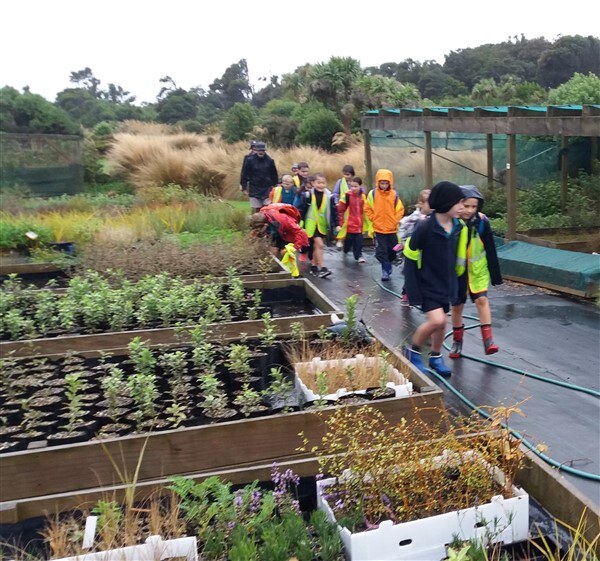
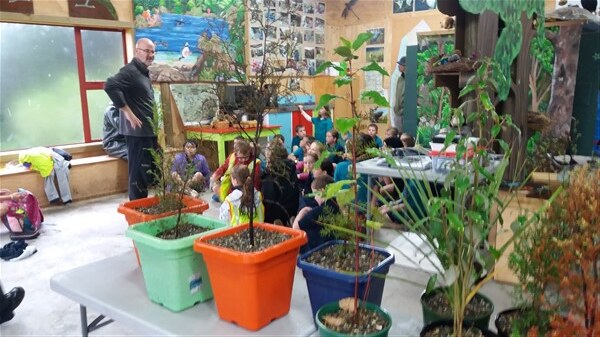
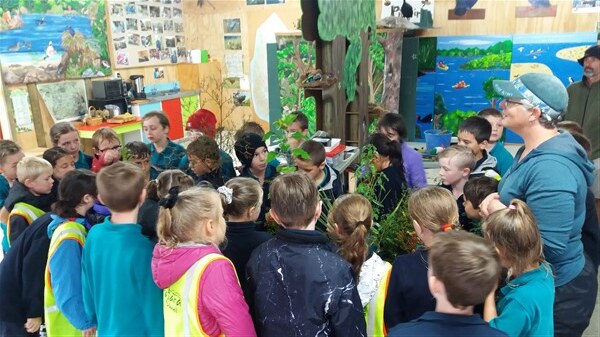
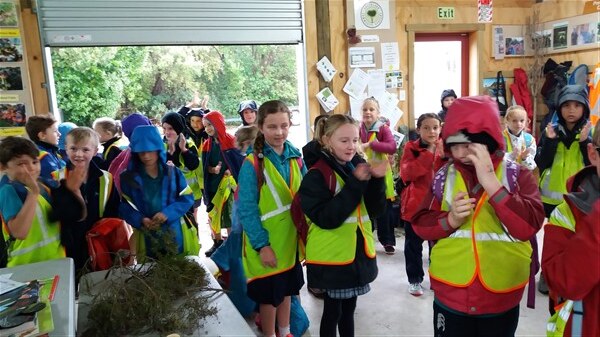
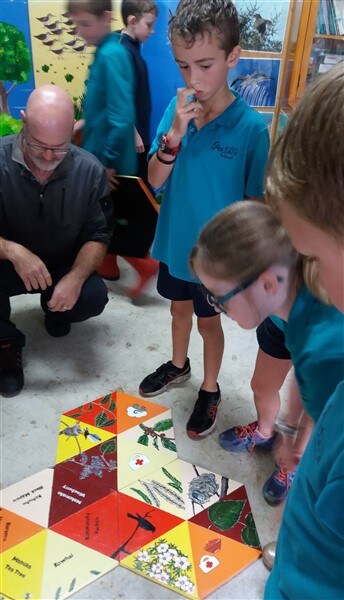
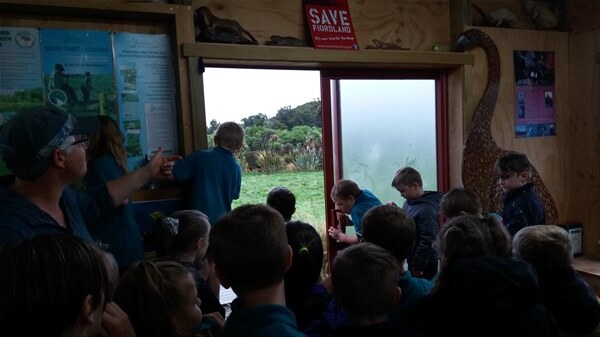
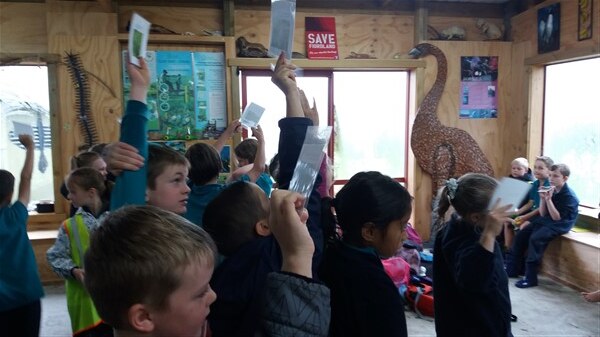
A switched on group of learners from Year 3 Otatara School arrived ready and keen to learn all about their class tree Kotukutuku and much much more. A leaf identification game got the students observing and noticing similarities and differences between leaves, and what characteristics the kotukutuku leaf has – in terms of shape, colour (or colours as the the case is) and feel. We then talked about other identifying features that can be used to identify kotukutuku, like its bell like flower (that can be green, stripey, red or purple), its big black berries and its papery bark. It was then a discovery filled walk around the pond track, identifying numerous kotukutuku, noticing in what kind of places this tree likes to grow, what other native tree species are growing nearby, and what animals (in particular bugs) we could spot living in the habitats created by these plants. Spiders, slugs, shield bugs and more were spotted! We were too late in the season to find any flowers or berries, but we used our knowledge about and observation skills to spot the leaves and bark of the kotukutuku. We collected seeds from different plant species and noted how some are on the outside of a fruit, some are on the inside of a fruit, and some are in pods. We also noticed the ferns growing and how these have spores. A brilliant description of what spores are: “a pocket on the back of the leaf” was given summing up perfectly how there are many spores in each sporangium. A fantastic observation and descriptive explanation – tumeke! So many great terms to fill these eager minds with. Back in the education centre for some kai to feed these great inquiring minds we talked more about spores and looked closely at some fern fronds and just how small spores are. We also talked about those plants that attract birds – with kotukutuku being one of the best. Some great questioning led us onto talking about the animal pests that could be in the reserve behind school (we’d noticed all the different traps and bait stations as we explored through the nursery) and how we could track these to work out what is there, and then finding out about trapping. This class’s inquiring could go in a number of different, or many, directions and we look forward with much interest to have them visit again. Great to have you at the nursery Kotukutuku class.
Bronwyn and Chris
Posted: 9 April 2019
Sorry, the nursery is closed Friday 5 April 2019 as we are involved in the Native Plant Restoration Workshop. See you at the open morning Sunday 7 April or the following Friday.
Chris
Posted: 3 April 2019
We will be having an open day and plant sale on Sunday 7 April 2019 - 10am to noon. 185 Grant Road , Otatara
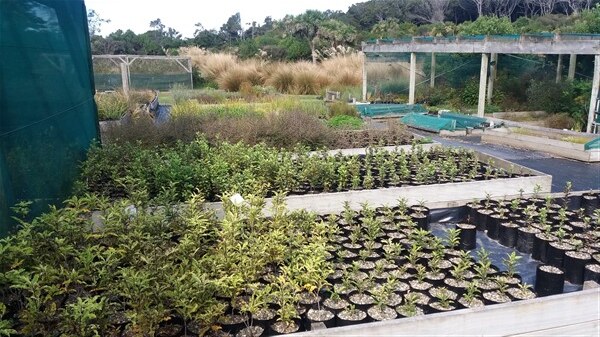
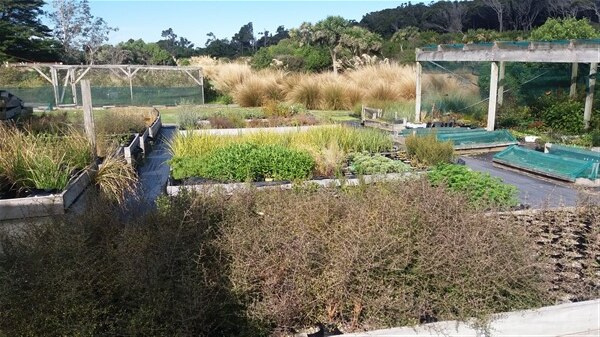
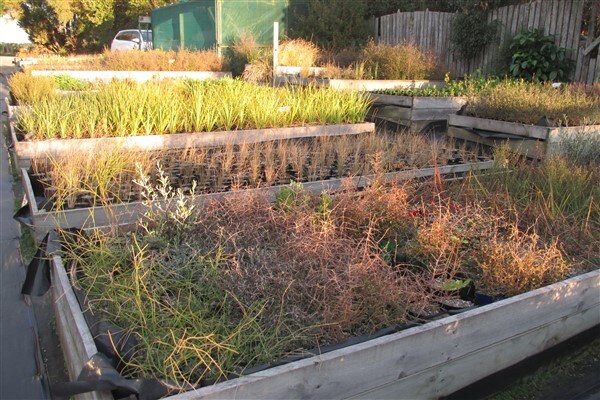
We have locally sourced, good sized plants in PB3’s ready for planting now – all $5 each – toetoe, Carex secta, mingimingi (Coprosma propinqua), Cabbage tree, Kohuhu (Pittosporum tenuifolium), wineberry, koromiko (Hebe salicifolia) Lemonwood, broadleaf, manuka, red tussock and a wide range of native shrubs. Sale of plants funds much of what we do at the Nursery and Education Centre so not only will you be getting good local plants, you will also be contributing to our Charitable Trust and the work we do with schools as well.
Phone Chris evenings 03 2131161 for further information or visit www.southlandcommunitynursery.org.nz
Don’t forget daylight saving!!
Chris
Posted: 3 April 2019
A very wet and bedraggled group of Year 3 and 4’s arrived at the Southland Community Nursery after walking through Bushy Point Conservation Area with Mr Esler. The rain had poured down all morning for them as they took a look out over the estuary, saw first hand the great restoration planting that is happening at Bushy Point, traipsed through the totara-matai forest remnant, and listened to Mr Esler explain the sand dune history of Otatara and how many possums there are in NZ.
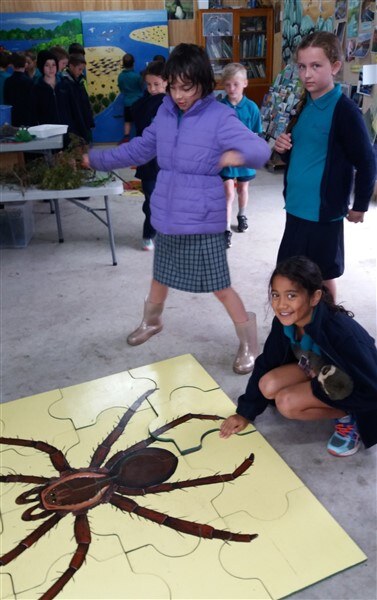
The education centre at the nursery was a welcome relief for many as they peeled off their wet layers and had something to eat and explored all the fun displays at the nursery. Then we got to know all the classroom plants for Otatara School, using potted up specimens, looking closely at their leaves and leaf shape. Then we learnt how a forest grows and acted the process of succession out, with bare land being colonised and taken over by hardy colonising (or nursery) species of native NZ trees before taller tree species establish a canopy of mature forest species. Lots of new terminology to learn, great discussion about what ‘hardy’ is, what kinds of conditions plants can grow in, and a great way to learn about forests when it is pouring with rain! We also noted that trees don’t talk! There was wondrous pondering about how trees were first “planted” before people arrived – great questioning? Then we had a close up look at the seed capsules and tiny seeds from a manuka, how these might be dispersed and what manuka has been used and known for, giving it the name tea tree. The windows fogged up and the coldness set in, so it was early back to school for this group, but not until a few floor jigsaws had been done, the tunnel explored and the new drums tested!. We hope the sun shines for your next visit!
Bronwyn and Chris
Posted: 26 March 2019
A clued- up group of students from Otatara School arrived today, excited to learn more about the mighty tōtara tree. After a quick look at the habitat tunnel and opening of doors to see what kind of plants and animals live where we turned our focus back to tōtara. We knew that as a class they have been looking after two tōtara seedlings and learning about what they need to survive, so we started by asking them about how caring for the seedlings has been going and what they have learnt about what plants need.
We talked about what identifies tōtara, with the students knowledge of the spikey pointed leaves most obvious. A leaf matching game with similar shaped leaved did still confuse a couple, showing how important it is to look closely, just as a botanist would. Their description of the tōtara bark was excellent. We then showed them the fruit of tōtara and wondered what the green things were on the end of the berry….a leaf? (but it wasn’t the same as a leaf)… A seed? (yes a seed!). Tōtara have their seeds on the outside of their fruit (just like a strawberry), are eaten by birds and pooped out to grow somewhere else in the forest.
We discussed how special the tōtara is for Otatara, with Otatara and Sandy Point providing the best example in New Zealand of coastal tōtara sand dune forest, and how native forest used to grow everywhere in Otatara. This then led to pondering what had happened to all the tōtara and the uses that the strong straight timber was put to.
Chris showed a big book all about tōtara and how tōtara tells the story of New Zealand history because of its uses by both Maori and European people. Could we tell the story of Otatara history in the same way? Tōtara was used for all types of building, fenceposts, bridges etc – are there still any tōtara structures left in Otatara? We agreed we might have to ask Mr Esler! Students were asked if they knew of any Maori uses for tōtara and they gave some great answers – boats – waka, carving (telling stories), making bags (for muttonbirds).
A walk around the pond, noticing tōtara as we wandered, talking about how forests grow and how the Southland Community Nursery works were followed by learning how to pot up little tōtara seedlings. A great hands on way to end their visit to the nursery. Some great learning about tōtara by the tōtara class today.
Bronwyn and Chris
Posted: 21 March 2019