
For all types of forest, repair begins with ‘foundation’ or ‘nursery species’. These are the native plants that would naturally cover a site that has been damaged. In nature damage can result from natural events like storms and trees falling from old age. However, today our forests are also damaged by the effects of logging, clearing, browsing animals and building development.
Foundation or ‘nursery’ species
Foundation or nursery species (also called primary or pioneer species) grow well on bare ground in open sites. They are hardy, easy to grow and will generally tolerate extremes in temperature, terrain, soil type and drainage. They provide the perfect habitat for forest canopy species to establish and grow. Find out more about foundation species and How Forests Work.
The native foundation species are tough and though every site is different, our experience shows that by using a small range of Southland species you will have most success. When some shelter has been established with these species you can add others like wineberry and fuchsia.
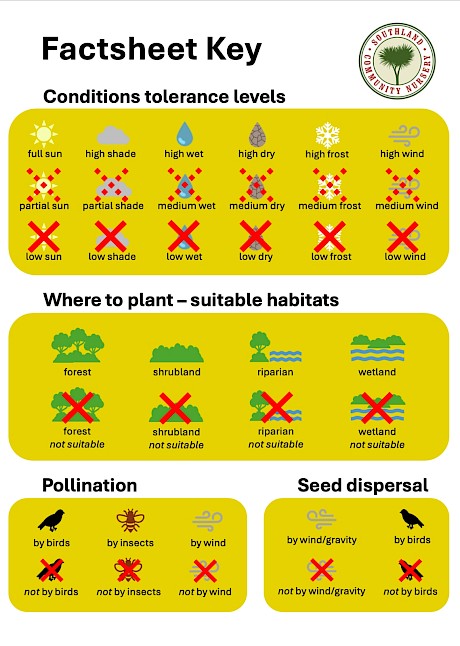 Factsheets
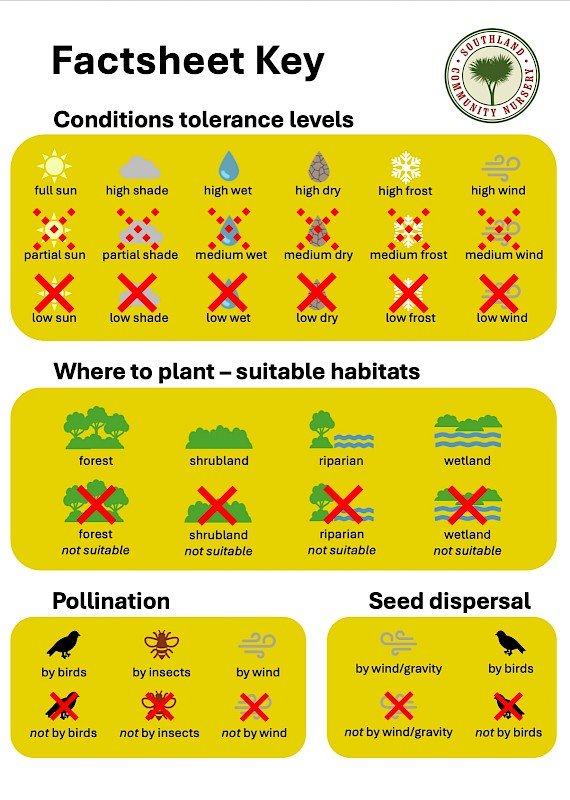
We have developed a series of factsheets that provide more detail for each species.
Download the factsheets to find out:
- Conditions tolerance levels (sun, shade, wet, dry, frost, wind)
- Where to plant - suitable habitats (forest, shrubland, wetland, riparian)
- Pollination (by birds, insects, or wind)
- Seed dispersal (by wind/gravity, or birds)
See our key to factsheet symbols.
Recommended plants
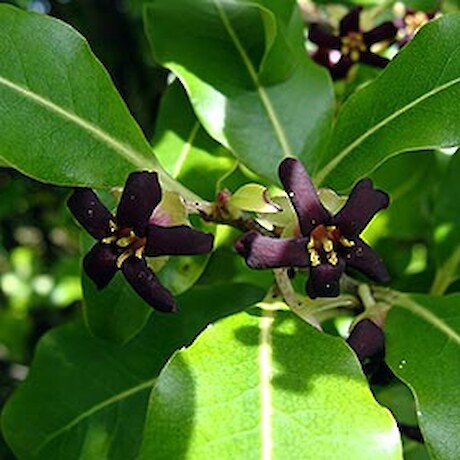
Black Mapou / Kōhūhū (Pittosporum tenuifolium)
- Height: Up to 10 metres.
- Form: Shrub or small slender tree.
- Bark: Dark grey-black, smooth.
- Leaves: Light green, oblong with wavy edges with white mid vein.
- Flowers: Small, dark red flowers that occur singly and are sweet scented at night.
- Fruit: Capsules with black sticky seeds.
Download the factsheet to find out more.
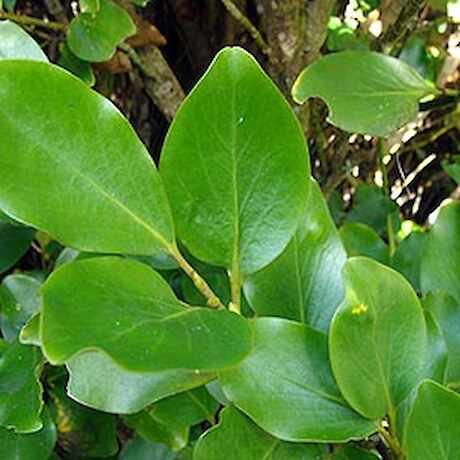
Broadleaf / Kāpuka (Griselinia littoralis)
- Height: Up to 15 metres.
- Form: Small tree.
- Bark: Grey, furrowed.
- Leaves: Thick, shiny, yellow-green with rounded apex.
- Flowers: Small, green, in clusters, male and female on separate plants.
- Fruit: Blue/black berries.
Download the factsheet to find out more.
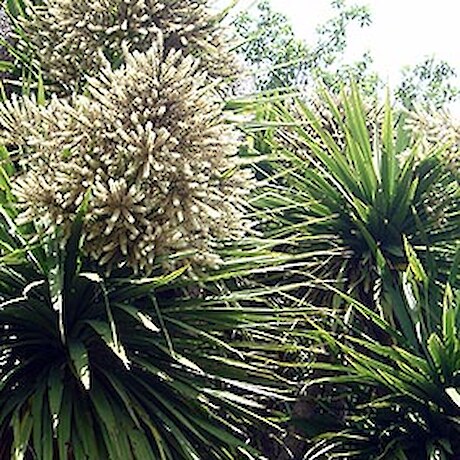
Cabbage Tree / Tī Kōuka (Cordyline australis)
- Height: Up to 20 metres.
- Form: Distinctive palm-like tree, unbranched trunk in young tree and branching in the upper half of older trees.
- Bark: Grey, thick, corky and rough.
- Leaves: Mass of long leaves (up to 1m) at the end of stems.
- Flowers: Small, sweet scented, white, in panicles up to 1m long.
- Fruit: Whitish berries becoming dry.
Download the factsheet to find out more.
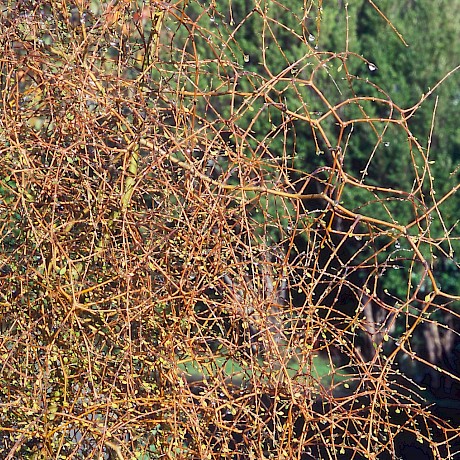
Photo credit: Jeremy R Rolfe.
Coprosma virescens (Coprosma virescens)
NOTE: Not a common plant - threatened.
- Height: Up to 4 metres.
- Form: Bushy shrub with tangled, wide-angled branches.
- Bark: Smooth and knobbled, greenish.
- Leaves: Small and oval with pointed ends.
- Flowers: Very small and inconspicuous. Separate male and female plants.
- Fruit: Small, oblong, greenish when ripe.
Download the factsheet to find out more.
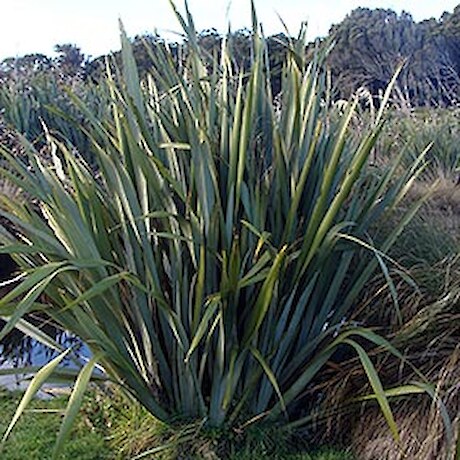
Flax / Harakeke (Phormium tenax)
- Height: 1-3 metres.
- Form: Robust, fan-like clumps of leaves.
- Leaves: Long and fibrous.
- Flowers: Stalk, 3-5m tall, reddish or orange-yellow flowers.
- Fruit: Dark seed capsule with glossy black seeds – upright pod.
Download the factsheet to find out more.
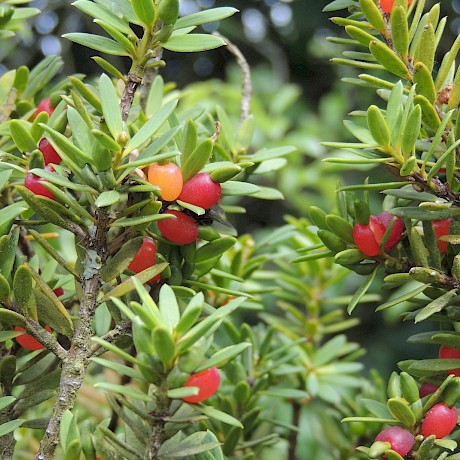
Photo credit: Jesse Bythell.
Hall’s Tōtara / Mountain Tōtara (Podocarpus laetus)
- Height: Up to 20 metres.
- Form: Large conifer tree.
- Bark: Papery, thin, freely flaking, reddish-grey.
- Leaves: Narrow, leathery and sharp; yellow-green to green.
- Male trees: Produce small cones with pollen.
- Female trees: Produce red berry-like fruit, seed is green and located at tip of fruit.
Download the factsheet to find out more.
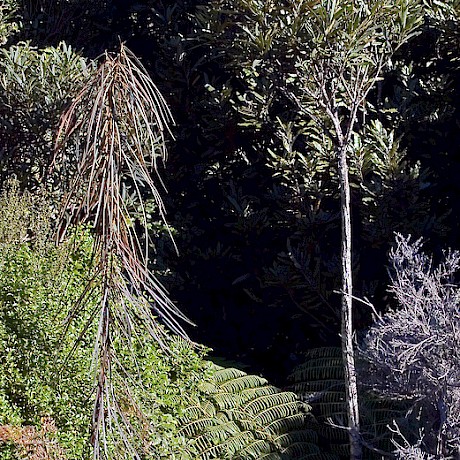
Photo credit: Jeremy R Rolfe. Left = Juvenile tree. Right = Adult tree.
Lancewood / Horoeka (Pseudopanax crassifolius)
Height: Up to 12 metres.
Form: Different juvenile and adult tree forms. Juvenile form lasts between 15-20 years.
Bark: Distinctly ridged in young trees, becoming paler with age.
Juvenile leaves: Up to 1 metre long, stiff and leathery, irregular teeth.
Adult leaves: Much shorter and wider than juvenile leaves.
Flowers: Only produced on adult trees. Very small, pale yellow to green, in clusters.
Fruit: Round, purple to black when ripe.
Download the factsheet to find out more.
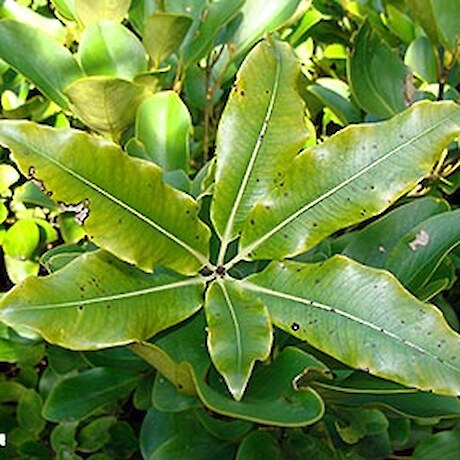
Lemonwood / Tarata (Pittosporum eugenioides)
- Height: Up to 12 metres.
- Form: Small tree – juvenile compact and mature tree more open.
- Bark: Grey-brown, smooth in the juvenile and rough in the adult.
- Leaves: Light green glossy, wavy, with pale midvein, lemony smell when crushed.
- Flowers: Sweet-scented yellow to cream flowers, in large clusters.
- Fruit: Capsules with black sticky seeds when mature.
Download the factsheet to find out more.
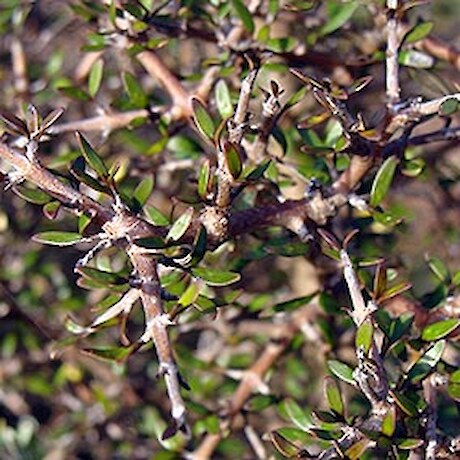
Mingimingi (Coprosma propinqua)
- Height: Up to 5 metres.
- Form: Bushy tangled dark shrub.
- Bark: Grey.
- Leaves: Small, dark green, thick, paler underneath.
- Flowers: Solitary or in clusters, male and female on separate plants.
- Fruit: Translucent blue, flecked with darker blue.
Download the factsheet to find out more.
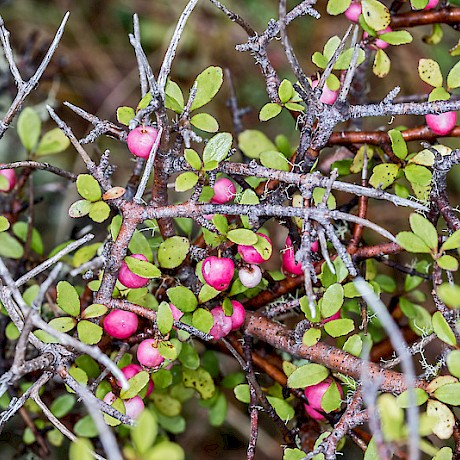
Photo credit: Jeremy R Rolfe
Mountain Wineberry (Aristotelia fruticosa)
NOTE: Not a common plant. More common at sites with higher elevation.
- Height: Up to 3 metres.
- Form: Much branched low growing shrub.
- Bark: Reddish brown.
- Leaves: Small, oblong, often serrated with small teeth along edges.
- Flowers: Small; white, light pink or red.
- Fruit: Small berry of variable colour ranging from white, pale pink, red, to black.
Download the factsheet to find out more.
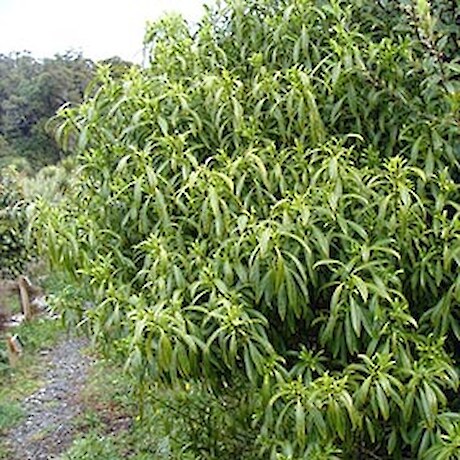
Narrow-leaved Māhoe / Māhoe-wao (Melicytus lanceolatus)
- Height: Up to 5 metres.
- Form: Shrub or small bushy tree.
- Bark: Grey and spotty.
- Leaves: Bright green, long, serrated, lance-like.
- Flowers: Small, yellow or purplish.
- Fruit: Dark purple berries.
Download the factsheet to find out more.
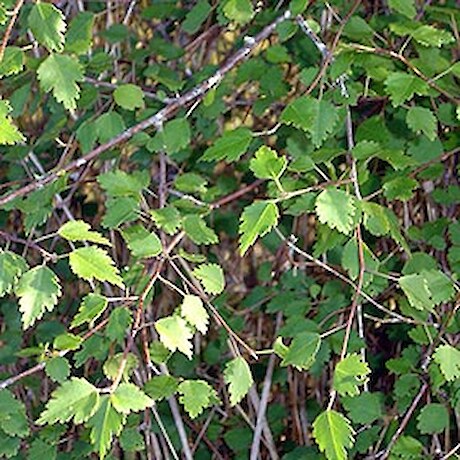
Ribbonwood / Mānatu (Plagianthus regius)
- Height: Up to 17 metres.
- Form: Deciduous tree with interlaced branched juvenile form.
- Bark: Clean trunks with lacy bark.
- Leaves: Pale green, toothed, soft, deciduous.
- Flowers: Yellowish-green, tiny, in clusters, male and female on separate plants.
- Fruit: Downy seed capsules.
Download the factsheet to find out more.
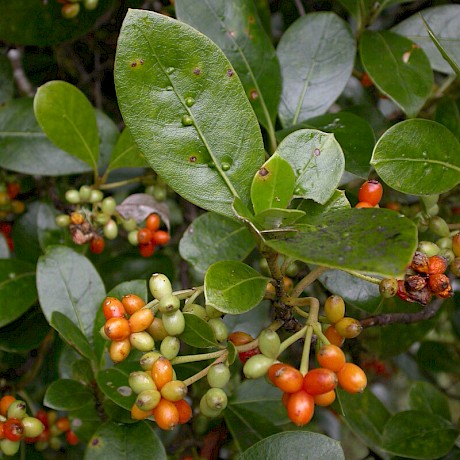
Shining Karamū / Karamū (Coprosma lucida)
- Height: Up to 5 metres.
- Form: Tall shrub with green stems.
- Bark: Inner bark layer is yellow.
- Leaves: Oval shape, with smooth shiny surface. Opposite on stem in pairs. Pale main vein.
- Flowers: Very small and inconspicuous. Green or white. Wind pollinated. Separate male and female plants.
- Fruit: Orange-red in clusters.
Download the factsheet to find out more.
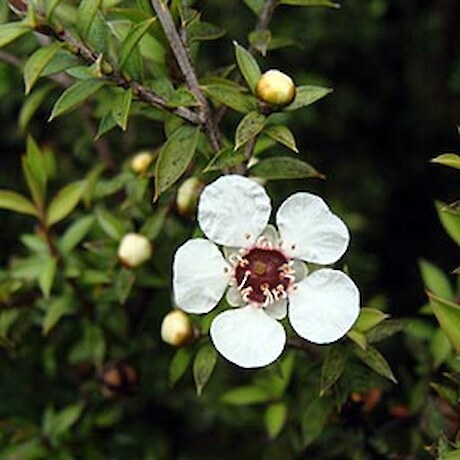
Tea Tree / Mānuka (Leptospermum scoparium)
- Height: Up to 8 metres.
- Form: Large shrub or small tree.
- Bark: Stringy grey-brown bark, peels off in long strips.
- Leaves: Small, prickly to touch.
- Flowers: Masses of white flowers.
- Fruit: Characteristic woody seed capsules.
Download the factsheet to find out more.

Tree Fuchsia / Kōtukutuku (Fuchsia excorticata)
NOTE: Plant with shelter from wind and frost. Needs partial shade.
- Height: Up to 12 metres.
- Form: Deciduous, spreading small tree or shrub.
- Bark: Orange-fawn, papery bark which peels off to reveal smooth greenish inner layer.
- Leaves: Dark green above, and pale green or silvery below.
- Flowers: Hanging red, dark purple flowers, blue coloured pollen.
- Fruit: Elongated black berries containing many tiny seeds.
Download the factsheet to find out more.
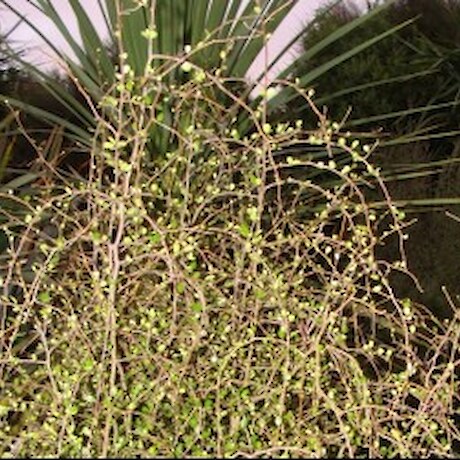
Weeping māpou (Myrsine divaricata)
- Height: Up to 3.5 metres.
- Form: Bushy, divaricating shrub, weeping habit.
- Leaves: Small, green, leathery, sometimes with tiny notch in top.
- Flowers: Yellow or red petals, tiny, in clusters.
Download the factsheet to find out more.
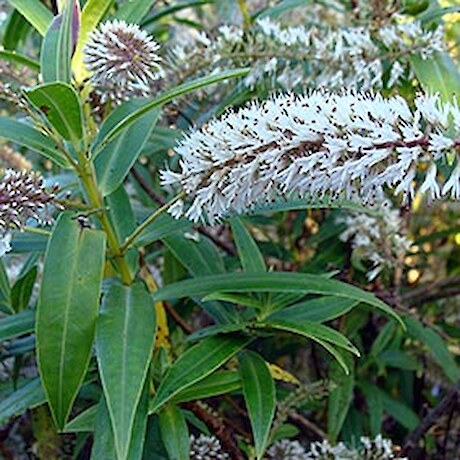
Willow-leaved Hebe / Koromiko (Veronica salicifolia)
- Height: Up to 5 metres.
- Form: Bright green leafy shrub.
- Leaves: Bright green, long, thin, willow-like.
- Flowers: White, clustered in spikes.
- Fruit: Small dry brown capsules containing tiny seeds.
Download the factsheet to find out more.
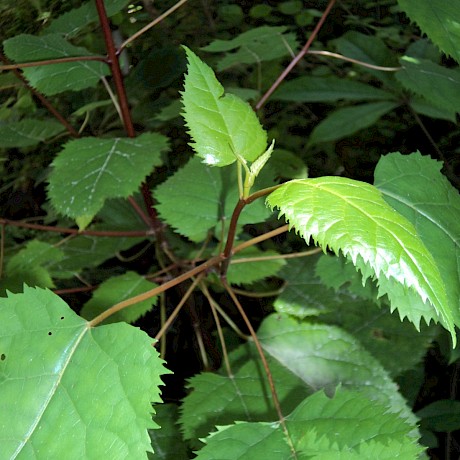
Wineberry / Makomako (Aristotelia serrata)
NOTE: Plant with shelter from wind and frost. Needs partial shade.
- Height: Up to 10 metres.
- Form: Small tree.
- Bark: Smooth and grey, with reddish coloured branchlets.
- Leaves: Heart-shaped with sharply toothed edges.
- Flowers: Small, white or red/pink. In clusters. Males and female flowers on separate trees.
- Fruit: Small, round, black when ripe.
Download the factsheet to find out more.