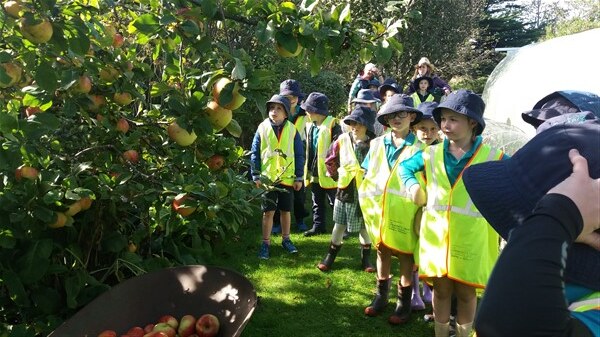
Its been a bumper season for just about everything! To make the most of your apple harvest come along to our Community Apple Pressing on Friday 3 May 2019 - $5 donation for the Cider Press
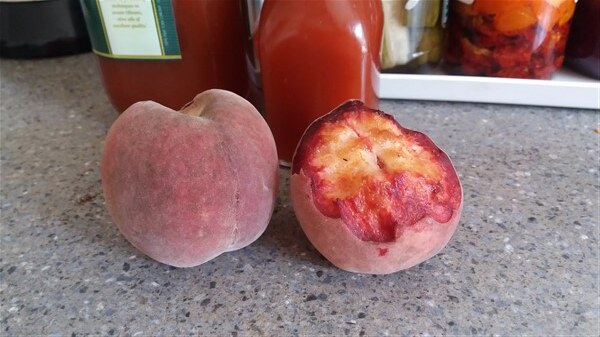
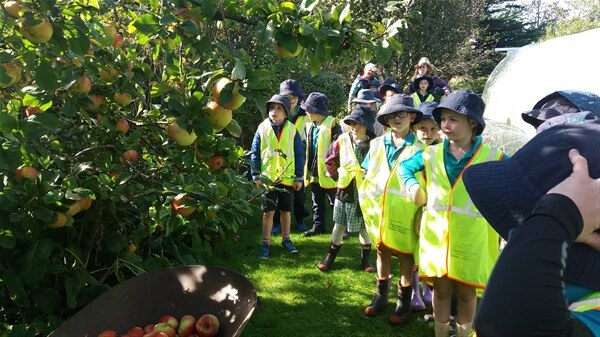
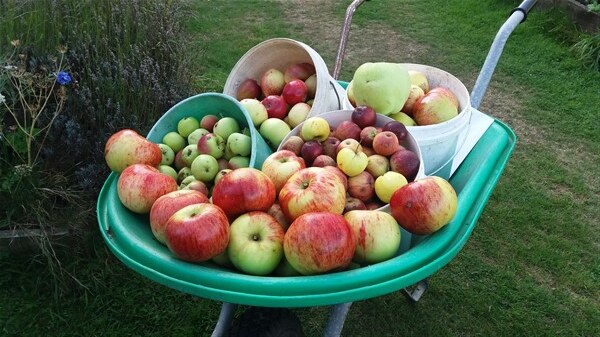
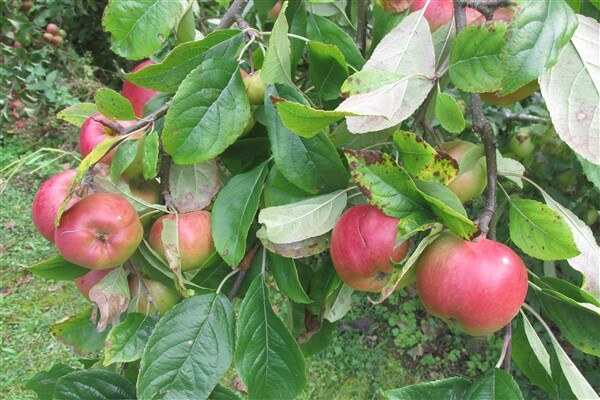
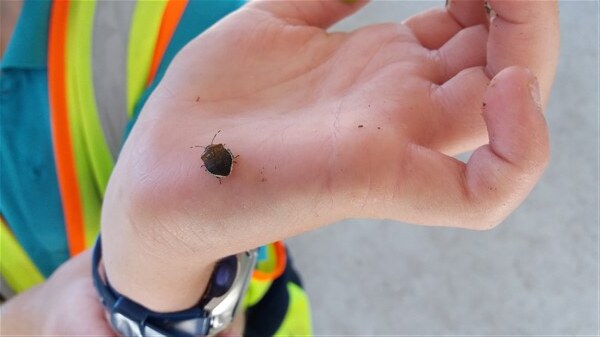
1-3pm at Southland Community Nursery. Bring your own apples and containers for juice - we will be restricting people to two containers of apples this year. If you have frozen apples (and we would recommend you do that now - you get much more juice, a clearer juice and you dont have to chip the apples, just squash them in the presss! so much less work), make sure they are defrosted thoroughly. No need to book - just turn up. Thanks in advance to Malcolm McKenzie for bringing along his cider press for us to use. The photos are some of our apples and my first blackboy peaches (but the birds got half!).
Chris
Posted: 10 April 2019
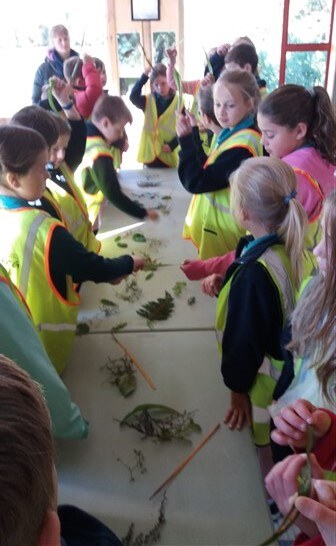
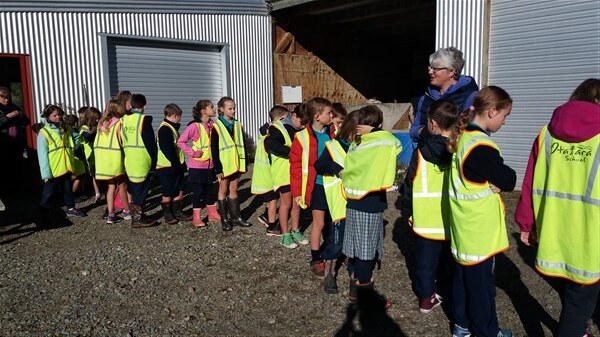
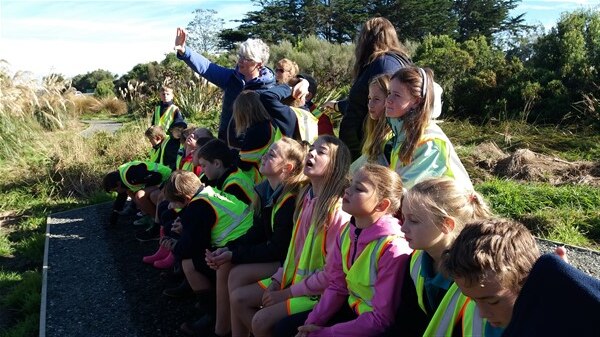
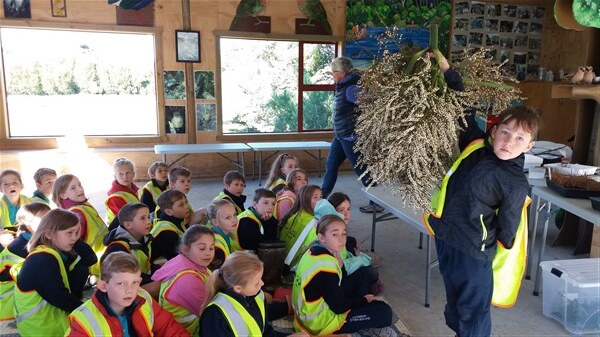
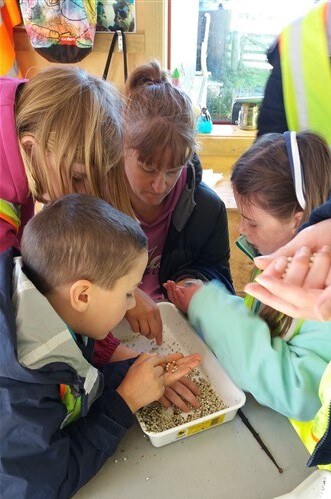
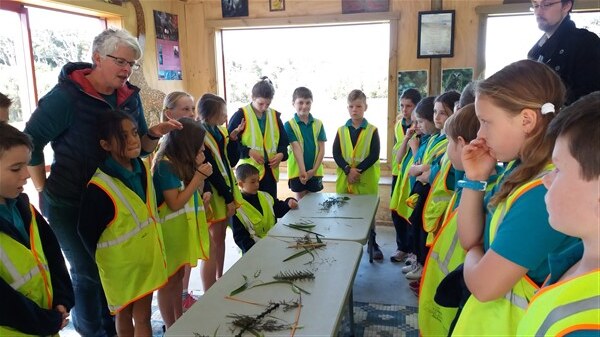
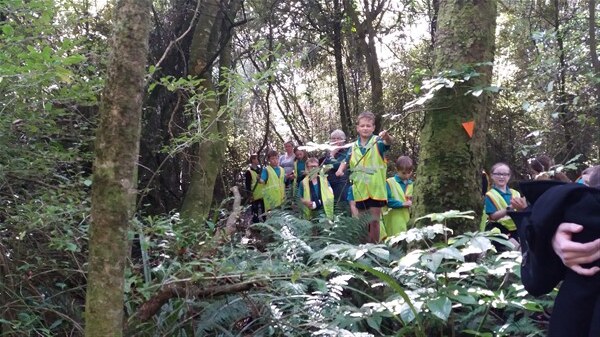
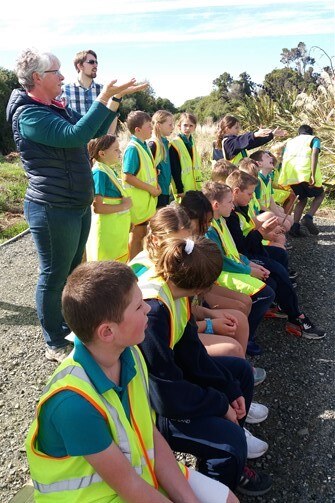
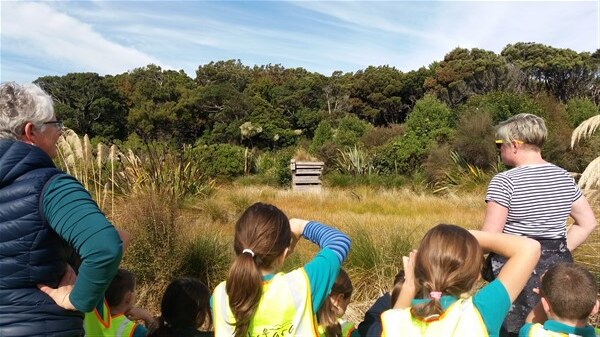
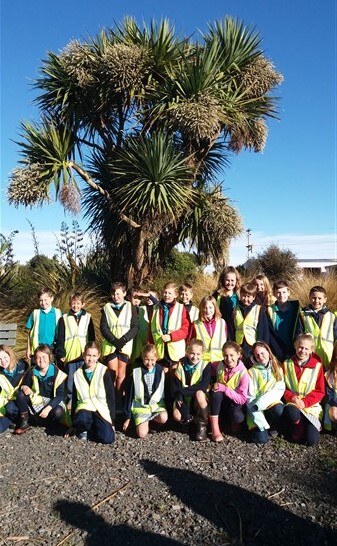
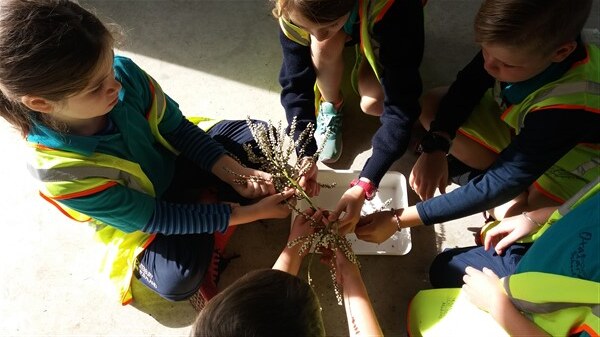
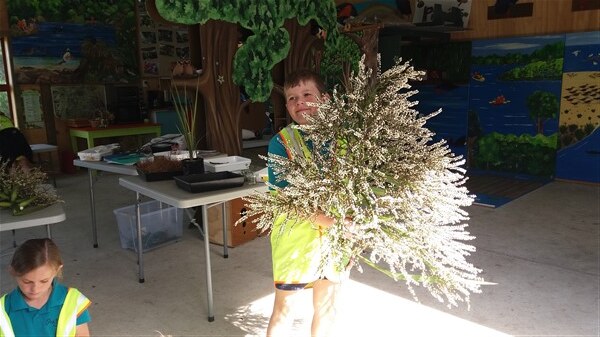
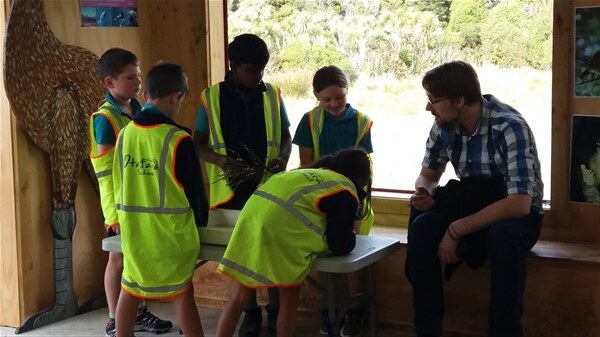
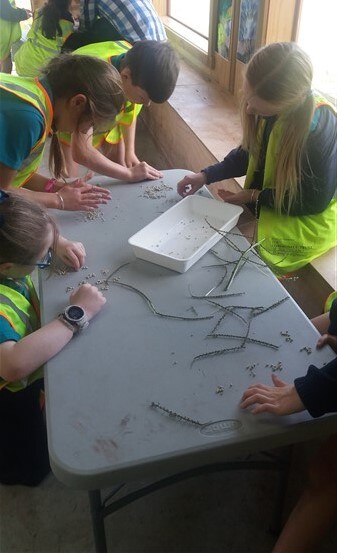
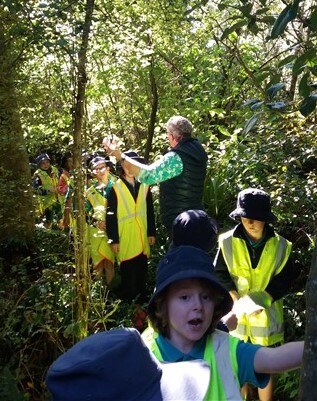
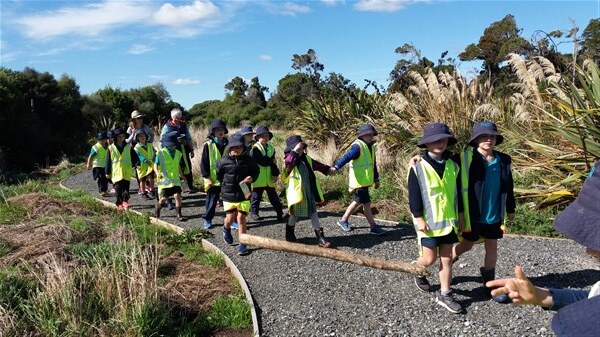
The last of the Otatara School classes (rooms 8&9) to visit the nursery this term arrived today in two groups. These classes are named after the easily recognisable tī kōuka or cabbage tree Cordyline australis. Each of the groups had time to share what they have learnt and noticed about the tī kōuka already and it was great to hear that these budding botanists and inquiring minds have found out lots about the cabbage tree. Then even though this tree is easily recognisable, when you only have the leaves in front of you identification can still trick even the most astute! We looked at the leaves of other school class plants and then headed out around the tracks to see what ones we could notice. Around the restored pond area many tī kōuka were found, while in the mature kahikatea forest none were found, proving what this class had learnt about tī kōuka not liking shady places to grow. This got us into noticing the differences in what was growing in these two areas. We talked about growing a forest, by planting out colonising or nursery species to provide the shelter needed for mature forest tree species to be able to then grow. As we walked we noticed the different seeds - of kahikatea, tī kōuka, mānuka, harakeke, and mingimingi - some which were in pods, some inside the fruit, and some seeds on the outside. We also looked at the two species of horoeka/ lancewood and the heteroblastic nature of this tree. We went back to the education centre and set about answering how many seeds there are on a tī kōuka tree. A huge fruiting head had been collected and each small group set about stripping the fruit off the branches (which is a job we do at the nursery at seed collecting time), and counting the fruit. The number of seeds inside each fruit ranged from 3-11, there was also a range of number of fruit on each stalk, and there were a number of stalks on the fruit head. We also noticed that different sized tī kōuka have a different number of fruit heads. We look forward to getting the answers to this mathematical problem! This class also heard about the importance of Otatara and Sandy Point for tī kōuka, the cabbage tree moth that lives on tī kōuka, and we wondered where the biggest cabbage tree would be in Otatara? This class sat at the seat on the new track and looked towards the layers of forest. “It looks like a painting” someone said….it sure does!
Bronwyn and Chris
Posted: 9 April 2019
Around 70 people came to the Invercargill Workingmens Club to hear a number of interesting speakers in the morning. First up Waikato Universities People Cities Nature team of Bruce Clarkson, Kiri Wallace and Catherine Kirby who presented on their nationwide cities restoration project. This was followed by speakers Brian Rance, Tim Whittaker, James Griffiths and Ben Doherty. After lunch everyone came to the Southland Community Nursery and into Bushy Point where Chris Rance, Jesse Bythell, Kiri Wallace and Brian Rance spoke about the various aspects of restoration in the field. You can read all about it at https://www.peoplecitiesnature.co.nz/
Brians presentation on “Right Plant Right Place”
Chris Rance
Posted: 9 April 2019
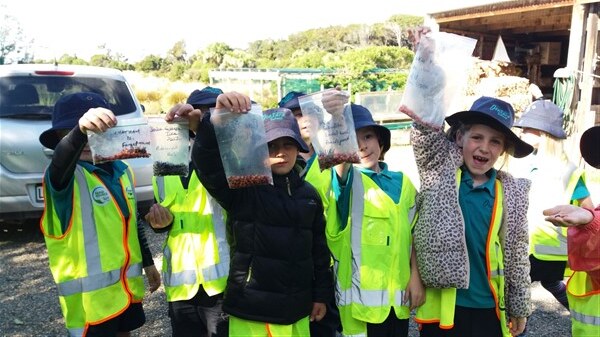
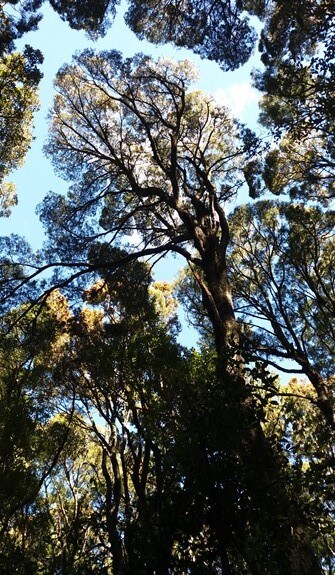
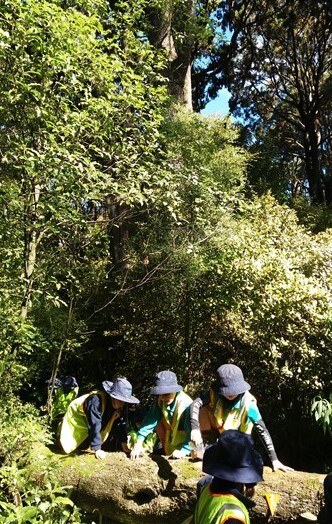
Seed hunting and great observational skills All the close observational work and drawings that this class had done back at school was evident as this class started by sharing with us what they already knew about the kahikatea. To learn more about the mighty kahikatea and other NZ native trees we started by looking closely at different tree leaves. We talked about the different names that kahikatea has - White pine (because of the whiteness of the wood inside the trunk) and Dacrydium dacrydioides - its scientific name meaning “tear shaped seed” and “like a conifer”. The highlight of the walk through the swampy kahikatea forest was finding heaps and heaps of kahikatea fruit, with the black round seed on the outside of the bright red/orange fruit. The students enjoyed collecting these, some to be taken back to the class for observational drawing and the rest for the nursery - thanks for contributing to the work that the community nursery undertakes. The observational skills of this group meant that we also saw tiny fungi, Pokaka seeds, the spores on the underside of fern fronds, ti kouka, shelf fungi, the piwakawaka that followed us, white faced heron feathers and the different smells of the forest. After singing “E tu Kahikatea” to the birds in the middle of the swamp forest we stood still and listened very quietly hearing tui and korimako (bellbird). This class was very very good at being silent. It was a great afternoon I the sunshine with a lovely class of budding botanists.
Bronwyn and Chris
Posted: 9 April 2019
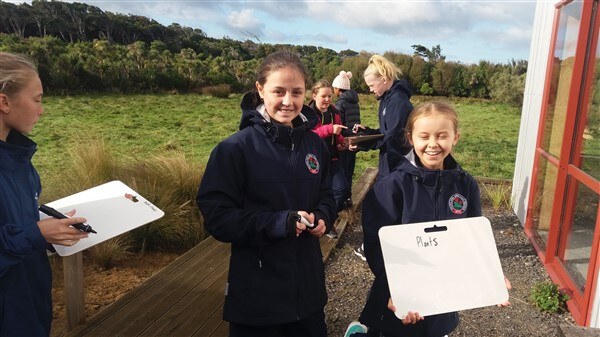
Southland Girls have been having their Community Breakout days at Bushy Point since 2005. Day one saw the various groups plant 100 native plants and carefully covering each plant with combi-guards. The OLG team of Barry, Chris, Sally, Lesley and Ray helped run this activity. Mark Oster took groups on a bush adventure as only Mark can! Tom Harding introduced the girls to all things pesty! Pat Hoffman and Hannah Sim took two groups at a time to the Community Nursery Education Centre and Rances Garden where they studied “sustainability”. At lunchtime there was a commemorative planting in memory of the Christchurch atrocity, where a student planted three significant totara trees.
On day two Bronwyn joined in with the activities being run by ES for the SGHS year 7 group (today was the second day of such activities). Pat and Hannah brainstormed and played mind opening games around the concept of sustainability and what this means and looks like. The girls did a treasure hunt around the nursery area looking at what is being done in a sustainable way, giving them lots of ideas and the starting point to their thinking around how they can take some of these ideas back to SGHS and their school grounds. It will be great to hear what happens at SGHS.
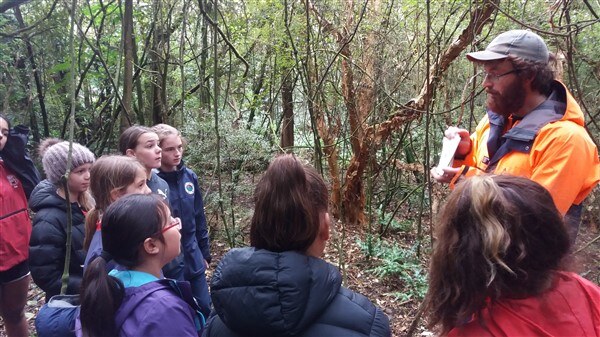
Then it was to Bushy Point where the group got to be in the NZ native bush (and for some this was their first time in the bush) learning all about how safe our bush is and looking at nests and then undertaking nest building for an imaginary 180 million year old stone bird! We had piwakawaka and korimako join us, and the totara forest gave a sheltered place for exploration and learning. After this fun with Mark, Tom took us along a pest line following the yellow markers. Animal pests were found, with some finds accompanied by loud shrieks. Possums, rats, stoats and other pests were looked at, a tracking tunnel was explained, some footprint identification was undertaken and a trap was studied to see how pests are killed. And we saw that it is not only animal pests that are a problem in our NZ forest, with Chilean flame creeper, a plant pest, seen and discussed.
The groups also did an environmental themed video making challenge with their teacher. A great day to be out in an area where the community is doing important planting, pest control and other valuable environmental work.
Chris and Bronwyn
Posted: 9 April 2019