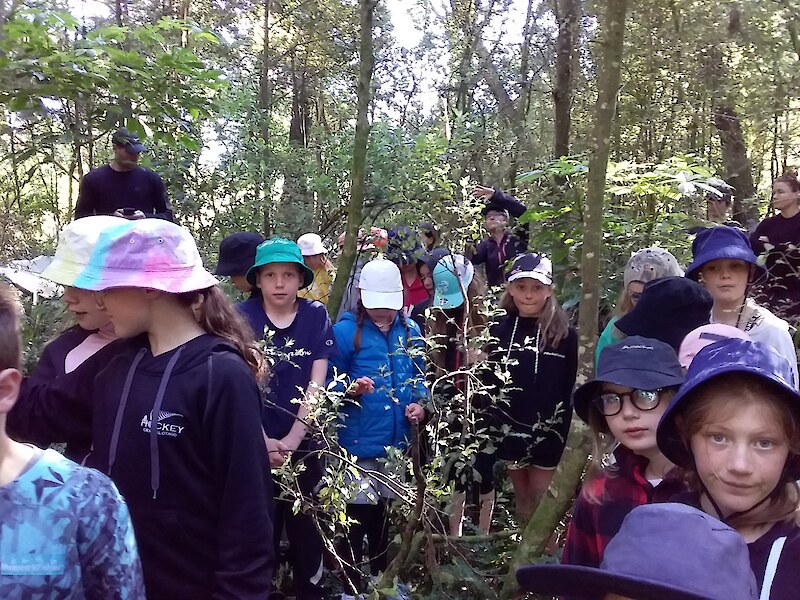
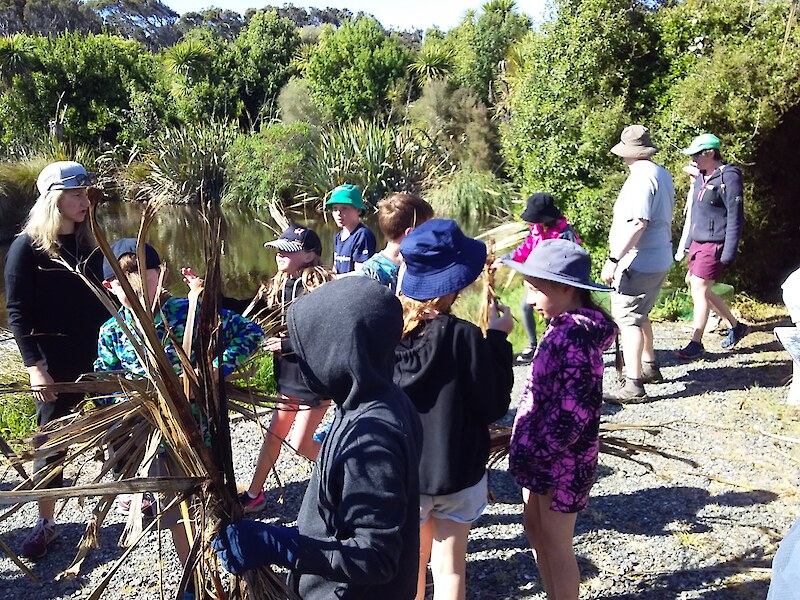
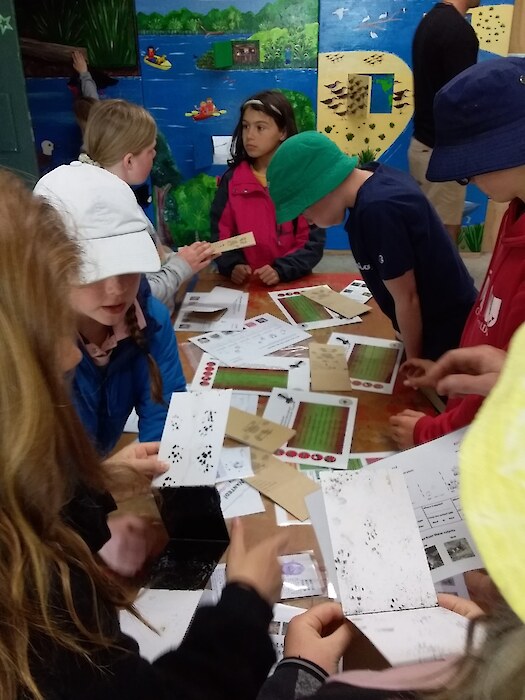
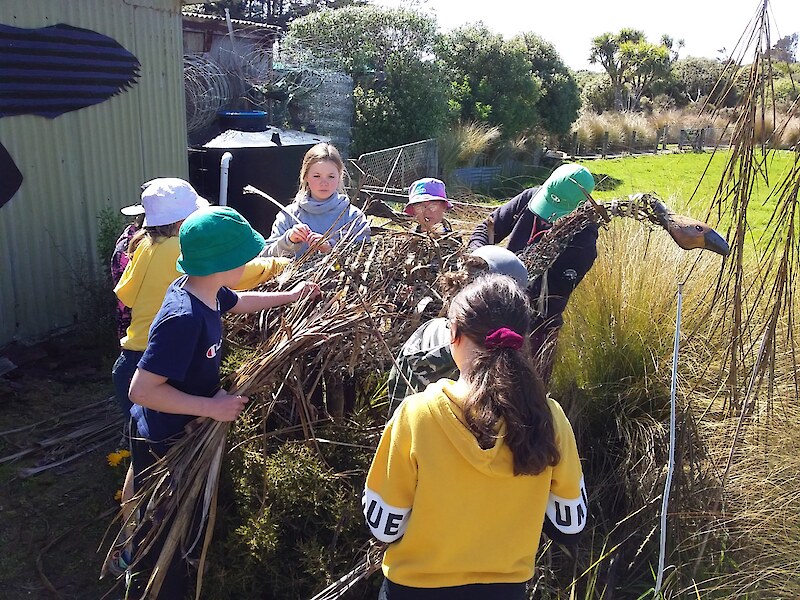
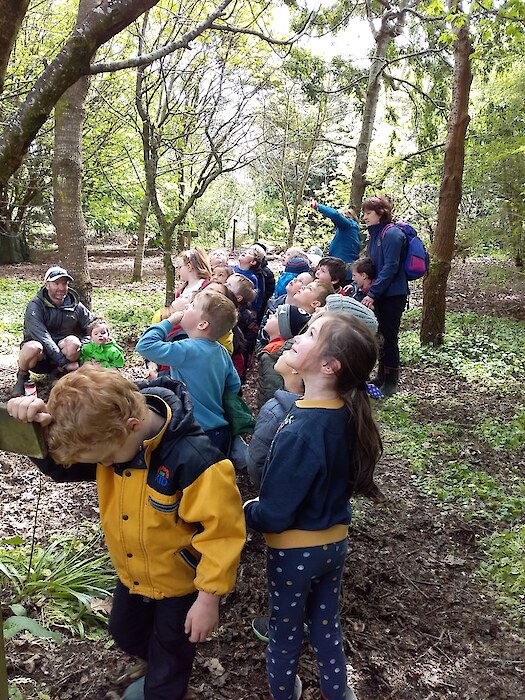
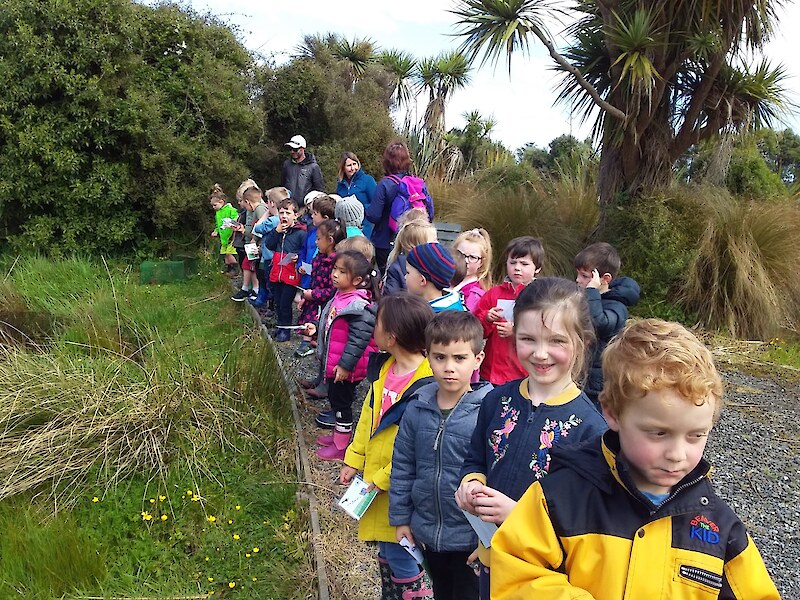
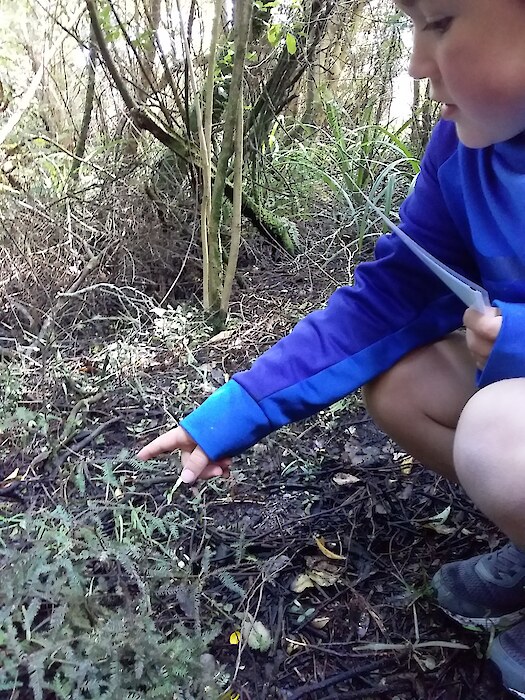
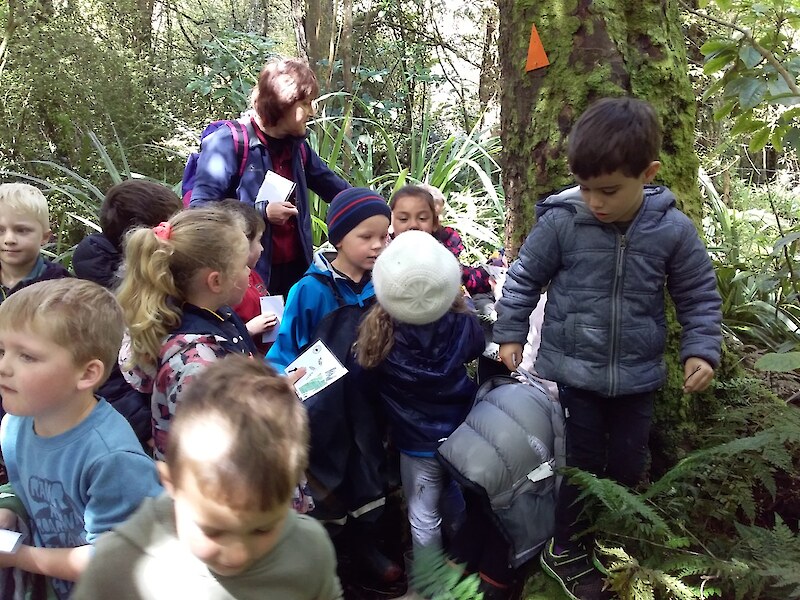
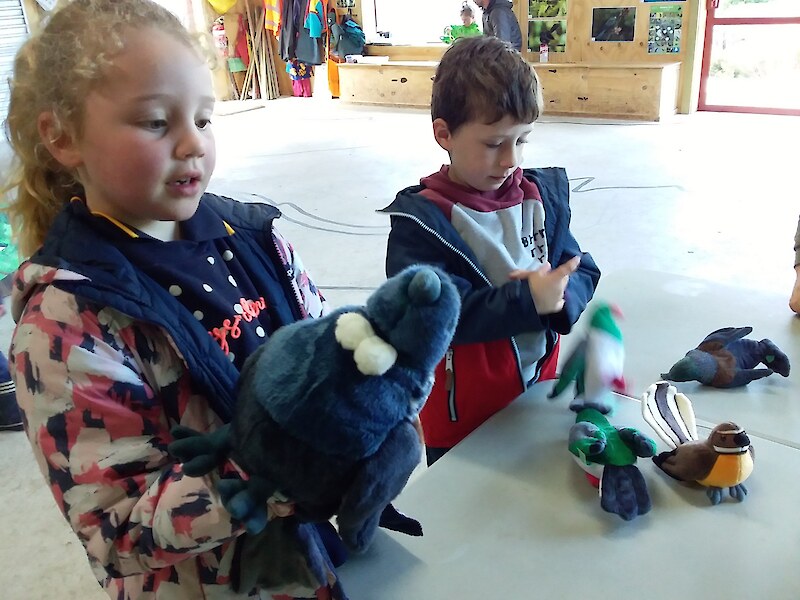
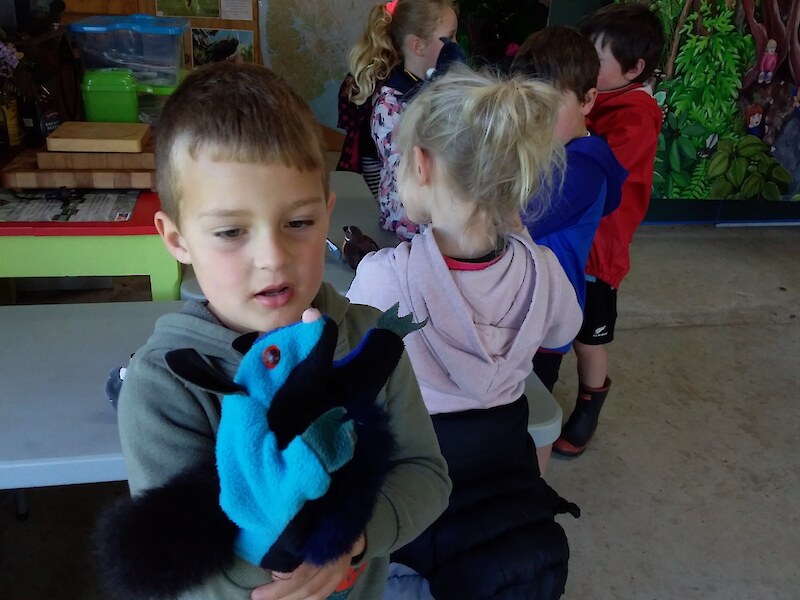
Te Kura O Take Kārara from Wānaka visited today as part of their school camp excursion. It was a pleasure to feed the minds of the year 5 and 6 learners from weka with the focus of the visit on birds and pests. We noted the success of introduced pests to New Zealand and the adaptations that these species such as rats, mustelids and possums have made in their new environment. Observation of the chew marker tabs, tunnels, bait stations and traps and how we manage these pests in NZ native ecoystems was explored. Becoming pest detectives the students identified the foot prints of pests that had left their identifying marks on tunnel tracker cards. Learning facts on each of the pest species was tested with a quick quiz at the end. Exploring the restoration forest and kahikatea swamp forest we spotted a white faced heron /matukumoana, bellbirds /korimako, fantail / pīwakawaka, scaup /papango, mallard ducks (one mother with about 10 or 11 ducklings), starlings, sparrows and tui. In the heart of the kahikatea swamp forest we were very quiet, tuning in to hear korimako, tui and grey warbler / riroriro. We learnt about the fernbird /matata and talked about planting trees for bird habitat creation, to provide nest building sites and materials, and food (both the plants themselves and the insects that live in the forest). In the education centre we mimicked many birds using different beak tools to think about how NZs variety of birds have adapted different beak features, gave “the moa” some tī kōuka feathers and matched the birds with the pictures – including many that are found locally but weren’t seen today such as the silver eye /tauhou. Telling how the shining cuckoo /pīpīwharauroa flies in and lays its eggs in the nest of the riroriro for it to nurture and bring up was a surprising story of nature for many. This class had great inquiring minds, and once back at school may very well become pest detectives.
Bronwyn
Posted: 28 October 2020
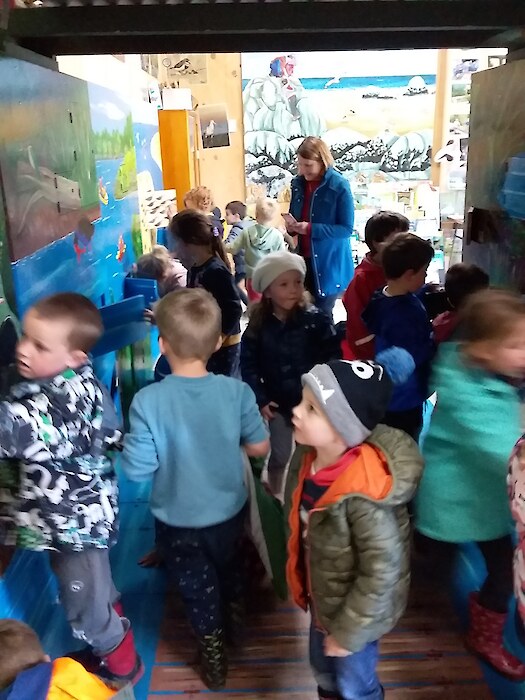
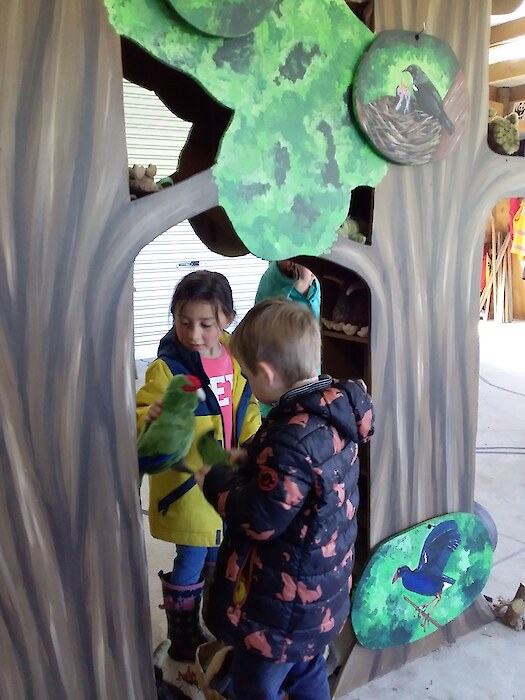
The next class/syndicate from Myross Bush School visited today. After spotting a kererū sleeping in the tree we followed the pond track finding the leaves of many special NZ native tree species. Then it was into the kahikatea swamp forest remnant to meet the Ako of their school – the kahikatea. We spotted baby seedlings and hugged a 400-500 year old treasure. We learnt and experienced the kind of habitat the kahikatea likes to live in – swamp – it was very wet underfoot! Pest traps, bait stations and chew tags were seen and we talked about why we manage pest species like rats, stoats and possums in our native forests. We found some bug critters in the forest and talked about how they are food for some of the NZ native birds. Some time spent in the education centre focused on playing in the habitat panel tunnel opening all the doors, and naming the soft toy birds. I look forward to hearing about and seeing these new entrants and year 1 students becoming kaitiaki in their school community.
Bronwyn
Posted: 27 October 2020
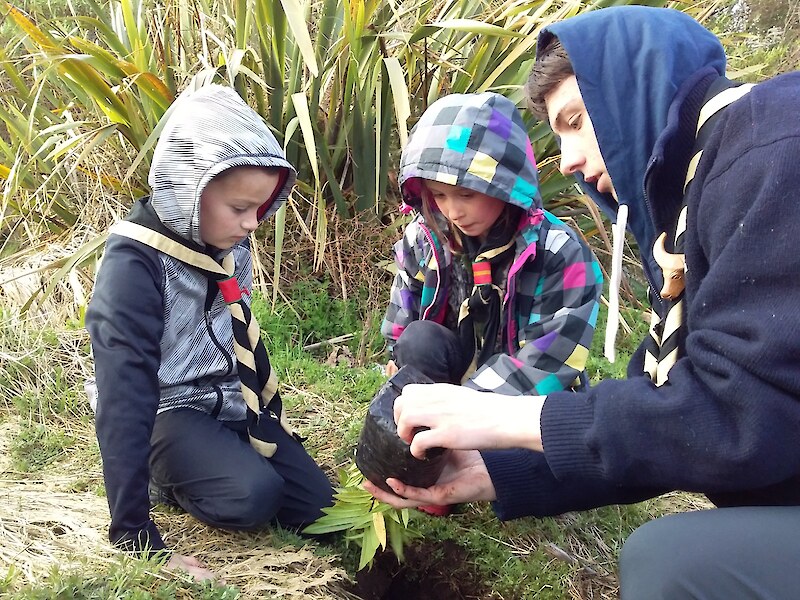
A big thank you to the enthusiastic group of Georgetown Cubs for their mahi, planting out some special New Zealand native plants at the nursery property as part of their Conservation Badge. A discussion of the areas of NZ that have been deforested, and how restoration is improving nature put their action into context.
The group also learnt about the secretive wetland bird mātātā – the fernbird. The group was exceptional at keeping quiet (for such a large group) and some even heard the fernbird that was nearby. The group learnt what is being done to save it and how simple things like replanting wetland margins and pest control can help.
Bronwyn
Posted: 22 October 2020
It was great to welcome big groups back, with two classes from Myross Bush School visiting to be inspired by the Southland Community Nursery environments and education centre. Following visits I made to each classroom at the school during September, we continued on our learning journey being inspired by all that was around us. We followed the pond track through the restored forest and trekked through the boggy swampy kahikatea swamp forest meeting the taonga native tree species that these students are learning about. We noticed the blue pollen of the kotukutuku flower, the distinguishing leaf features of many of our natives, learnt that most (but not all) NZ natives are evergreen (not deciduous) and hugged some trees. We smelt the tarata and horopito leaves. We learnt to identify native manu (birds) using photos and paintings and in the forest heard and saw bellbird, tui and piwakawaka. We learnt the meaning of terms like juvenile, heteroblastic, endemic, native, introduced, canopy and colonising, and wondered about all we saw. The kahikatea tree was spotted and we learnt and experienced the kind of habitat it likes to live in – swamp! Pests were met and discussions started about why we manage these species in our native forests. I’m sure the students and teachers left with some creative ideas and lots of more thinking will happen regarding what they can be inspired to do at their place.
Bronwyn
Posted: 20 October 2020
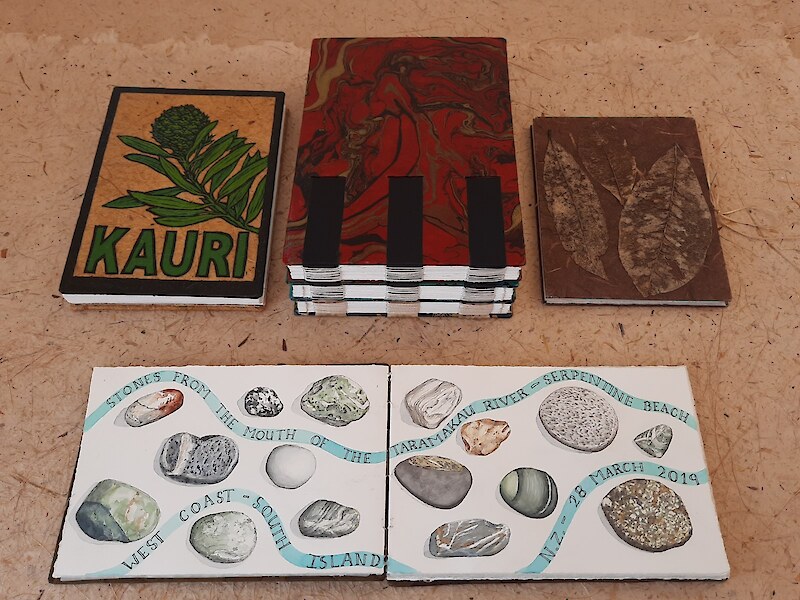
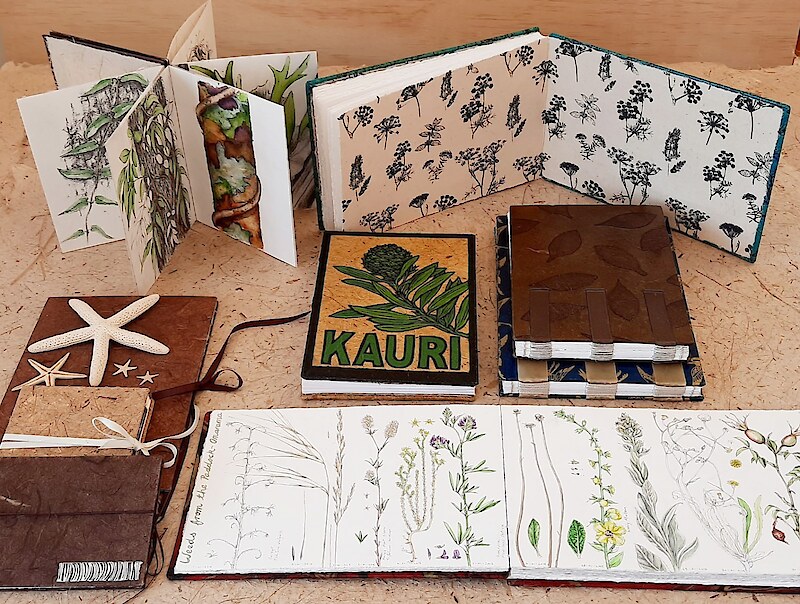
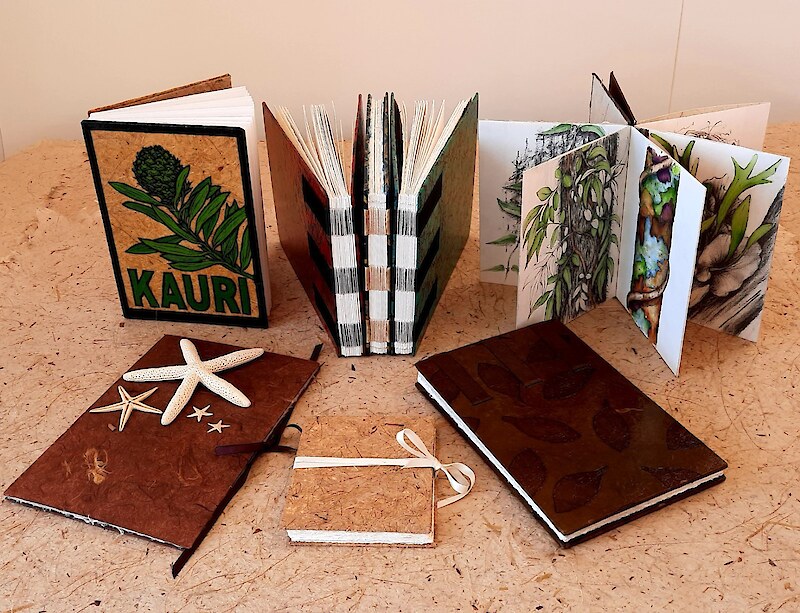
We are very pleased to bring Jo Ogier down from Christshurch for another art workshop - Making your own Nature Journal or Sketch Book - see details. Places are limited and bookings will be first come first served (with a reserves list for those who miss out). Book by emailing me at [Enable JavaScript to view protected content]. Payments can be made once your booking has been confirmed.
kind regards
Chris
Posted: 28 September 2020