A Kindergarten “family night” was a first for the Community Nursery. Waikiwi families came along with their fish and chip dinners at 5.30pm. After the food and some play in the education centre everyone went for a scavenger hunt around the pond with Chris. We were met by Donna the duck and her family and then accompanied by piwakawaka all along the track as we used our senses to find various interesting prickly, smooth, coloured, sweet smelling plants around the pond track. We finished with a run around the newly mowed koru in the paddock.
Posted: 26 March 2017
The rainy weather didn’t dampen the enthusiasm of the budding nature photographers on Sunday 26 March 2017. Wynston Cooper and Dawn Patterson gave their expertise, experience and photographic tips on the big screen and out in the field around the pond at Rances. An illustrated presentation explaining the basics of “F stops”, “aperture”, “depth of field”, ”shutter speeds” and “white balance” was given before participants took their cameras out into the field. After taking photos with guidance from Dawn and Wynston, each participant downloaded some of their digital images to be discussed by the group and all went away with ideas and more confidence in operating their cameras. It was a very productive and enjoyable workshop and another “first” for the Community Nursery.
Posted: 26 March 2017
From the Southland Community Nursery we wandered past the pond and through plantings. We first stopped to collect some seed from the mingimingi (Coprosma propinqua) finding the little blue berries in the tangly shrubs. We also spotted nursery web spider webs, manuka seed pods, and both the green and ready and open seed pods of Kohuhu (Pittosporum tenufolium). It was great to talk about how we can collect seed to grow a forest.
We made our way to Bushy Point stopping to see how the plants we are planting as part of the Eco Challenge Days (joint KCC and Otatara Landcare Group events) are growing. A great way for us as KCC to be involved in growing a forest. Liam found his tree planted December 2015 which started out at 43 cm and is now 128 cm! We made it to the pond at Bushy Point and set up base to explore from. Russel caught a cicada for us to have a close up look at, we heard and spotted a rare fernbird, made boats (that we sailed on the pond back at the Southland Community Nursery), started a nature journal, used books to find out about species found in this area, and watched a kereru drink water from the pond – extraodinary! On the way back we saw kakariki flying over the bush at Rances.
Bronwyn (KCC Coordinator)
Posted: 22 March 2017
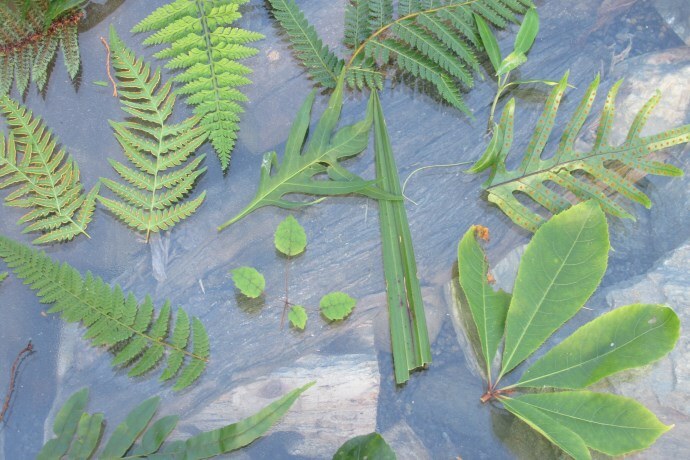
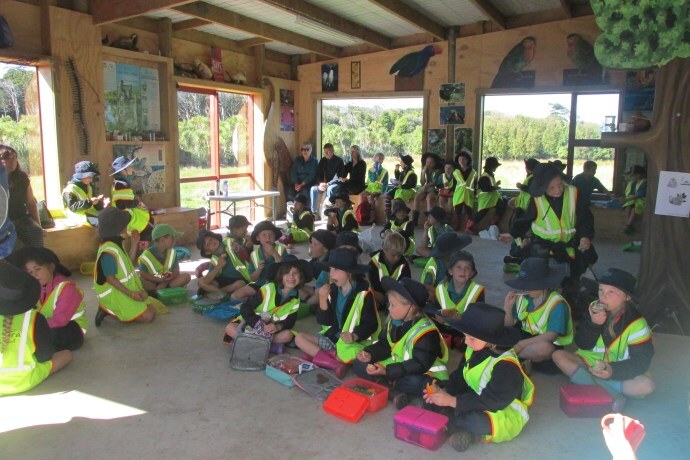
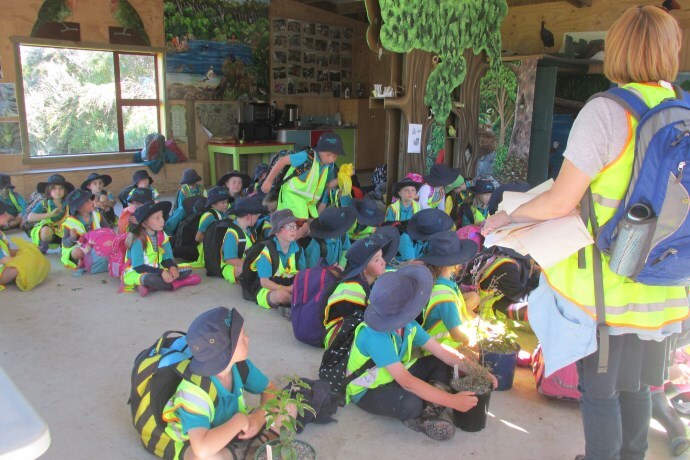
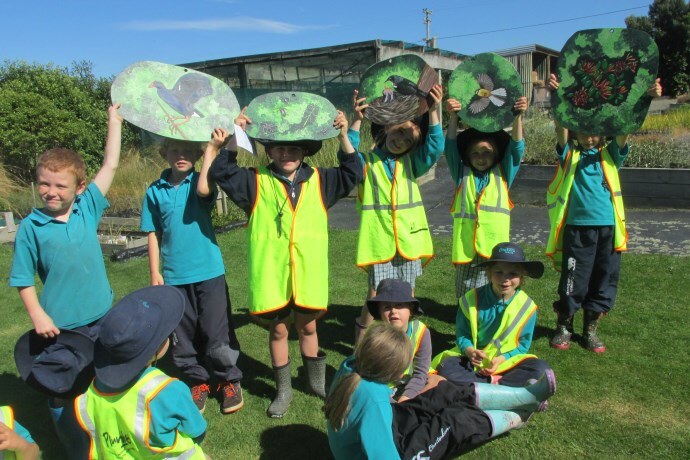
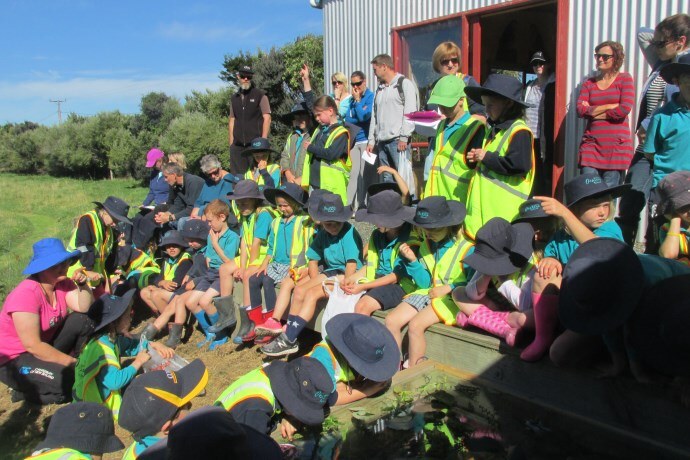
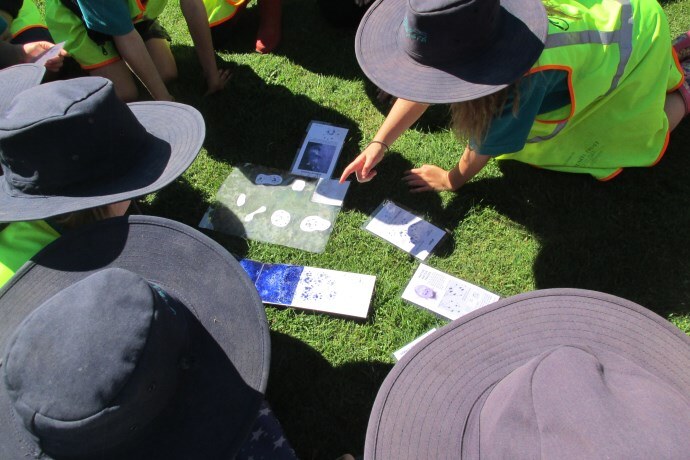
Fifty two students from Rooms 11 and 12 at Otatara School came to learn all about native plants and habitats on Wednesday 15th March 17. Accompanied by teachers and parents, students had a very busy day going for a bush walk in the ancient kahikatea forest with Chris and round the pond restoration area with Bronwyn in the morning. After a quick snack everyone gathered on the deck to talk about the differences they had noticed between those two areas, and the adjoining paddock. Leaves from plants collected along the way were discussed and lots of good questions were asked. After lunch in the Education Centre the group divided into 4 groups and learned about tracking pests with Chris, how to grow plants with Bronwyn, nature journaling and leaf studies with Linda and bird studies with teachers.
Suddenly, it was time to go and hopefully take some of the ideas back to the school and to home. The native plants that were potted up on the day were taken back to the school for looking after and they were shown to other students at assembly next day. Well done rooms 11 and 12 – it was a great day!
Chris
Posted: 19 March 2017
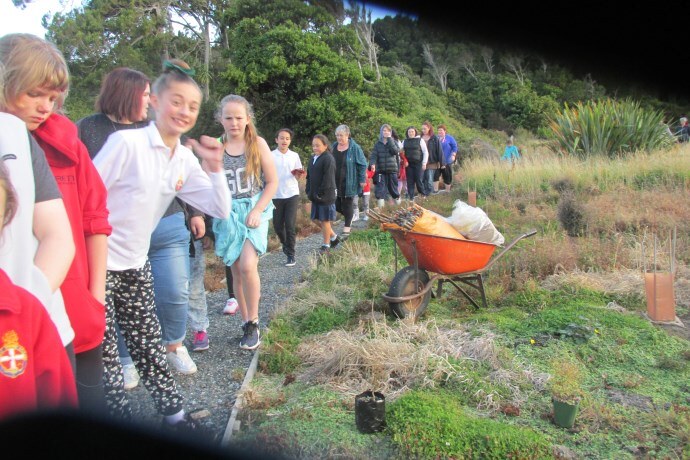
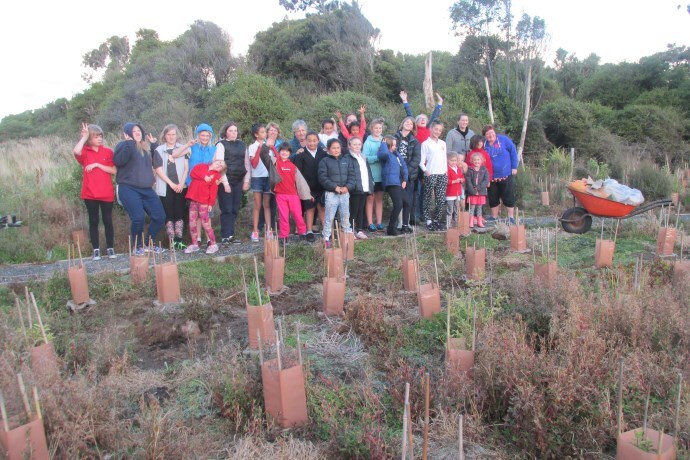
Twenty-five girls from 3rd Invercargill Girls’ Brigade, aged 5-14 years, came to the Southland Community Nursery on the evening of Tuesday 14th March. They came to learn about plants and helped out with a local planting of natives, and got them planted in quick time. Plants included Manuka, kohuhu, mingimingi, lemonwood and cabbage trees and they were covered with combi guards to protect them from rabbits.
Posted: 19 March 2017