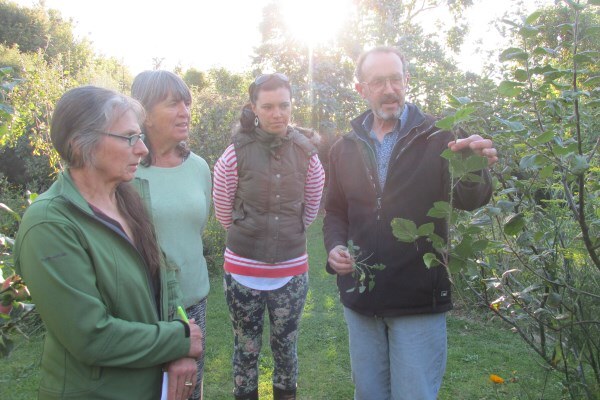
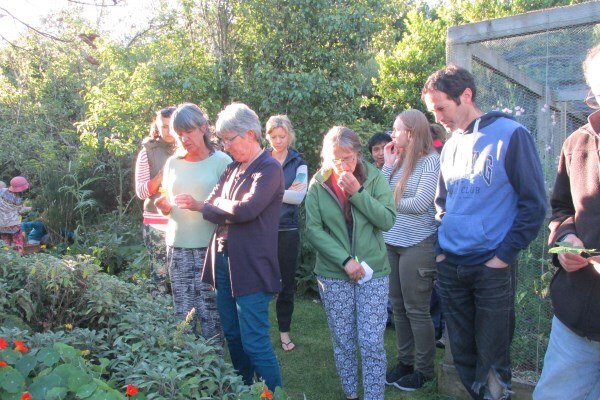
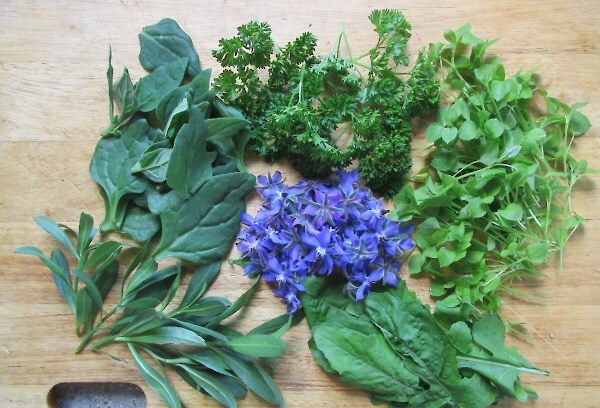
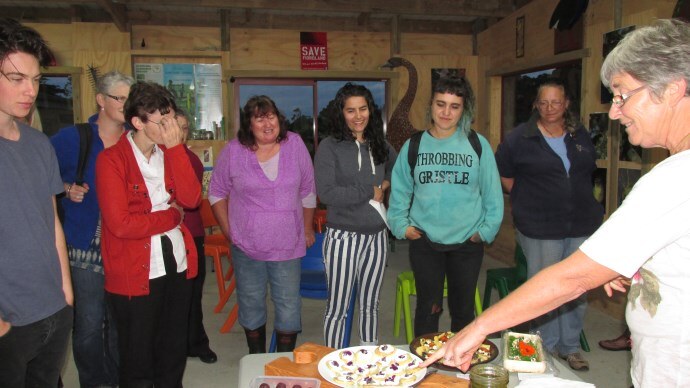
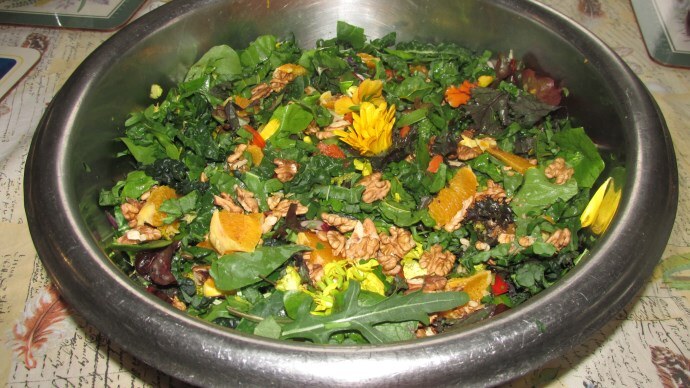
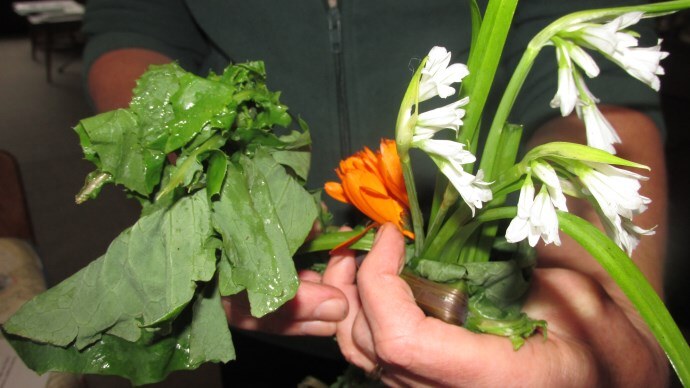
A successful evening of foraging took place on Wednesday 8th March 2017. Plant identification was the first skill needed for foraging – “if you don’t know what it is, you shouldn’t eat it” said Chris. We spent a good amount of time walking around identifying natives, exotics (some would call them weeds), and poisonous plants. Chris pointed out Cooks scurvy grass – a very common and useful native brassica that was once abundant around the coasts of New Zealand, it is now a very rare plant, but grows well in the garden!
Poisonous plants included poroporo, hemlock and bittersweet and hemlock in particular looks very like many other foragable plants where flowerheads are in umbels (flowerheads with many tiny white flowers). However, there were many more plants that we saw which were useful – a list is attached.
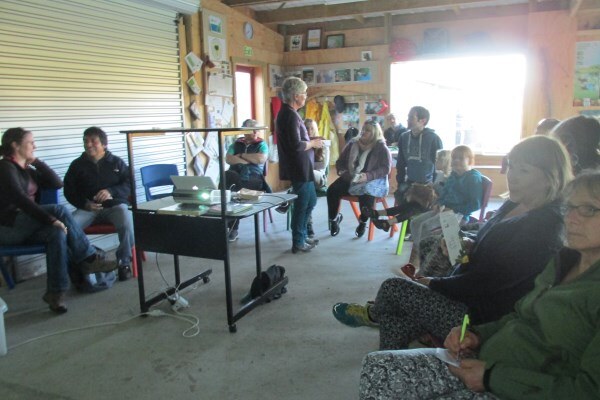
We then adjourned to the Education Centre where Maggie gave a presentation on foraging – with fascinating facts on how today’s diet and use of plants has changed dramatically from previously as follows:
•People used to graze on three to five thousand plants.
•Now we rely on 150 with only 20 providing 90% of our intake.
•American stats show that just FOUR crops account for 2/3 of their calories.
•They are soy, corn, wheat and rice.
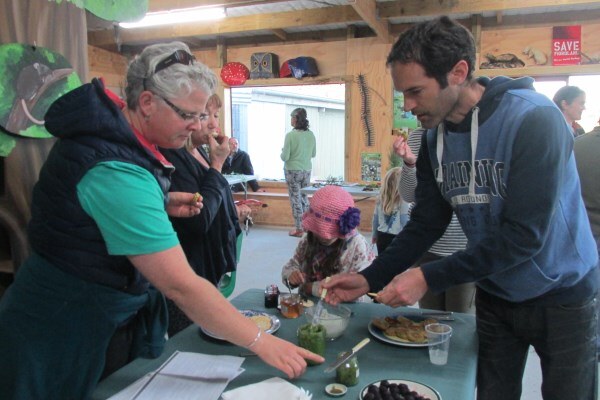
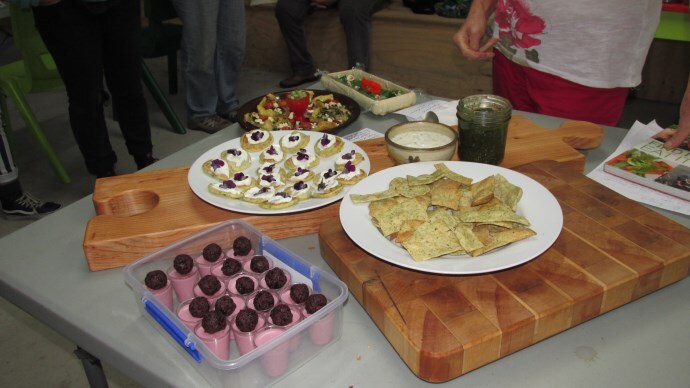
Then we went on the to sample a few foraged delights – nettle and wild foods pesto, horopito pepper, elderberry truffles, elderflower cordial and champagne, and samples of teas or tissanes – lemon verbena, Manuka, lemon balm, chamomile, and dandelion tea.
Posted: 13 March 2017
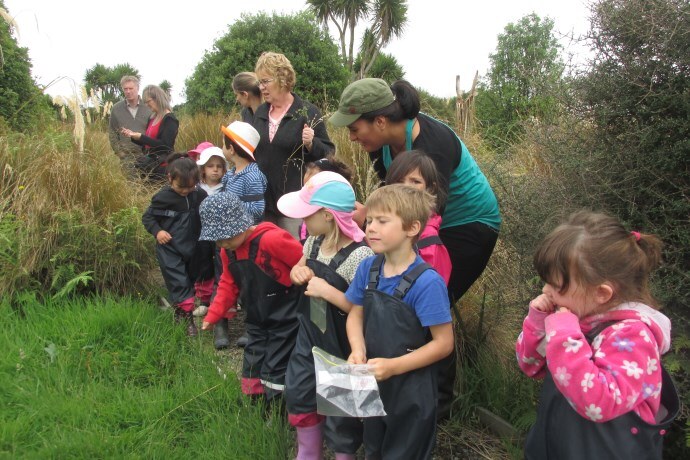
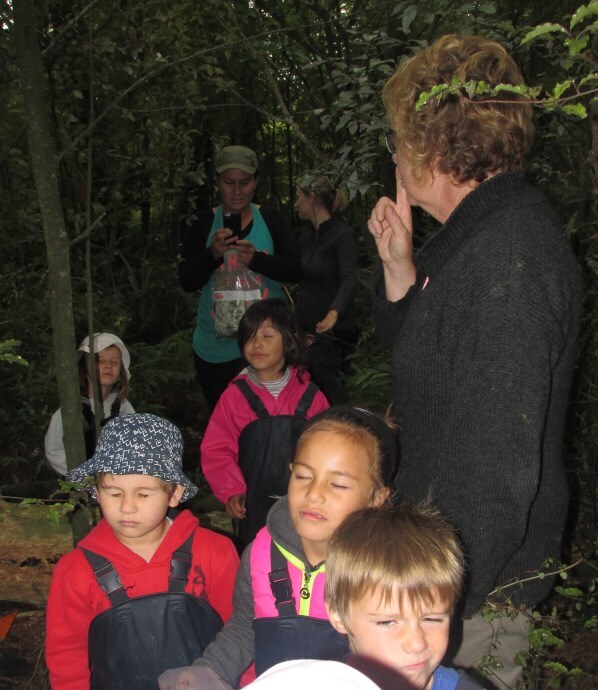
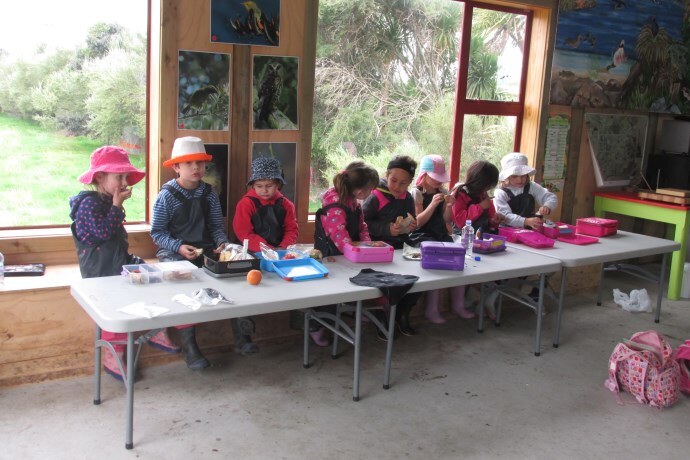
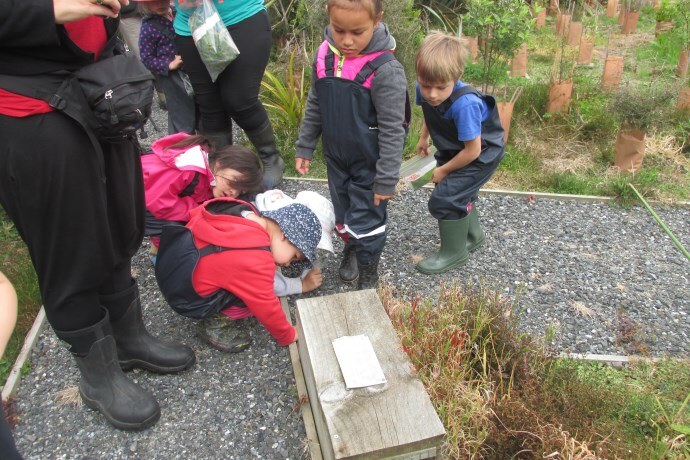
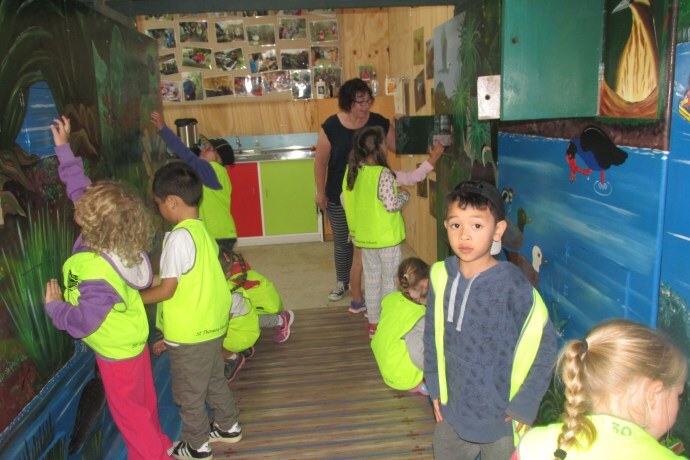
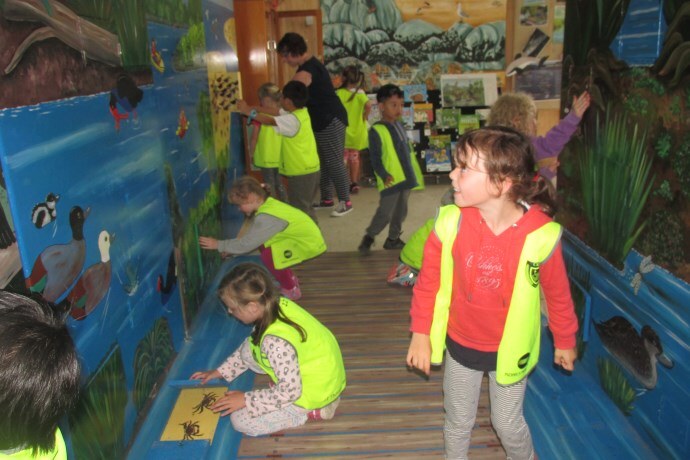
On Monday 27 February, ten Rockdale Kindergarten children came to do nature discovery at the Community Nursery. We started in the orchard where the apples were growing nicely. Then the children looked for the Community Nursery signs to lead them through the garden to the Education Centre. A brief snack and out into the wilds. The fish nets Chris had put int eh pond were pulled out and backswimmers and beetles were seen. (The next day 5 koura were found in the nets!). After looking for seeds and collecting the bright blue Coprosma berries we headed into the bush. The highlight was when we all closed our eyes and listened to the birdsong. Chris got out the bird squeaker and lured 5 piwakawaka (fantails) down from the canopy. They delighted us with their flitting and calling. Wendy said “they couldn’t be Rosie piwakawaka from Myross Bush because they were all so big!”.
Posted: 5 March 2017
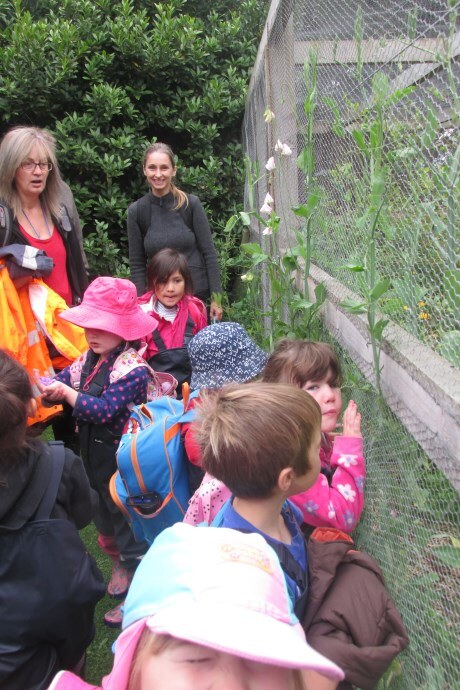
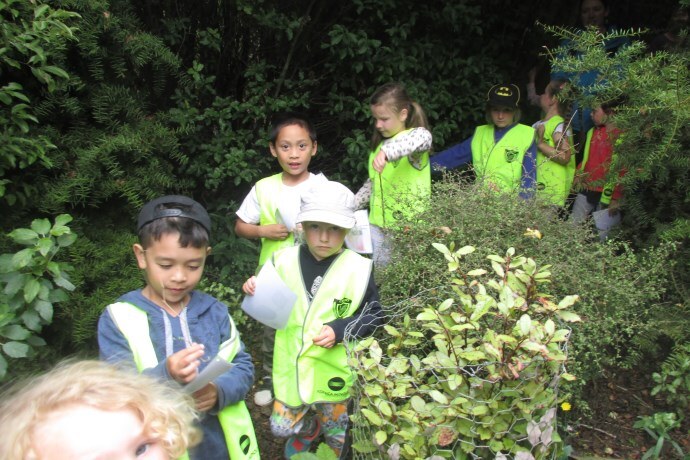
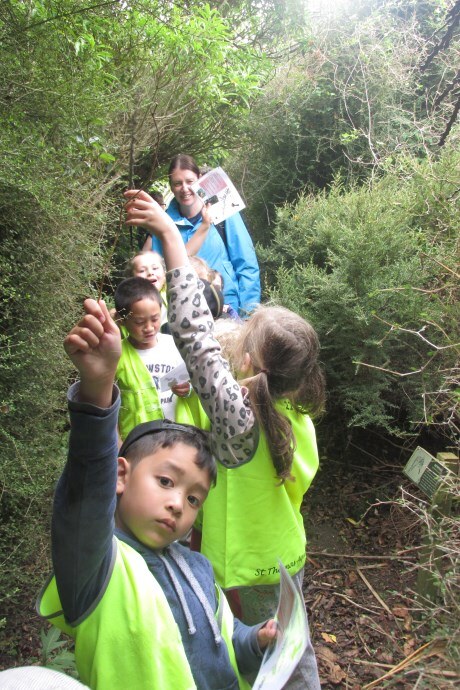
Sue Maynard brought a group of enthusiastic 5-6 year olds to the nursery on Thursday afternoon. The group were on a camp and doing lots of different activities and visiting lots of places. Here at the nursery they wanted to learn about setting up a school garden, so Chris took them on a plant hunting trip around the ponds. Each student was given a plant bingo card and all the children searched for their plants and matched the picture son the cards to an actual
plants. While matching they learned a little about each plant and used their senses to feel, smell and look at each
plant. At the end of the walk Chris gave the group a box of native plants matching those found on the walk, so the
children could plant a school garden and learn more about native plants.
Posted: 5 March 2017
Learn which plants you can eat and those you shouldn’t!
Learn about the health properties of certain plants.
Finish by sampling some of the foraged delights – wild food pesto, dandelion coffee, various tissanes and other delights! More information
No booking required, $5 per person, pay cash on the night. Meet at 183 Grant Road, Otatara at 6.30pm and walk through to the Education Centre.
Posted: 5 March 2017
Honey Extraction and Making Splits - at the Southland Community Nursery, 15 February 2017
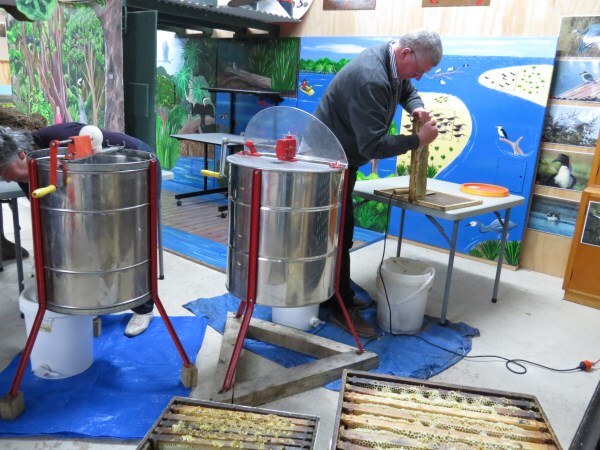
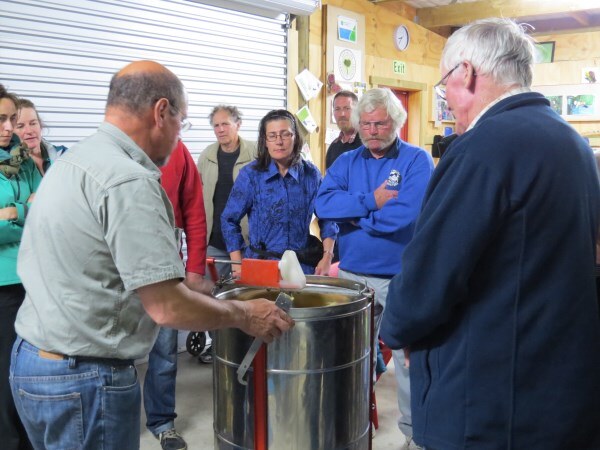
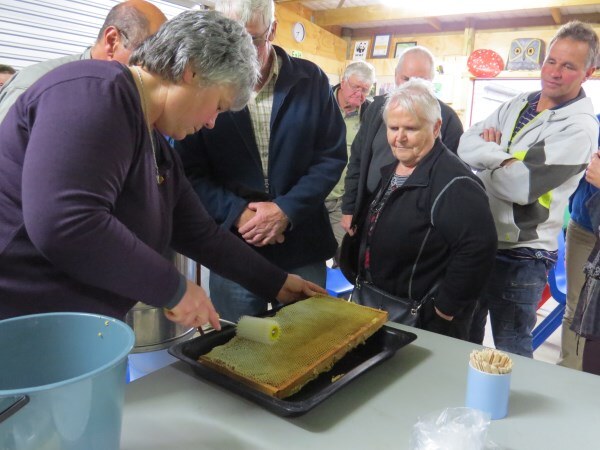
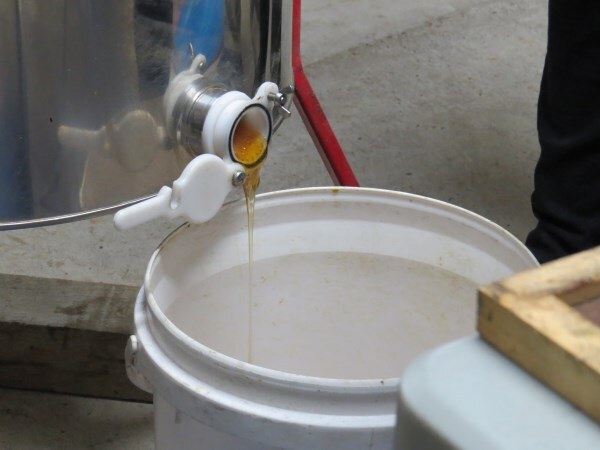
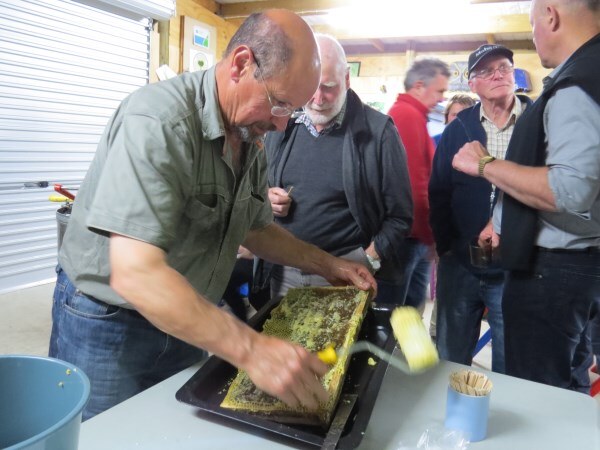
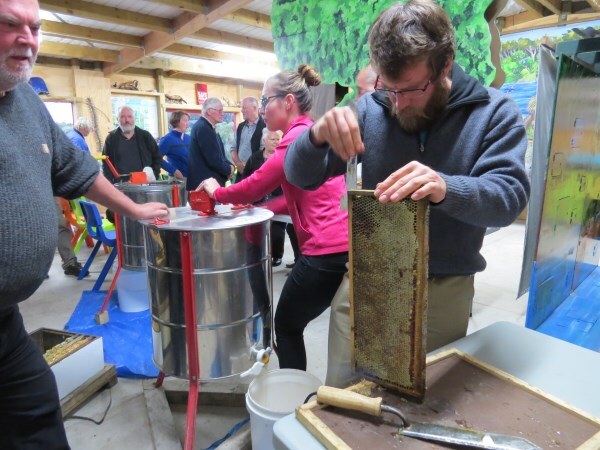
On Wednesday night following the monthly Southland Bee Society committee meeting Murray explained how to make a split (which essentially was how to build up your hive boxes by halving the resources – bees and pollen, including a Queen cell). I never even fathomed the intricacies of making Queen cells, the dependence on the weather, and the need to provide enough food to produce good Queens! It made me appreciate that keeping bees is complicated – and then as Murray and Norman (Southland Bee Society members) showed how to extract honey, it made me realise how messy (and yummy) it can be. And well, to be fair, I probably hadn’t even thought about the process of how to get the honey out of the hive and into the jar! What a process it was! We were shown different methods of breaking the wax (in order for the honey to flow out), members got to try the spinning and watched the anticipated golden flow of honey into the bucket! So, bees are not only important for our environment and our planet but they produce lovely honey. It was a great night and my knowledge of bees and honey increased immensely. The Community Nursery Education Centre made a great venue for this potentially messy activity - which was why the Bee Society changed from their regular venue! Thanks. Bronwyn G
We have a range of resources for planting to attract bees to your garden, including lists of native plants appropriate to the Southland Region - see this link for further information http://www.southlandcommunitynursery.org.nz/restoring-your-patch/planning-your-project/planting-for-bees/
For more information abou the Southland Bee Society email Sonya Crook [Enable JavaScript to view protected content]
Posted: 25 February 2017