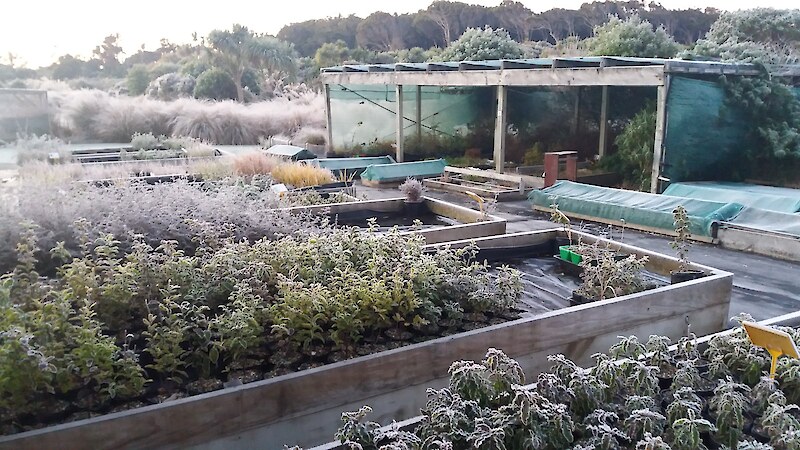
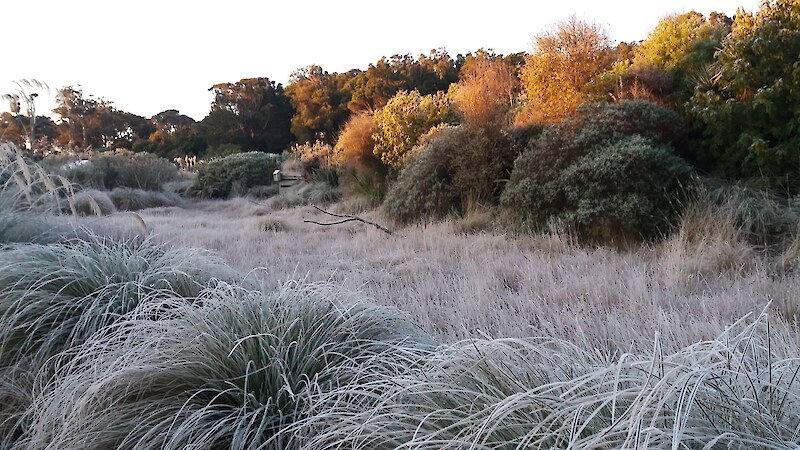
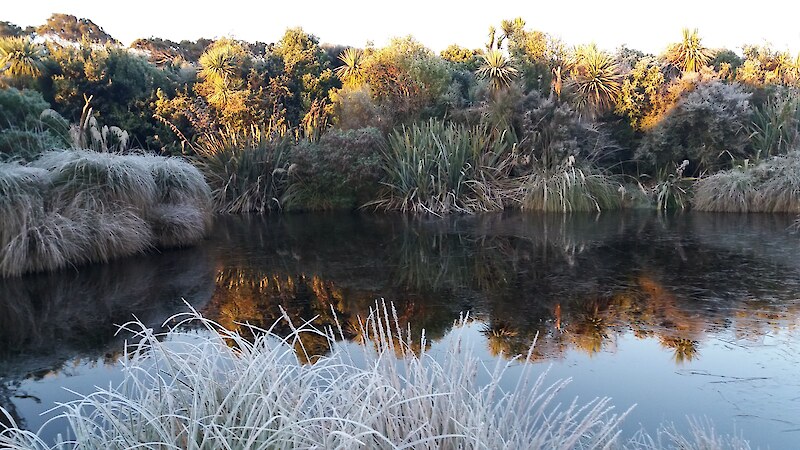
We have all missed the “community” aspect of the Nursery over recent months. So……… back by popular demand we are having an open Friday morning for volunteers on Friday 26 June 2020 – 10am-noon. That means shared food will be back on the menu and we will all share our lockdown stories and yummy food – bring something made from the garden or some food that got you through lockdown as well as recipes we can add to our lockdown cookbook. The scheduled Veggie Gardening workshop will still happen but we will all share our Veggie Garden tips and tricks and Bronwyn and Erica will have some resources that will help us all plan our vegetable gardens this season. No booking required for this one – just turn up and we will be happy to see you again. Then, after a few more workshops we will be closing for a couple of months through winter, so hope to see you on the 26th June. The photos below were from yesterday!
Chris, Linda, Bronwyn, Erica
Posted: 15 June 2020
Thanks to everyone who has booked in so far. Due to demand for cuttings workshops we will run an extra one on Friday 19 June – and the Veggie Gardening will be on 26 June. Permaculture and Forest Gardens will include Vegetables as well. We have also had some other suggestions so if you are interested in these let me know. Some we have in mind to run in spring/summer when its getting warmer! The extra topics are Renewable Energy Technologies – Solar Water Heating and Solar Electricity, Growing and pruning fruit trees, Foraging, Food preservation, Soap making, Art, Fungi
All workshops will be 10am – noon and the schedule will be as follows and bookings are required email Chris at : [Enable JavaScript to view protected content]
Friday 12 June 2020 – Native Plant Cuttings Workshop - Linda
Friday 19 June 2020 – Native Plant Cuttings Workshop - Linda
Friday 26 June 2020 – Vegetable Gardening in Southland – Bronwyn and Erica
Friday 3 July 2020 – Principles of Permaculture and Forest Gardens – Geoff
Friday 10 July 2020 – Setting up a Community Nursery - Chris
Posted: 8 June 2020
We will be operating the Community Nursery on Fridays a bit differently from 1 June 2020.
Instead of volunteer mornings we will be going to workshops where you will need to pre-book. This change has been brought upon both by Covid distancing requirements and the season (we are going into winter and nursery activities decrease).
All workshops will be 10am – noon and the schedule at present will be as follows
Friday 5 June 2020 – Native Plant Cuttings Workshop - Linda
Friday 12 June 2020 – Native Plant Cuttings Workshop - Linda
Friday 19 June 2020 – Vegetable Gardening in Southland – Bronwyn and Erika
Friday 26 June 2020 – Vegetable Gardening in Southland – Bronwyn and Erica
Friday 3 July 2020 – Principles of Permaculture and Forest Gardens – Geoff
Friday 10 July 2020 – Setting up a Community Nursery - Chris
The workshops will be by booking only (email [Enable JavaScript to view protected content]) – first come first served (sorry, no just turning up!) and depending on responses, the topics and dates could change. I am also planning fruit pruning workshops etc but if you have something you’d like us to run let me know. I will keep you updated via the website news and events as well as emails but my post lockdown promise to myself is spending more time outside and less time on the computer so apologies in advance if I drop the ball on this one. I don’t have emails coming to my phone so please don’t expect an immediate response to short notice emails.
I am also open to individual volunteers coming to help out on a day other than Friday, let me know if you are interested in that, but again it will need to be notified to me in advance.
Chris
Posted: 2 June 2020
We are missing you guys, but we are still closed on Fridays!! However, under Covid-19 directions the Nursery will be open on Friday mornings soon, but running a bit differently for volunteers for the foreseeable future.
We thought the best way for us to continue at the moment (with social distancing, gathering numbers, time restrictions, hygiene, and tracing rules, not to mention the non-shared morning teas!) would be for a pre-booking system for Fridays.
Realistically we can only have 4 people in the sheds potting up and as the potting requirement is lessening as we go into winter we aim to run a series of workshops on Fridays for 6 people interspersed with “work days” with specific tasks assigned – these tasks will be weather dependent so will probably be put on the website News and Events on Mondays for the following Friday (and trust the weather forecast is good enough for planning tasks) and you will need to register your interest for the Friday by email. Unfortunately, you can’t just turn up on a Friday anymore.
The type of workshops will include plant propagation – seeds and cuttings, beginners guide to vegetable gardening in Southland, permaculture for beginners, foraging or using garden produce, pruning of fruit trees and bushes etc as well as the usual nursery tasks such as weeding, potting up, moving native plants around and tidying the nursery.
Other workshops could be how to make sourdough, kefir, kombucha, yoghurt (without actually making them!) or any other things you can think of that people may be interested in – they’d be 2 hour sessions 10am-noon.
Any other ideas welcome and if you’d be interested in particular workshops let me know in advance and that will help with our planning.
There could also be other opportunities to help as individuals on other days, but that will need to be pre-booked too.
If you want to wear a mask or gloves please bring your own, we will have hand sanitiser and hand washing facilities on – site.
Keep safe and any questions please ask.
Chris
Posted: 14 May 2020
A few people have been asking how to prepare seed for sowing and it’s an operation that mainly goes on behind closed doors. There are a few steps that lead to the sowing and the link to our seed page doesn’t go into too much detail https://www.southlandcommunitynursery.org.nz/restoring-your-patch/get-growing/seeds/
So, I thought I’d explain the detail in relation to a specific species – patē or seven finger (Shefflera digitata). Patē is a common tree species often found under the canopy of native forest in Otatara and Southland, or on the edges of forest. The technique for cleaning the seed is the same for all the fruit covered seeds like Coprosma, cabbage tree etc and it helps to separate the often tiny seeds inside the fruity cover. That fruity cover (often bright colours) is to attract birds to eat the seeds, which are then distributed (with their own fertiliser) throughout the forest and beyond. It’s the natural way for such seeds to get distributed far and wide. Loss of birds means lessening of the ability of plants to distribute their seeds, so birds and plants need each-other. Photographs below show the cleaning process.
After collecting the ripe patē seeds (generally the seeds turn from hard and green to fleshy, soft and coloured – in the case of patē white and purple) they are removed from the stalks. Then the seeds are ground in a sieve under running water. If you squash a single fruit (like patē or cabbage tree) you often find it contains many more than one seed (a Coprosma fruit always contains two white seeds).
After separating the tiny seeds run water into the seeds, let them settle to the bottom and pour off the water, the seeds stay at the bottom and the fruity residue floats off. Then tip the seeds onto kitchen towel and leave to dry and separate. Rub them off the paper towel into a container and sow onto the surface of seed tray containing potting or seed raising mix and cover with more mix or pea gravel (link previous article). You will see that from just one stalk of pate fruit we get hundreds of seeds (and hopefully seedlings) and hopefully many seedlings and eventually plants.
While I have been sowing seeds, Linda has been starting the cuttings. Like seed preparation it is a time-consuming process. The cuttings in the photos took over 4 hours to prepare, but it is a good skill to have – a quick guide at the following link https://www.southlandcommunitynursery.org.nz/restoring-your-patch/get-growing/cuttings/
Happy propagating!
Chris
Posted: 11 May 2020