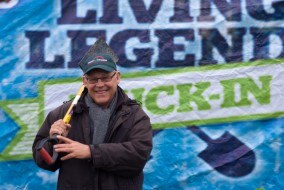
We are delighted to announce that “Bugman” Ruud Kleinpaste has recently joined the Community Nursery Trust as our Patron.
Ruud visited the nursery whilst attending the “Living Legends” event at Bushy Point in September 2011 and joined us to add his support to an exciting new venture that we are pursuing - a proposal to build an Education Centre adjoining the Community Nursery.
Watch this space!!
Posted: 6 February 2012
The Southland Community Nursery won the “plant nursery award” at the recent New Zealand Plant Conservation Network Awards.
NZPCN Newsletter - Trilepidia
“The awards recognise special people, and projects that have captured the interest of local communities. These individuals and groups are the leading guardians of our country’s native plants and ecosystems. They include Wanganui Intermediate School, a Southland plant nursery, a North Island city council, an island eco-sanctuary in the Hauraki Gulf, and dedicated plant enthusiasts and conservationists.
These awards are indicative of the huge effort that is being exerted all around the country by a large number of dedicated individuals, communities, and organisations to protect and enhance our unique native plants.
Plant Nursery
Southland Community Nursery, run by Chris and Brian Rance, won the ‘Plant Nursery Involved in Plant Conservation’ award for its unique approach to the growth, preservation and education of the public about native plant species. The nursery was nominated by three separate individuals. The nursery propagates local seeds and runs workshops through community groups and schools to teach volunteers the skills required to grow their own plants for restoration projects. The native plants grown at the nursery are planted all over Southland, on Council, Crown and privately owned property. The nursery is an invaluable resource for the province, with many schools using the nursery to teach children how to grow and care for native plants. There is a constant presence of long-time volunteers with a comprehensive knowledge base and new volunteers are regularly welcomed.
The nursery property features extensive restoration plantings linking mature kahikatea forest with shrubland and wetland. In addition, the nursery has established a Southland threatened plants garden to conserve and educate the public about threatened species and has developed a website providing information on restoration in Southland. This nursery is truly inspirational, having inspired many individuals, including the establishment of a similar Community Nursery in Bluff.”
www.nzpcn.org.nz
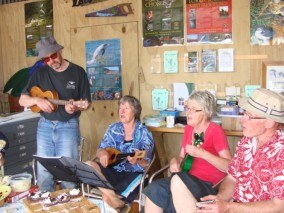
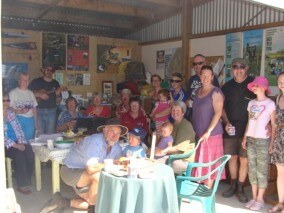
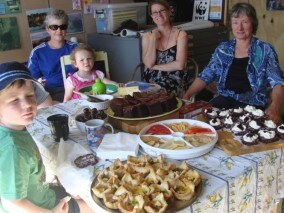
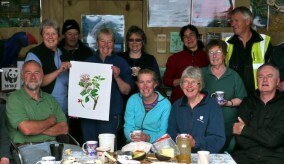
The Christmas break up at the nursery was well attended with the usual fantastic morning smoko and a special treat - ukulele carols with Geoff, Sherry, Maggie and Jeff.
Posted: 24 December 2011
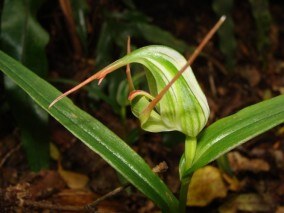
Native orchids are a very diverse group of plants and they can be seen at their best at this time of year. A few different orchids are illustrated here and if you are out and about in the bush or wetlands this holiday period keep your eyes peeled. In bush areas the most commonly seen orchid is the green hooded orchid (Pterostylis banksii) - this photo was taken at Mores Reserve Riverton on 23 December 2011.
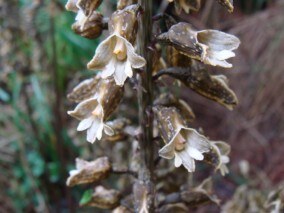
Also flowering now are the black orchids (Gastrodia cunninghamii), look out for what appears to be a dead stick!! They are parasitic orchids that grow on the roots of other plants and if you take a close look their flowers are quite distinctive, there are a lot of them up the stem and they are scented.
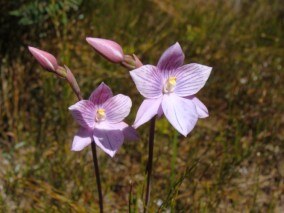
Some of the most spectacular orchids are found in wetlands. One such species is the sun orchid (Thelymitra vernosa). Its striking blue or purple colour is very obvious and this species can be seen at Waituna lagoon from the new loop track off Waghorn Road.
Posted: 24 December 2011
In December its all go in the nursery and in nature – everything seems to be flowering profusely and nothing more so than cabbage trees! Love them or hate them (and I love them) there is no denying the beautiful scent that emanates from the flowers at this time of year. The main species in Southland is Cordyline australis the common cabbage tree but another species that makes it into Fiordland is Cordyline banksii and we have two in our garden flowering profusely and very strongly scented.
As well as their scented flowers their dramatic form looks great all year round and especially in the strong winds that we get in springtime. This photograph was taken in late November as the weather fluctuates between cold southwesterly gales and hot summer temperatures of twenty plus degrees. If you have a problem of cabbage tree leaves snagging the lawnmower the solution is simple – get rid of your lawn!
Another addition to the family in December was “fluffy” - named by Tesca Edwards. He had fallen out of the nest and was being rehabilitated.
Posted: 4 December 2011
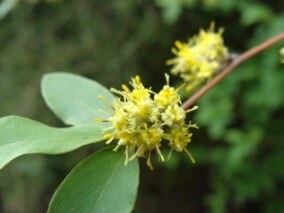
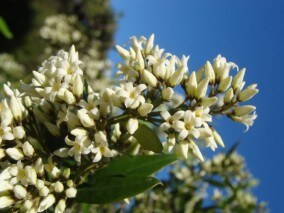
Scented natives - Olearia fragrantissima and native jasmine are in full flower at the nursery in November. A nationally threatened tree, Olearia fragrantissima lives up to its name with peach/apricot scented yellow flowers - its a must for every Southland Garden.
Native climbers such as jasmine, clematis and lawyer all flower very early and need to get to the canopy to flower. That’s why regenerating areas are so good for native birds as flowers are more prolific at low levels - they dont have to reach up to the treetops to flower. Native wineberry is flowering more vigorously than I have ever seen before at Otatara and Sandy Point - is that a good or a bad sign? Often plants under stress flower massively, or maybe its just a sign of a mild winter or a good summer to come!
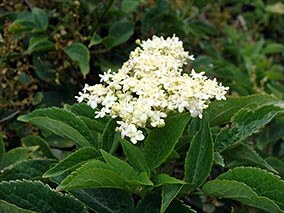
The exotic elderberry is also flowering - now is the time to collect the flowers to make elderflower cordial and champagne - its a good excuse to do weed control of this invasive species.
Posted: 10 November 2011