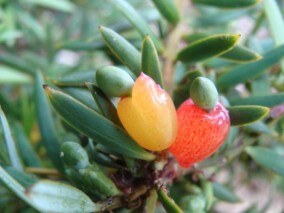
Halls totara is a common sight in Otatara. However the totara forest on sand dunes at Otatara are nationally significant being a rare forest type now in New Zealand. Totara are fruiting very well at the moment - Totara is a “podocarp” (like rimu and kahikatea), meaning it has a seed with a foot - the seed is attached to the fruit, not inside it. The seed itself stays green unlike most seeds that change colour when ripe.
The best places to see totara forest is Kilmock Bush and other Sandy Point forests. It has a distinctively bare understory, grows on sandy dry soils and often develops interesting twisted multi stemmed trunk shapes. Totara is one of the few large trees able to be planted in the early stages of a restoration project, it survives wind and full sun but dislikes wet ground.
Posted: 5 May 2011
Cuttings Training Days in June - free propagation training sessions 10 June 2011 and 17 June 2011 - 10am to noon. Learn how to propagate native plants and grow the plants that you want for your own project or contribute to nursery plants for next season. Book by sending an email
Posted: 5 May 2011
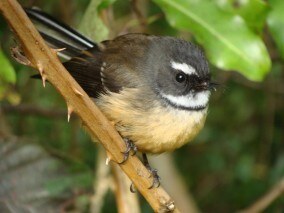
Fantails are very common at this time of the year, having produced young and chasing insects during the last autumn weather before winter. Winter has a devastating effect on small birds like the fantail but during the season they breed prolifically and are a common companion in the garden. You can attract small insect eating birds to your garden by planting a range of tangly shrubs like Coprosma that provide nesting habitat and food - insects.
It is seed collecting time so dont delay - come to the nursery on Friday morning for a hands on seed collecting session and look at the seed section of this website for additional information
Posted: 2 April 2011
Plant of the month for March is a very common Southland native plant. Mingimingi is a tangly coprosma shrub - often used in restoration because of its tolerance of wet soils, wind, full sun and frost. It is also very good habitat for nesting birds, insects, lizards and a very good food source at this time of year - with abundant berries - usually coloured white to dark blue. Coprosma species have male and female flowers on separate plants so make sure you plant at least three to have a better chance of getting a female with brilliant fruit! March is one of the main seed collecting months - if you miss out then you could be waiting until next year to start propagating your own native plants. However, we are busily collecting seed here so if you are interested in learning about it come along on a Friday morning.
Posted: 2 March 2011
Shore gentian - Gentianella saxosa, is a conspicuous sight in January and February on Southlands shores. The ground hugging herb is in the salt wind zone growing close to the sea amongst other coastal turf plants. One of the best places to see this plant is Waipapa Point, near the lighthouse on the Catlins Coast.
Posted: 6 February 2011