
The shrubland plants described below are similar to those planted to restore a forest as this type of shrubland is actually a successional forest stage. The process of re-colonising a bare patch of land is called ‘succession’. It takes many years for the process of succession to transform an area from bare land to mature forest
During the succession process each group of plants makes the site suitable for the next group of plants, but no longer suitable for themselves. These plants are called ‘foundation’, ‘colonising’ or ‘nursery’ plants. They are eventually replaced until mature canopy trees establish. Find out more about colonising species and How Forests Work.
Native foundation species are tough and though every site is different, our experience shows that by using a small range of Southland species you will have most success.
 Factsheets

We have developed a series of factsheets that provide more detail for each species.
Download the factsheets to find out:
- Conditions tolerance levels (sun, shade, wet, dry, frost, wind)
- Where to plant - suitable habitats (forest, shrubland, wetland, riparian)
- Pollination (by birds, insects, or wind)
- Seed dispersal (by wind/gravity, or birds)
See our key to factsheet symbols.
Recommended plants
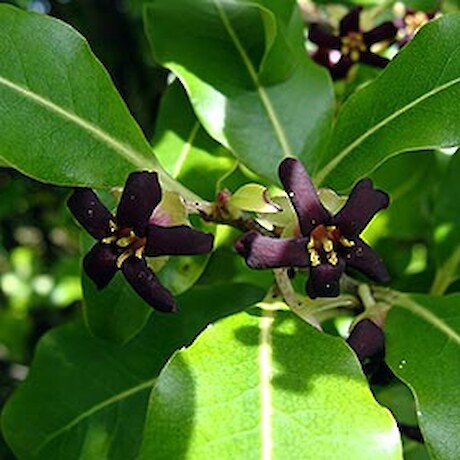
Black Mapou / Kōhūhū (Pittosporum tenuifolium)
- Height: Up to 10 metres.
- Form: Shrub or small slender tree.
- Bark: Dark grey-black, smooth.
- Leaves: Light green, oblong with wavy edges with white mid vein.
- Flowers: Small, dark red flowers that occur singly and are sweet scented at night.
- Fruit: Capsules with black sticky seeds.
Download the factsheet to find out more.
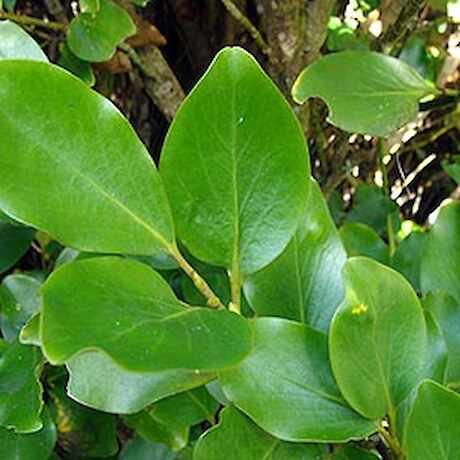
Broadleaf / Kāpuka (Griselinia littoralis)
- Height: Up to 15 metres.
- Form: Small tree.
- Bark: Grey, furrowed.
- Leaves: Thick, shiny, yellow-green with rounded apex.
- Flowers: Small, green, in clusters, male and female on separate plants.
- Fruit: Blue/black berries.
Download the factsheet to find out more.
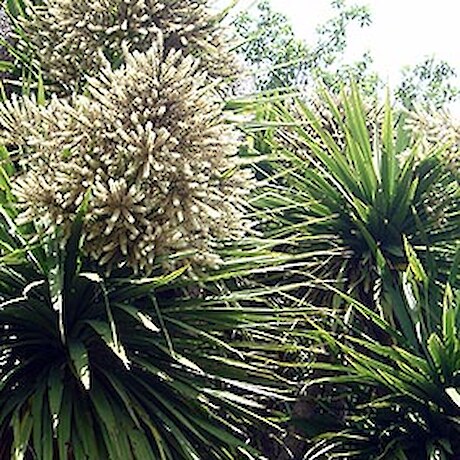
Cabbage Tree / Tī Kōuka (Cordyline australis)
- Height: Up to 20 metres.
- Form: Distinctive palm-like tree, unbranched trunk in young tree and branching in the upper half of older trees.
- Bark: Grey, thick, corky and rough.
- Leaves: Mass of long leaves (up to 1m) at the end of stems.
- Flowers: Small, sweet scented, white, in panicles up to 1m long.
- Fruit: Whitish berries becoming dry.
Download the factsheet to find out more.
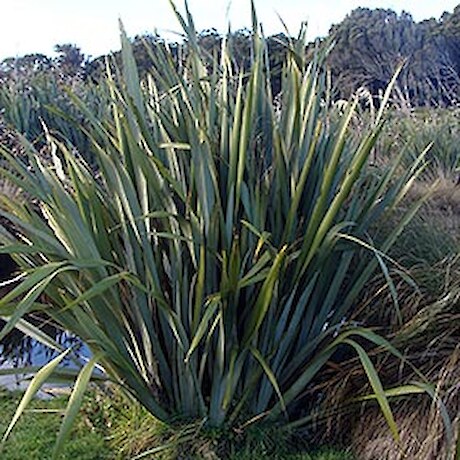
Flax / Harakeke (Phormium tenax)
- Height: 1-3 metres.
- Form: Robust, fan-like clumps of leaves.
- Leaves: Long and fibrous.
- Flowers: Stalk, 3-5m tall, reddish or orange-yellow flowers.
- Fruit: Dark seed capsule with glossy black seeds – upright pod.
Download the factsheet to find out more.

Karamū / Shining Karamū (Coprosma lucida)
- Height: Up to 5 metres.
- Form: Tall shrub with green stems.
- Bark: Inner bark layer is yellow.
- Leaves: Oval shape, with smooth shiny surface. Opposite on stem in pairs. Pale main vein.
- Flowers: Very small and inconspicuous. Green or white. Wind pollinated. Separate male and female plants.
- Fruit: Orange-red in clusters.
Download the factsheet to find out more.
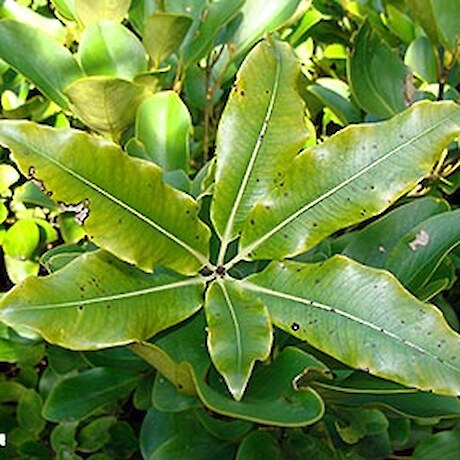
Lemonwood / Tarata (Pittosporum eugenioides)
- Height: Up to 12 metres.
- Form: Small tree – juvenile compact and mature tree more open.
- Bark: Grey-brown, smooth in the juvenile and rough in the adult.
- Leaves: Light green glossy, wavy, with pale midvein, lemony smell when crushed.
- Flowers: Sweet-scented yellow to cream flowers, in large clusters.
- Fruit: Capsules with black sticky seeds when mature.
Download the factsheet to find out more.
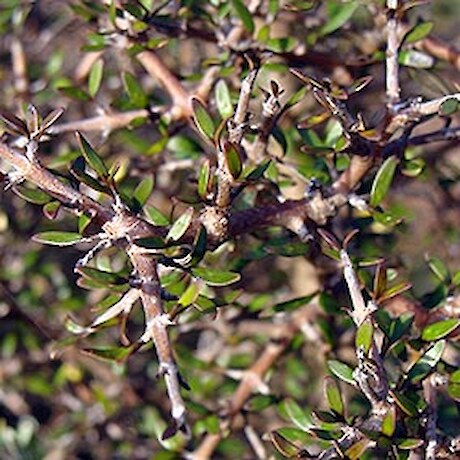
Mingimingi (Coprosma propinqua)
- Height: Up to 5 metres.
- Form: Bushy tangled dark shrub.
- Bark: Grey.
- Leaves: Small, dark green, thick, paler underneath.
- Flowers: Solitary or in clusters, male and female on separate plants.
- Fruit: Translucent blue, flecked with darker blue.
Download the factsheet to find out more.
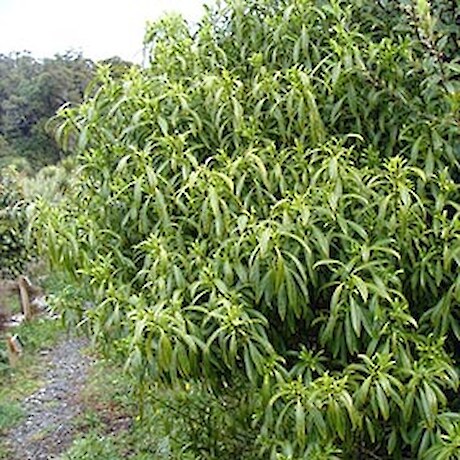
Narrow-leaved Māhoe / Māhoe-wao (Melicytus lanceolatus)
- Height: Up to 5 metres.
- Form: Shrub or small bushy tree.
- Bark: Grey and spotty.
- Leaves: Bright green, long, serrated, lance-like.
- Flowers: Small, yellow or purplish.
- Fruit: Dark purple berries.
Download the factsheet to find out more.
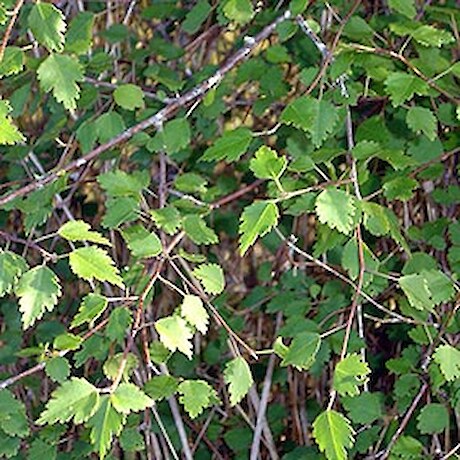
Ribbonwood / Mānatu (Plagianthus regius)
- Height: Up to 17 metres.
- Form: Deciduous tree with interlaced branched juvenile form.
- Bark: Clean trunks with lacy bark.
- Leaves: Pale green, toothed, soft, deciduous.
- Flowers: Yellowish-green, tiny, in clusters, male and female on separate plants.
- Fruit: Downy seed capsules.
Download the factsheet to find out more.
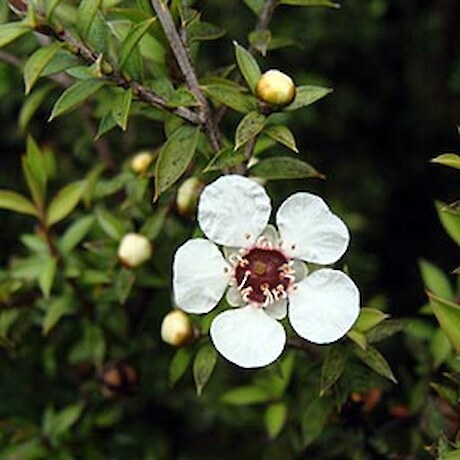
Tea Tree / Mānuka (Leptospermum scoparium)
- Height: Up to 8 metres.
- Form: Large shrub or small tree.
- Bark: Stringy grey-brown bark, peels off in long strips.
- Leaves: Small, prickly to touch.
- Flowers: Masses of white flowers.
- Fruit: Characteristic woody seed capsules.
Download the factsheet to find out more.

Tier Coprosma (Coprosma dumosa)
- Height: Up to 2 metres.
- Form: Bushy shrub with ‘layered’ branches
- Leaves: Small, elliptical, in clusters of pairs.
- Flowers: Very small and inconspicuous. Separate male and female plants.
- Fruit: Round, usually transparent, but can be pale pink or bright red.
Download the factsheet to find out more.
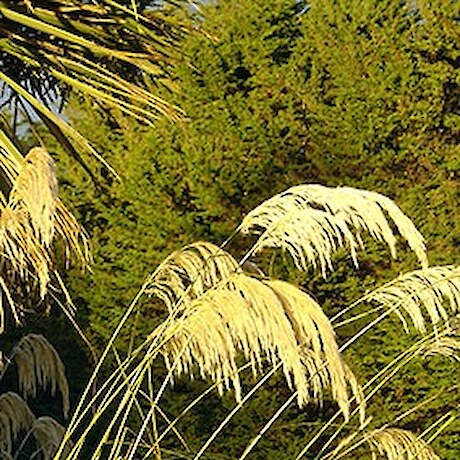
Toetoe (Austroderia richardii)
- Height: 1 metre or more tall.
- Form: Very robust tussock, coarse.
- Leaves: Long, grass-like, green, rough to touch.
- Flowers: Heads reach up to 2m tall, white and feathery.
Download the factsheet to find out more.
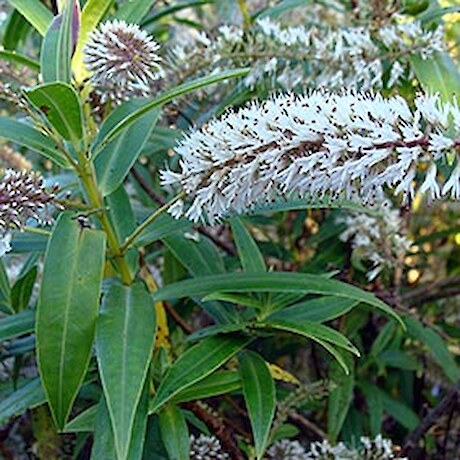
Willow-leaved Hebe / Koromiko (Veronica salicifolia)
- Height: Up to 5 metres.
- Form: Bright green leafy shrub.
- Leaves: Bright green, long, thin, willow-like.
- Flowers: White, clustered in spikes.
- Fruit: Small dry brown capsules containing tiny seeds.
Download the factsheet to find out more.