
St John’s Girls School 31 October 2018
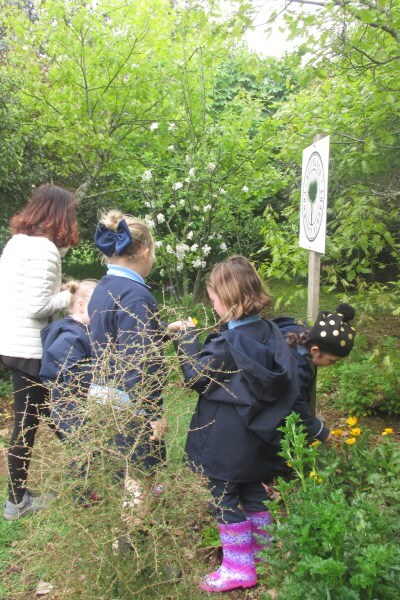
Fifty-eight students from St Johns Girls School, two teachers and ten parents came to the Community Nursery on Tuesday 30th October 2018.
The brief from the school was “the food that we eat” – so we devised three different activities to divide the large group into three manageable activity groups. The activities were
- Foraging for wild food (with Chris and Maggie)
- Maori traditional uses for native plants (with Bronwyn)
- Growing vegetables, herbs and companion planting (with Lesley and Lidia)
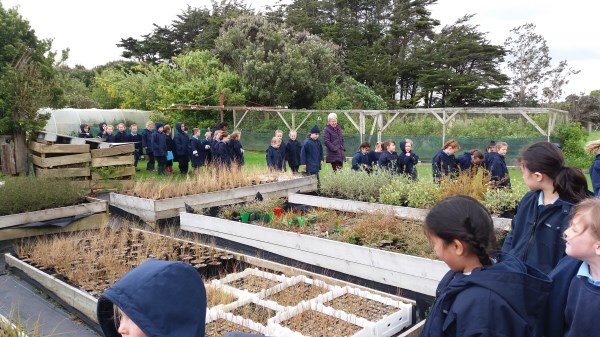
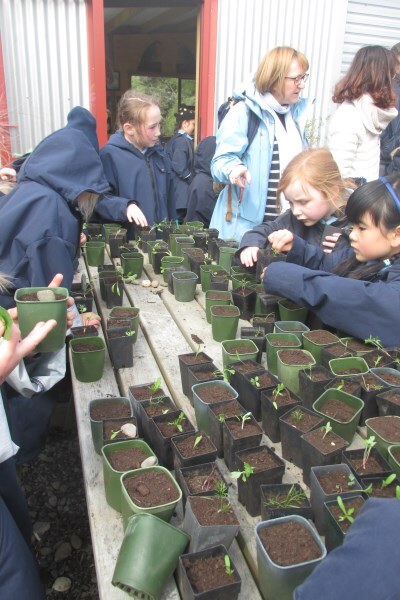
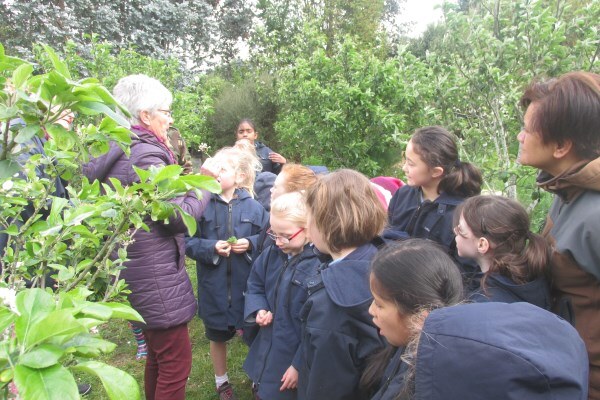
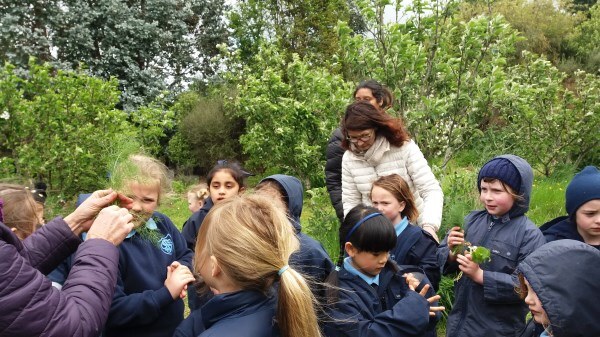
Each group of children did each of the activities led by our nursery volunteers. Lesley and Lidia led groups around the vegetable garden seeing which vegetables grow well in Southland. They also went into the tunnelhouse where we can grow tomatoes, courgettes and chilly peppers and basil as they need more heat than a Southland summer! Another activity was potting up seedlings of the herb lovage and companion plant French marigold and sowing runner bean seeds – all to take back to school to grow. Maggie and Chris went into the orchard to do some foraging – where some children (with prior permission) tasted some of the plants. The key to foraging is never to eat something you don’t know so the catchphrase “If in doubt, leave it out” was used to reinforce that message. Some of the foraged plants included miner’s lettuce, marigold flowers, rocket flowers and a range of other herbs found growing wild. The nut trees, fruit trees and berry bushes were also talked about as we went past.
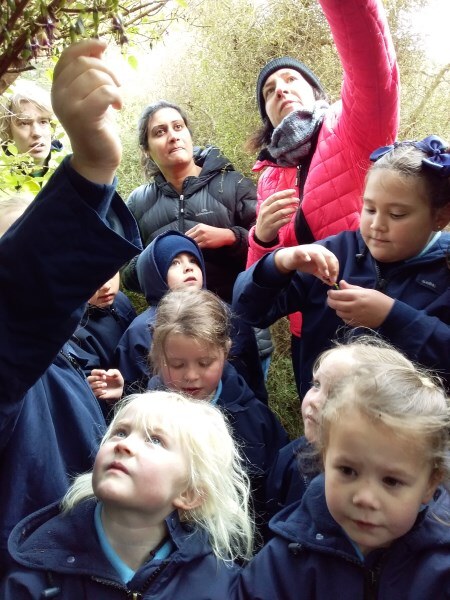
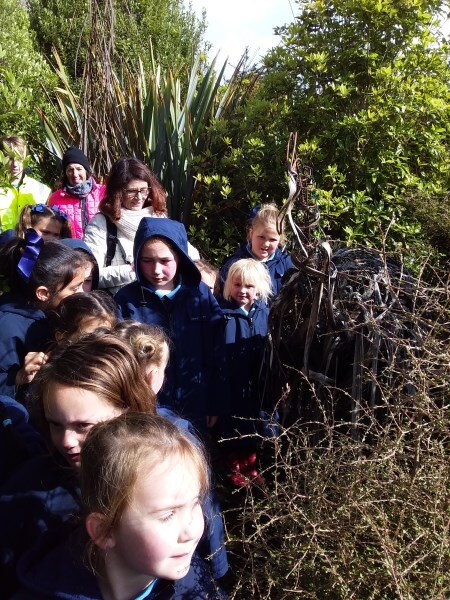
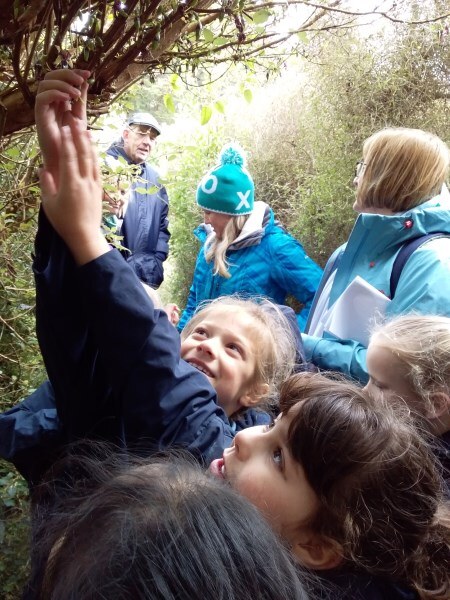
Bronwyn’s group walked around the pond track and talked about the importance of identifying anything you eat from the bush - if you don’t know what it is, don’t eat it. We did identify and taste some NZ natives :
- sucking the nectar out of the kotukutuku (tree fuchsia) and talking about the berries. We identified this through its flower, bark and distinctive two coloured leaf.
- Horopito or pepper tree, slowly licking then chewing to get hot tips of tongues and lips!
- makomako (or wineberry) looking at the distinctive shark toothed edged leaf and how the berries can be eaten
- the tangly divaricating mingimingi tree and a picture of their little blue berries that can be eaten
- the cabbage tree and how the shoots can be eaten.
We also talked about how to treat fungi in the bush and that there are a number of poisonous berries and parts of plants that we should not eat.
It was a pleasure having such an enthusiastic group at the Nursery.
Chris and Bronwyn
Posted: 8 November 2018