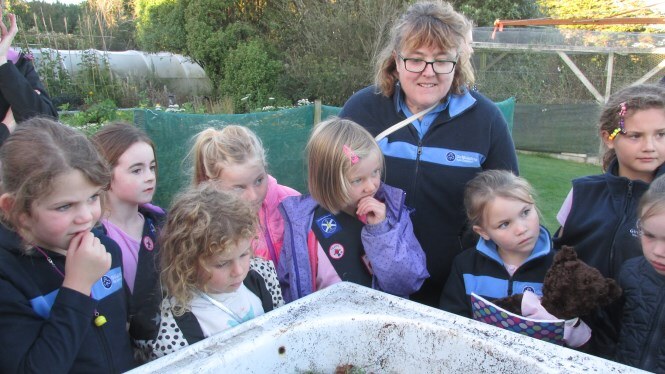
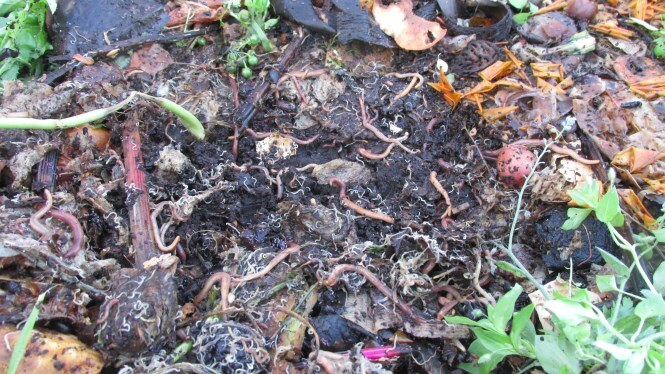
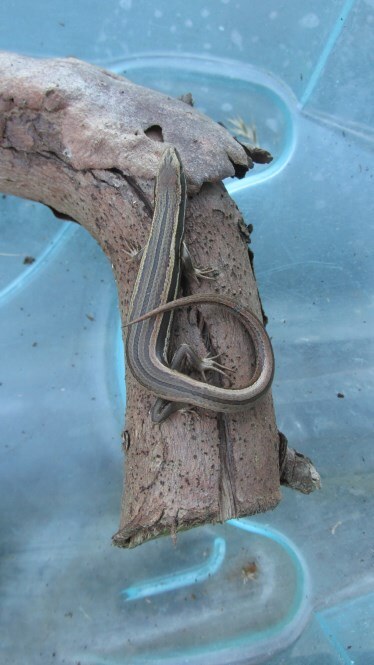
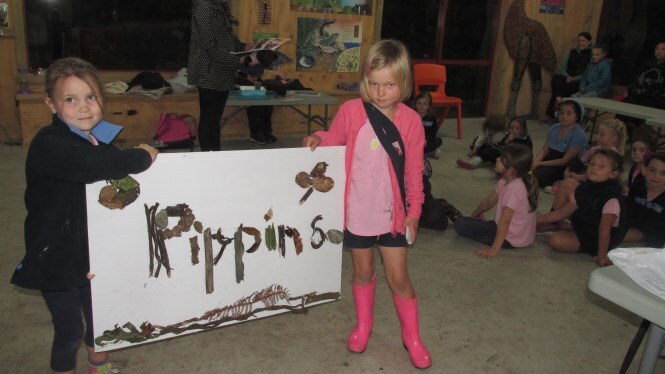
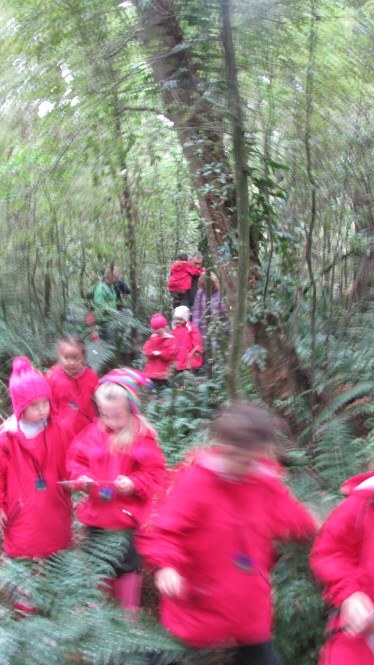
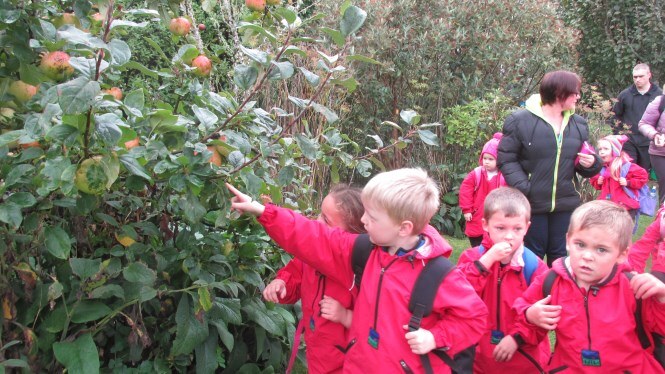
On Monday 4th April 14 Glenrose Pippins arrived for their follow-up visit to the Community Nursery. They had a number of activities planned – the first being a study of the Rances wormfarm. Made out of an old bathtub Chris pulled off the cover to reveal hundreds if not thousands of tiger worms (they are the sort recommended for compost bins). The pippins were well informed about the worm’s ability to recycle your food waste and turn it into “worm wee” which was good for your veggie plants. They also knew that worms don’t like oranges and lemons or onions in their compost bins! Generally, worms in the soil are good at aerating the soil, improving drainage and oxygen to plant roots, mixing minerals and humus and increasing nutrients to plants and increasing soil fertility. Did you know – there are over 200 species of native earthworm in New Zealand, but the one you see most often in your gardens is an introduced species! Another creature Chris had discovered that day in the nursery was a skink and the pippins got to observe it close-up before it was released back into the wild.
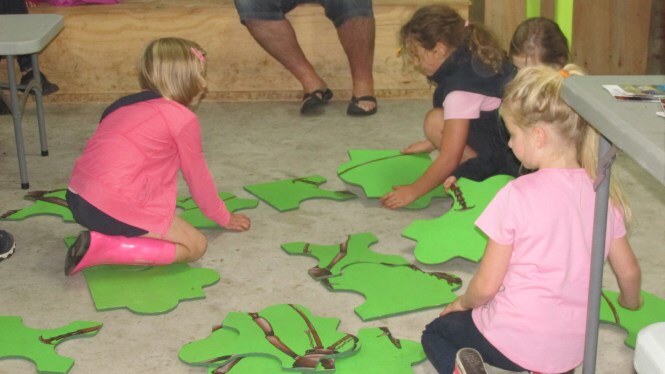
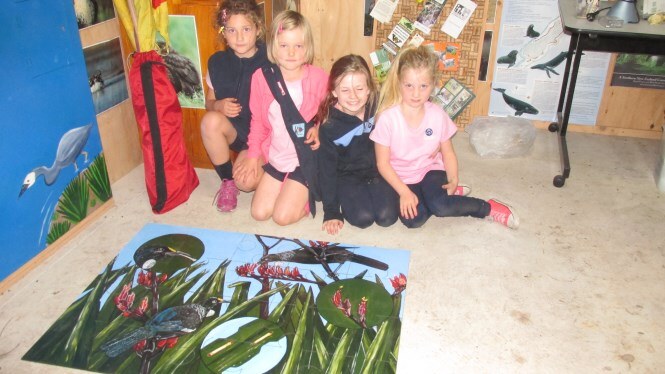
The bug theme was continued in the Education Centre where giant jigsaws of a nursery spider, weta and butterfly were made and then the new challenging tui and flax jigsaw. Other activities were potting up some mingimingi, feeding the ducks and then presenting Chris with a mural made of natural materials collected round the pond on their last visit.
Posted: 12 April 2016
On Tuesday 5th April, ten children from Waverley Park Kindergarten visited the property with Myross Bush Nature Discovery teacher Wendy. The children were part of the regular visits to Kindy South bush property at Myross Bush and for today’s visit they were excited to be discovering a new forest. Feeding the ducks was the first activity before venturing into the deepest darkest part of the forest. The theme of nature discovery is very much that children are left to use their own senses – looking, hearing, touching, smelling to make their own nature discoveries and the children found all sorts of interesting patterns, colour and species such as an adult nursery spider under the web, lots of fungi (“which you can’t eat because you don’t know if they are poisonous” I was told!). At one place we were all silent for 2 minutes enabling us to hear bellbirds and tui, while a fantail followed us most of the way round. What was apparent to me was the confidence these children had in the bush – enabling them to see so much more of what was going on around them and ask lots of quaestions. It is a credit to Kindergarten South that they are encouraging “nature discovery” as it has benefits for children in so many ways.
Posted: 12 April 2016
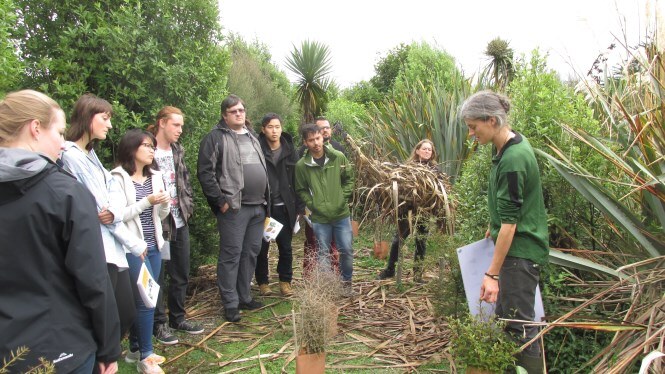
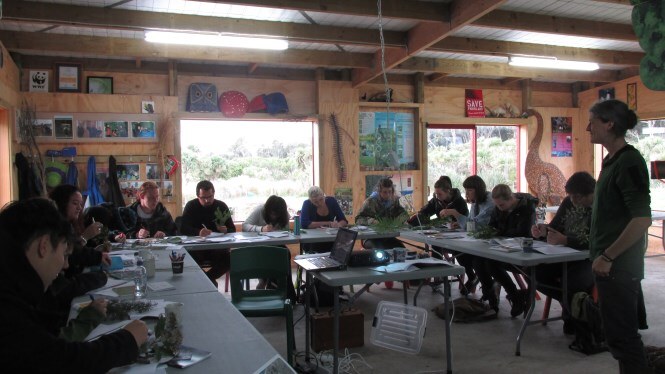
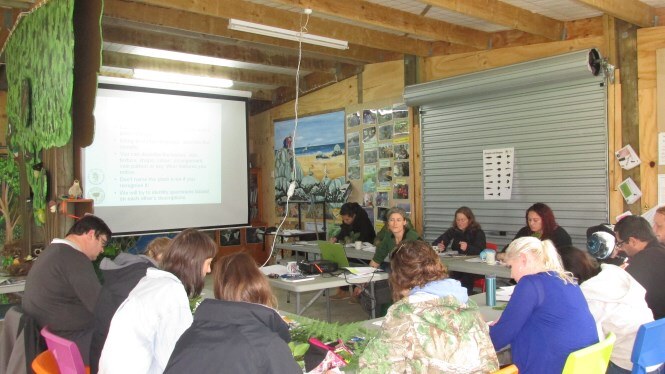
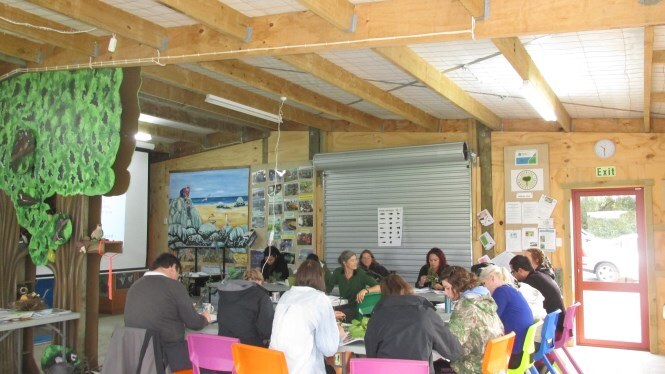
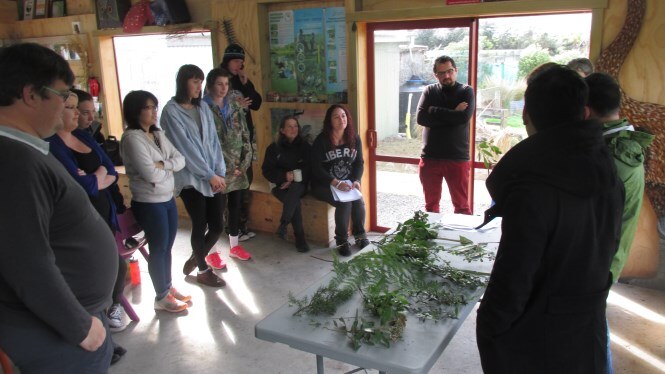
On Monday 11 April 2016 Ross Ramsay brought 14 first year SIT Environmental Management students to do the one day course – Know Your Southland Natives - An introduction to botany and Southland native plants with Jesse Bythell and Chris Rance. The course is based on the New Zealand Plant Conservation Network (NZPCN) two day course but tailored for Southland species. All seemed to enjoy the mix of tutoring, exercises and outside time and very favourable feedback was received on all aspects. Thanks Ross for promoting this course to students in their first year and to Jesse for her endless enthusiasm and knowledge.
Posted: 12 April 2016
Free Teachers workshop with Ruud “the Bugman” Kleinpaste – 9.30am-11.30am Sunday 15 May 2016
KCC Bug Hunting with Ruud – 1-3pm Sunday 15 May 2016(KCC members only)
Booking for both events essential as numbers are limited.
Posted: 12 April 2016
On 21 March 2016, sixty “Year 5” students came to help out at the Community Nursery in Otatara. There were three activities – planting native plants, potting seedlings and collecting native seeds. All are jobs needing to be done at this time of year. Each group did all of the activities led by Chris, Bronwyn and Lesley with teachers Jena and Gillian and some willing parents lending a hand.
For planting, groups went “across the boundary” into Bushy Point to plant the edges of a ditch with 100 kohuhu, cabbage trees, Manuka, lemonwood and other hardy native species. These plants add to the 24,000 plants that have been planted in the Bushy Point project over the last 15 years.
The potting group helped to prick out manuka and kohuhu (Pittosporum tenuifolium) seedlings from seed that the Otatara Year 4 classes had sown at last year’s visit to the nursery. It was a hive of activity in the Education Centre and a total of over 500 seedlings were potted up by the three groups.
Then, on to seed collecting where a whole array of native seeds were “discovered” hiding amongst the various shrubs from mingimingi (Coprosma propinqua) berries (yellow, white and blue), black flax seeds from pods, white cabbage tree seeds, Manuka pods (not quite ready to open) and sticky black kohuhu seeds.
It was a great day and the children seemed to have fun outside and thoroughly enjoyed doing the “work” - “We had a ball, the kids were highly engaged, made lots of connections to their learning last year and really enjoyed the hands on experiences” - Gillian Donnelly Year 5 Teacher, Otatara School.
Chris
Posted: 24 March 2016