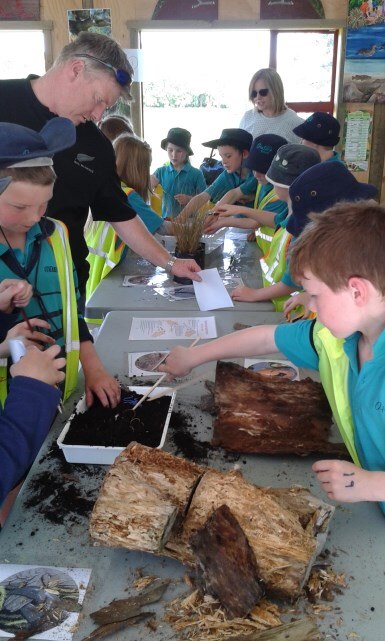
A gloomy rainy day didn’t deter Makarewa Playcentre families explore the SCN. Walking through the orchard and past the vegetable gardens highlighted the different foods that can be grown. The worm farm was really interesting with some children also seeing a black beetle and slaters. After some kai and exploration of the education centre, it was off around the track using our different senses to notice. Some trees were prickly while others were smooth. Everything was wet! Of particular interest were the pest traps, so we talked about how we want to keep our native forests free of pests like rats, stoats and possums, so that our native birds can grow and sing. The Makarewa Playcentre is going to be planting native trees around their centre so it was great to see what some of these look like. We potted up some seedlings, helping them grow big and strong. Bronwyn
Posted: 6 December 2016
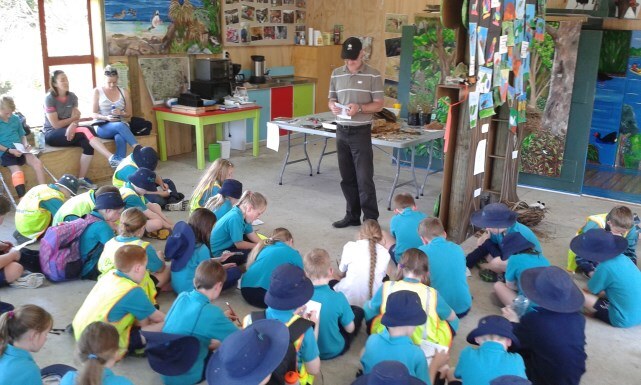
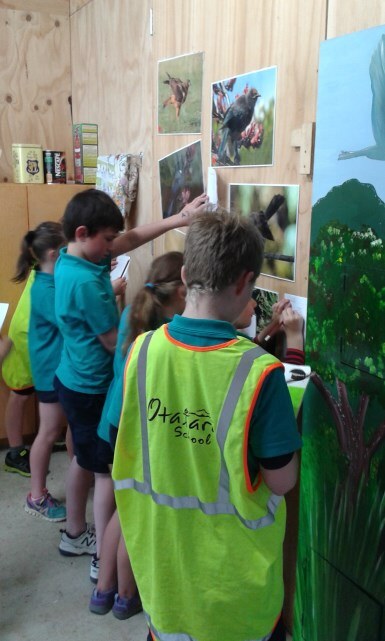
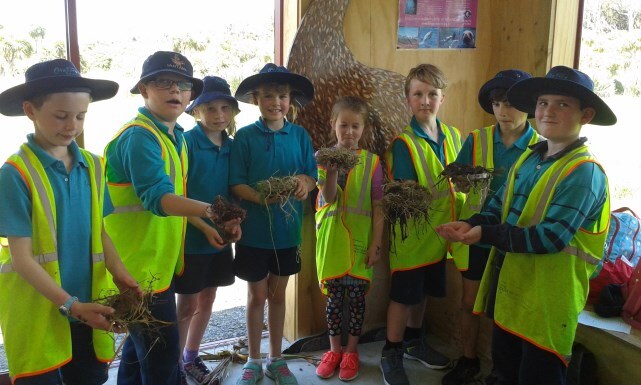
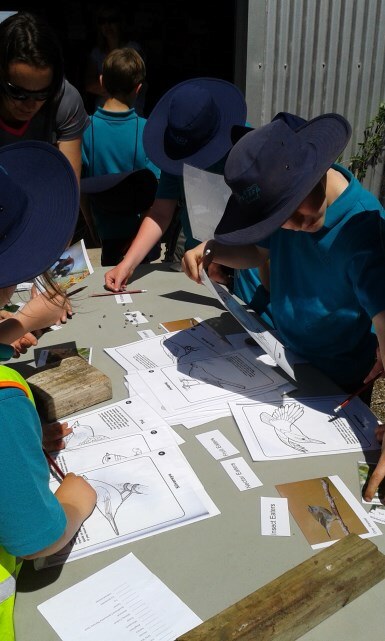
Just over 50 Year 4 students from Otatara School visited the Southland Community Nursery to continue their learning about NZ native birds and their adaptations to the environments they live in. Five activities allowed the students to discover and learn about native birds. The photo matching game showcased the NZ natives that are found here in their backyard – Otatara, Southland, and discussion highlighted the different beaks that different bird species have, and some interesting facts about the shining cuckoo! The Bird Beak activity allowed hands on (or beak on!) experimentation of how birds have adapted different beaks and how these allow them to feed in different environments for different food sources. Habitats such as the forest floor (dirt, rotting log), streams, wetlands and estuaries (water), river bed (stones), and kowhai flowers had the students thinking. They learnt that the tui have a tongue! “What do I eat?” had students grouping the birds under insect, nectar and fruit eater headings, and then discovered what plants can be planted to attract these birds to your backyard. A walk around the pond and collecting nature (as a bird would) ended in the students building an amazing array of nests. The “Who Am I?” cards were used to figure out what bird was being described and the students, parents and teachers all learnt some interesting facts about our NZ native birds. To finish off the visit their artwork was congratulated with many of these class members receiving a prize from the Southland Community Nursery and Kiwi Conservation Club bird art competition. Bronwyn
Posted: 6 December 2016
Community Nursery Christmas Breakup 16 December 2016 - bring something yummy to eat, maybe a decoration for the tree (which children can help decorate) and come and enjoy good company for the last time this year. Grab a native plant as a last minute Christmas gift!
If we dont see you, have a good Christmas and see you in the New Year.
Kind regards
Chris
Posted: 4 December 2016
Kahui Manu Homebased education Group
22 September 2016 – Messy Fun!
Lots of messy fun had at the Community Nursery this morning down by the duck pond for our last session of the term! All sorts of crazy concoctions were in the making! :) Thanks heaps to Katie for a really nice relaxing way to finish what has been a very speedy but fun term of activities! Can’t wait to see what we get up to in Term 4!! Carmen
8th September 2016 - Predators
What a fantastic session today with Mark Oster on predators! (Thanks Kiri for organising). It was so cool to see the kids so engaged and having fun whilst exploring and learning. The children did a great job of getting up to present their posters to the group on what they thought made a good predator. There were 30 of us there in total today…..including a few awesome Dads! It was also really lovely to welcome Amy and wee Levi to the group today :) Carmen
25 August 2016 – Nature Exploration
Nice relaxing morning at the Community Nursery with 23 of us out and about exploring nature together. Insects, cool spider webs and a possum skull were some of the finds of our wee nature explorers! Carmen
19 August 2016 – Flax Weaving
Was a stunning day on Friday at the Community Nursery where 12 of us (including Katie Jo’s mum
Posted: 17 November 2016
On 24 September Robyn and Robert Guyton lead an apple grafting workshop for 20 participants organised by Lesley at the Community Nursery. This workshop follows on from the pruning workshops held in July where the “scions” are pruned off the particular species of apple you want to graft from, kept in the fridge until September and then grafted onto rootstock bought by Guytons as being the best rootstock to use in Southland. The “scions” are those named species you want for fruit – eg “Monty’s Surprise”. The SCES website has an excellent section on the process of grafting see www.sces.org.nz. Lesleys report follows.
A cold rain-sodden day in September found an eclectic group of enthusiastic would-be horticulturists gathered at the Southland Community Nursery. We’d come to learn the art and science of grafting heritage apple trees - a follow on workshop from the apple pruning some of us had done in July.
Robyn Guyton told the story of the apple and explained why grafting is the only effective way to duplicate the genetic code for a particular variety of apple. She talked about the different heritage apples that can be traced back to the earliest trees brought to and planted in Southland. And she shared how they have been systematically collecting their extensive range of heritage apples through the process we’d be learning.
Rob Guyton took over then with an extremely informative demonstration of the grafting process. He explained not only what to do but why it was important to do it that way. We were invited to choose from the many varieties the Guytons had brought with them and then we were let loose to try our hand at doing it ourselves.
Some of us were a little keener than others and wanted to keep on practicing. At $5.00 a tree, grafted and potted up, it was an excellent way to hone one’s skills and establish a foundation to a heritage orchard.
I came away with six grafted trees, each a different variety. Some eight weeks later they are all sprouting healthy leaves and branches - so I guess the grafts were successful. Lesley
Posted: 17 November 2016