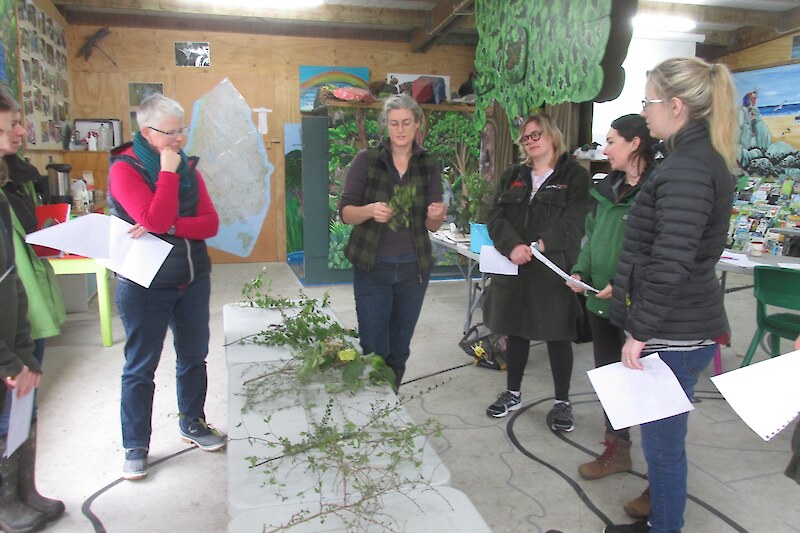
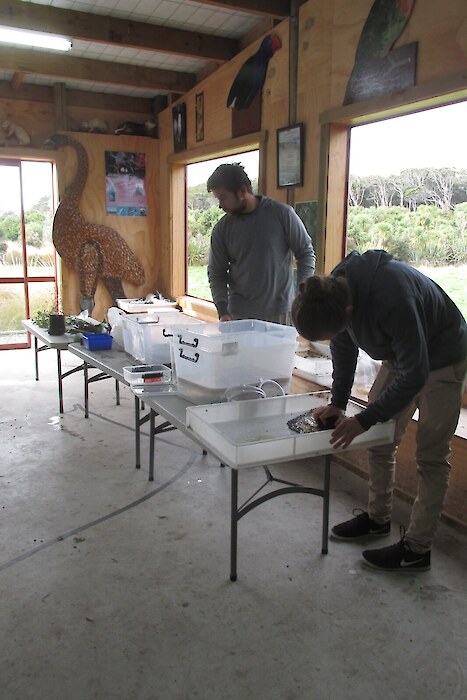
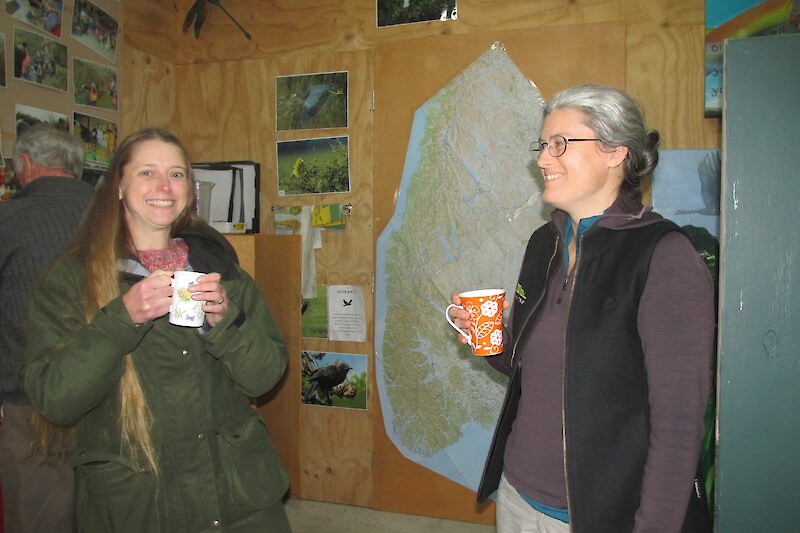
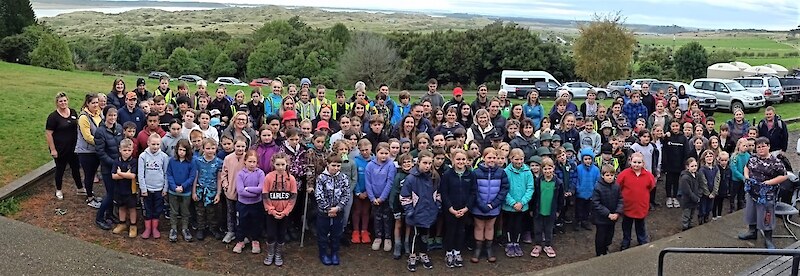
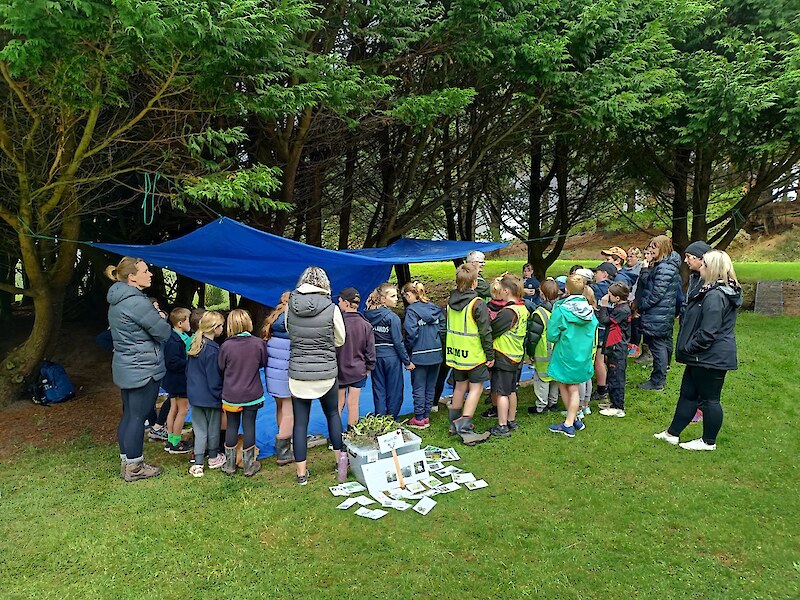
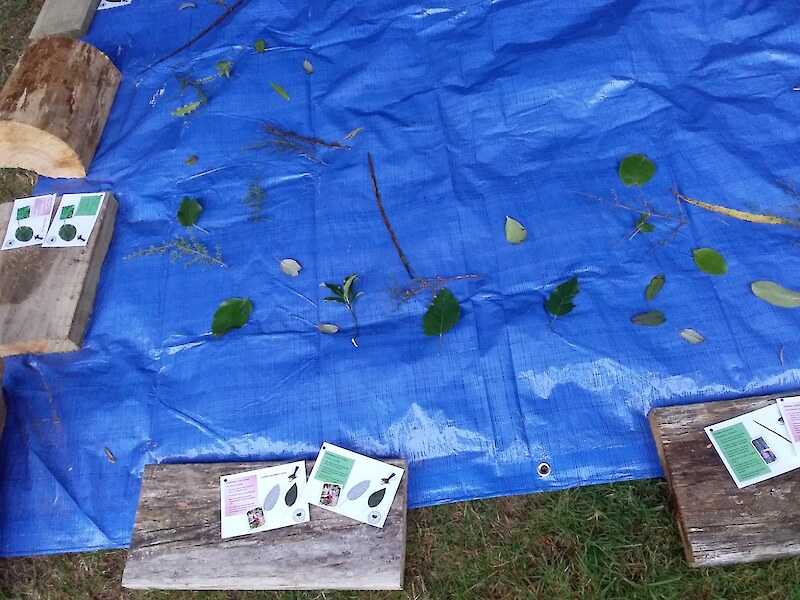
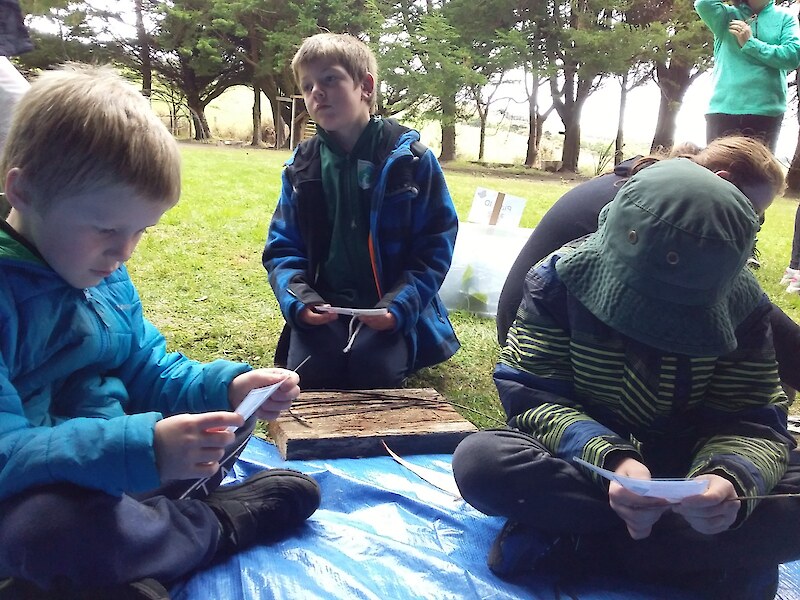
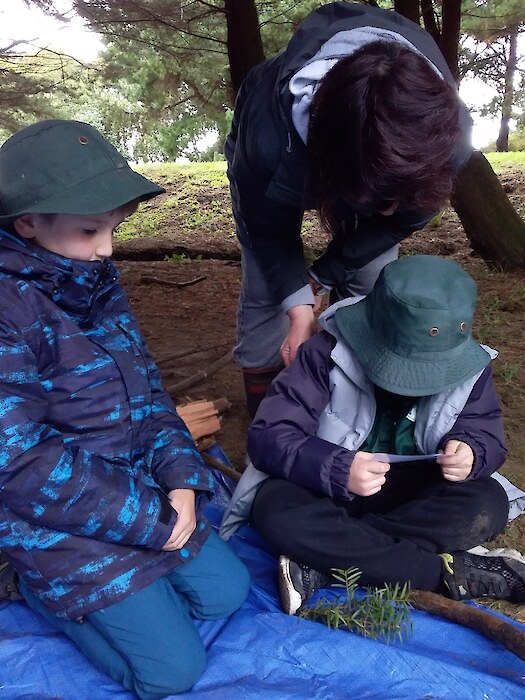
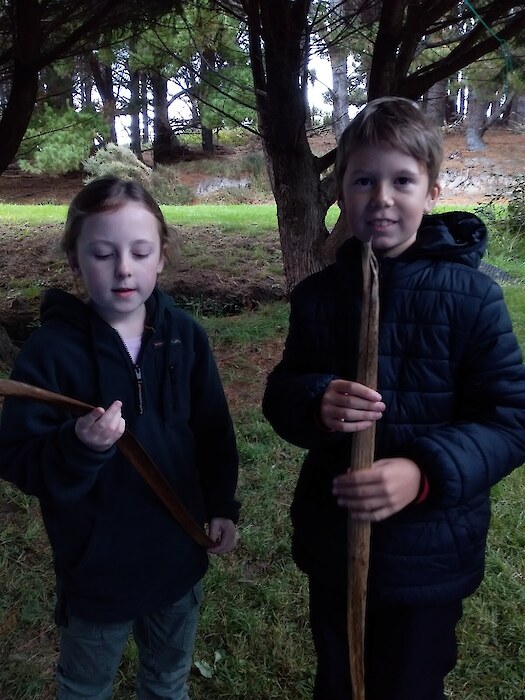
Teaming up with the Great South Southland Youth Futures team who are part of a programme to provide career exploration opportunities to Southland youth we hosted 27 Year 9 and 10 students from James Hargest College Agriculture & Horticulture classes. Sheltered in the purpose built education centre for Southland weather days such as this we provided hands on practical experience with NZ native plant propogation through both cuttings and seed sowing (covering ecosourcing, seed collection and preparation). We talked about links the Southland Community Nursery has with community projects for conservation restoration plantings, shelter belt and riparian plantings on farm properties. The management of pests was demonstrated linking to Jobs for Nature and Predator 2050. A walk between rain showers completed the visit showcasing the wetland creation and plantings to inspire these students.
Bronwyn, Chris and Mark
Posted: 20 May 2021
We have had a busy week at the Education Centre. A Native Plant ID Course run by Jesse Bythell and myself for the SIT Environment Students and others took place on Tuesday 4 May 2021. The course is now in its fifth year, includes a range of inside and outside study and is always well received by students. The Plant ID cards used on the course can be downloaded and printed here.
On Thursday 6 May 2021 five keen members of the Hokonui Runaka seed collecting team brought along their collection of seeds and we spent a morning cleaning and preparing seeds for sowing and a bit of plant/seed identification. The seed preparation included cleaning fleshy seed through sieves, shaking out tiny hebe seeds, cleaning sticky pittosporum seeds with washing up liquid (a new technique for us!) and removing all the extraneous chaff that gets collected with seeds – ready for sowing. Some plant ID was also done – the rare Neomyrtus pedunculata and Coprosma dumosa (photos below). A reminder that our website seed collecting pages have some good information on what ripe seed looks like and timing of collection for various common Southland native species.
Nursery Friday Mornings continue for volunteers and seed collecting and sorting is still being done.
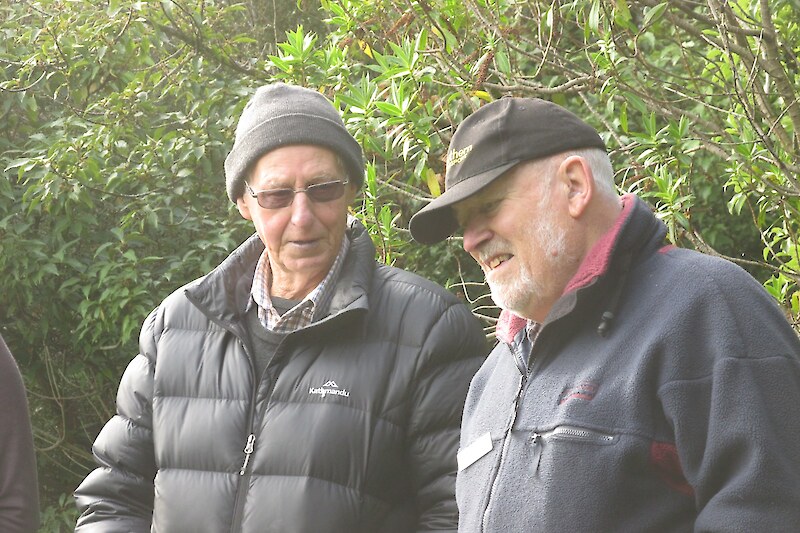
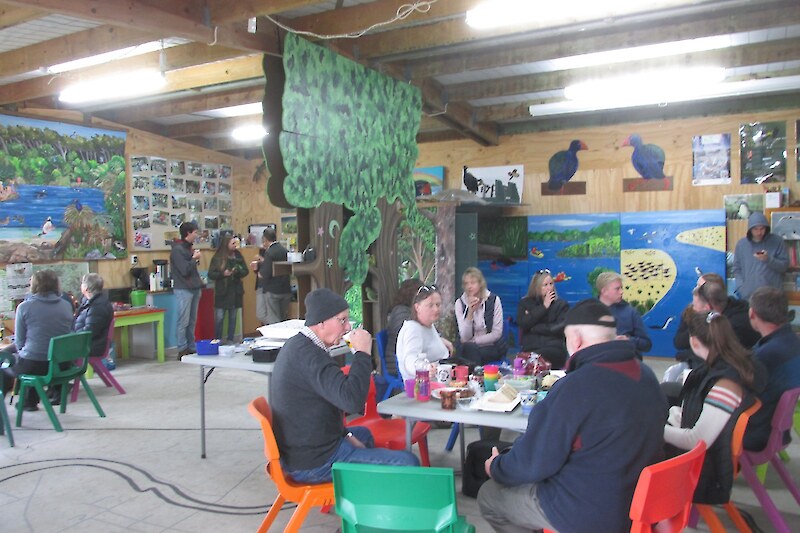
On Saturday 8 May 2021 the Education Centre was the lunch stop venue for the Autumn Southland Ecological Restoration Network trip to Kew Bush and Oreti Totara Dune Forest – www.sern.org.nz. Over 30 people attended the celebration of lots of hard work by Allan McPherson and John Tait at Kew Bush with the unveiling of an interpretation sign telling that story. Allan and John had also been regular Nursery attenders and many of the subsequent plantings at Kew were from our joint efforts. Ini had initiated a “Friends of Kew Bush” to continue their good work so if you live nearby email ini to become involved ([Enable JavaScript to view protected content]). The Education Centre was abuzz with conversation and everyone enjoyed catching up with friends and those involved in many conservation projects. After lunch the group moved on to the Oreti Totara Dune Forest for a guided walk with Maurice Rodway, Brian, Jesse and Dallas. Thanks to Gay, Jesse and Ini for doing the lions share of the organising for the day.
Chris
Posted: 10 May 2021
1st May 2021 was a historic occasion. Bluff Hill Motupōhue Trust volunteers, under Chair Estelle Leask, and Southland Community Nursery volunteers translocated 45 Punui (Stilbocarpa lyallii) plants back onto the NZ mainland! Pūnui/bunawe is a taonga species to local iwi and has many traditional uses. It grows on southern offshore muttonbird islands associated with seabird colonies, but gets eaten by introduced animals and so declined early on the mainland of NZ. With extensive predator control being undertaken over many years Bluff Hill Motupōhue is a perfect place for its reintroduction. Saturday 1st May was a joint affair with plants being grown by Southland Community Nursery from seed collected by the Davis Family from their island and passed to the Community Nursery by Estelle to grow for this project. The groups of plants were planted in favourable locations in light gaps under forest under guidance of Brian Rance DOC botanist and Community Nursery trustee. It is hoped that the plants thrive and seed and are then distributed by birds. Estelle had arranged a 10 year permit for translocations to continue and we at Southland Community Nursery were privileged to be involved and support the great work that the Bluff Hill Motupōhue Environment Trust are doing. Thanks to Jeanette for article in the ODT - with Ray starring! https://www.odt.co.nz/regions/southland/megaherb-punui-replanted
Chris
Posted: 3 May 2021
On the evening of 21 April, twenty five keen catchment folk attended a “Growing Native Plants” Workshop with Chris and Brian. A traditionally “outside” workshop became an indoor talk as daylight faded into night. Before that a quick guided walk around the created ponds and restoration area set the scene. Poppy Hardie, a Thriving Southland Coordinator organised the event and introduced Chris and Brian and then everyone introduced themselves, their catchment group and what they wanted to take away from the evening. Dipton, Otamita, Three Rivers (Mokoreta, Mimihau and Mataura), Waiwera (South Otago), Catchment Groups were represented plus others. Brian talked about some important principles of plant identification, the importance and reasons for sourcing plants locally and using “Southland Natives” for restoration projects. Emphasis was placed on Right Plant for Right Place in relation to successful planting projects. The profile drawings from the Community Nursery website and recommended plant lists were used as a guide. Chris concentrated on the seed collection, seed preparation and sowing also using the website resources to help assist people. Thriving Southland supplied supper and this was followed by a short hands on session looing at seeds and plants.
Thanks to Thriving Southland for facilitating the workshop and introducing us to a new group of plant enthusiasts. The talk is available here with links to various parts of the website. It was a lot to take in over a short period of time so we are happy to run more hands-on sessions on particular topics if there is interest. Just email Chris to request a workshop session at [Enable JavaScript to view protected content]
A copy of the talk is available here
Posted: 23 April 2021
The Southland Community Nursery supported Environment Southland’s Enviroschools hui at Omaui as many Southland Enviroschools came together to learn about Māori perspectives of our environment. Activities included flax weaving, traditional Māori games, the Aquavan, plant identification and Māori uses, as well as some art and a shared hangi.
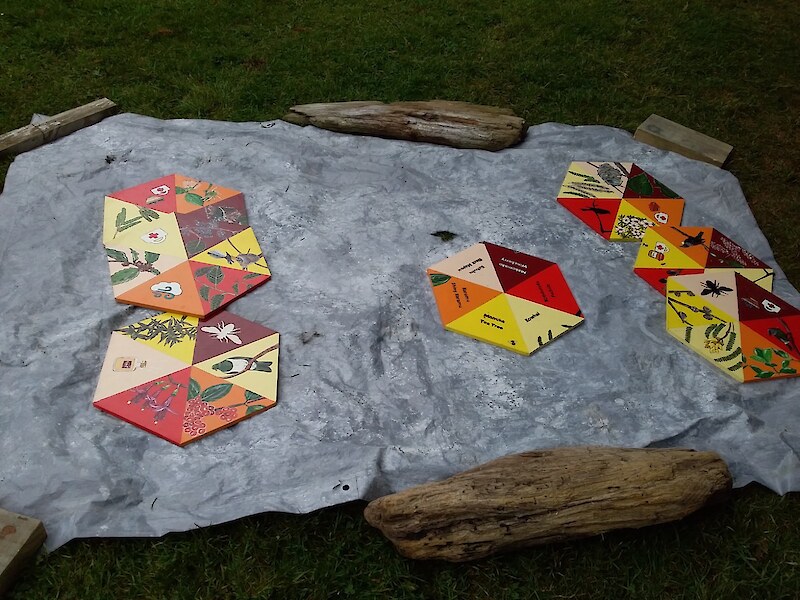
We ran the plant identification and Māori uses activity. Our leaf bingo cards were used to match up leaves, with participants (children and adults alike) having to look closely at the features and characteristics of leaves. We also looked at some bark, seeds, berries and fruit that are also features of plants that can be used to help us identify plants in our ngahere. We then travelled back in time, to a time with no supermarket, or chemist, or pantry or fridge to open when hungry. Students learnt about their chosen plant and reported back to the group. We discovered that many parts of plants were used for food, for example the fruit of tōtara and kahikatea were collected to eat using baskets made from plants from the forest. Plants were also the food for bird species that were eaten, with the ngahere ecosystem providing in this way. Many plants were used as part of the maramataka (Māori lunar calendar) to indicate when would be a good time to plant, or fish or harvest. Wood from different plant species also had a variety of uses for food gathering, fishing, traps and food storage. And plants also had many medicinal uses, as well as personal, domestic and industrial use. It was noted that some species were once seen as indispensable to Māori life in NZ.
The day was fun and interactive, and we look forward to working with schools again.
Check out our Leaf Bingo resources at www.southlandcommunitynursery.org.nz/education-centre/activities/school-activities/
- Leaf Bingo - an easy and fun way to learn how to identify native plants.
- Leaf Bingo Maori Uses - learn about traditional Māori uses for some of our native plants
Bronwyn
Posted: 23 April 2021