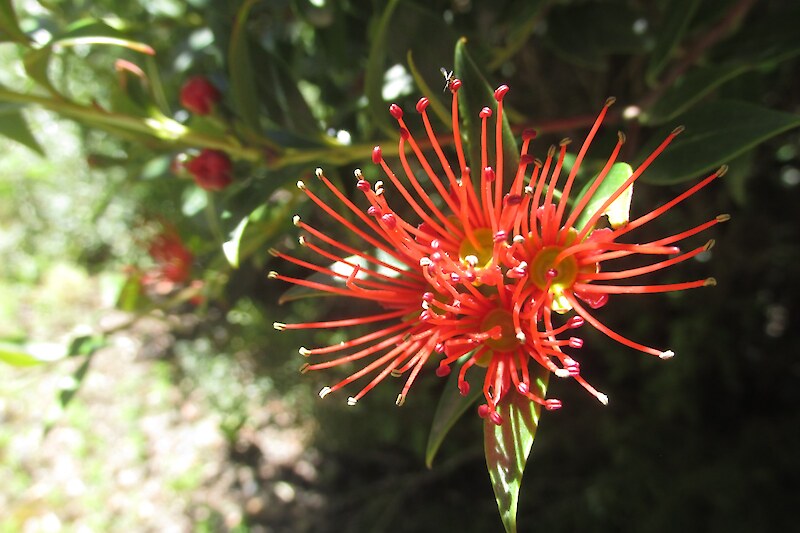
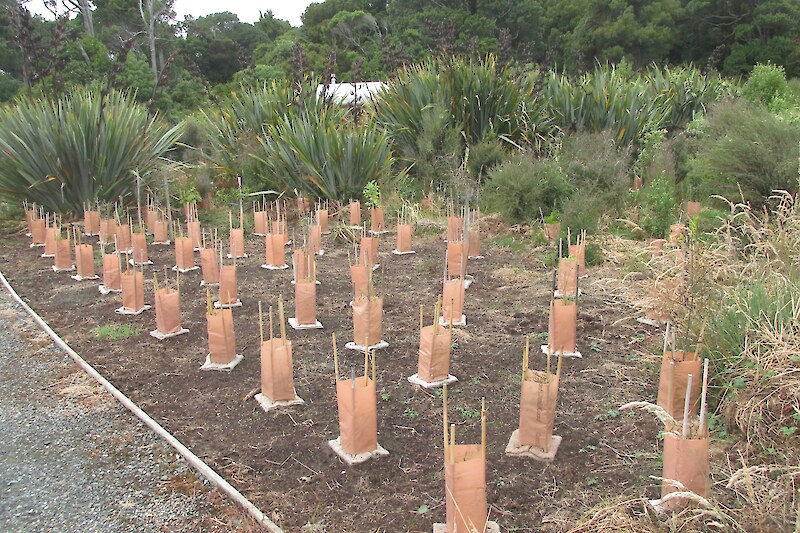
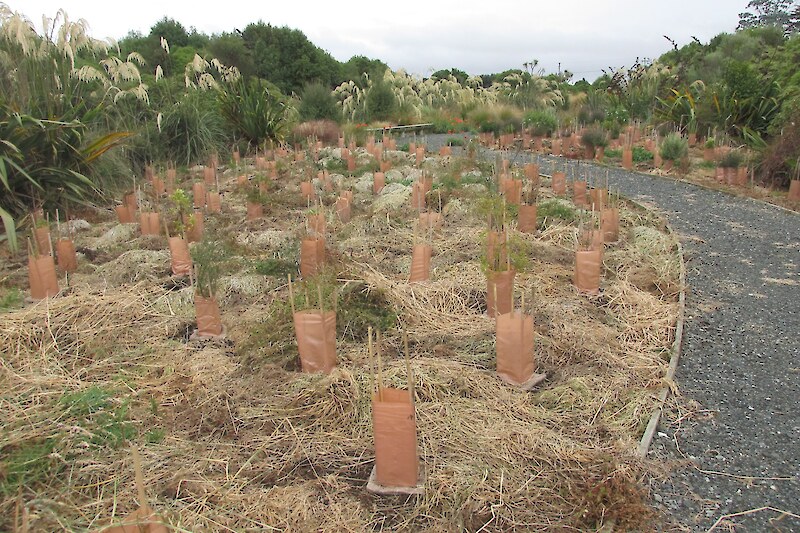
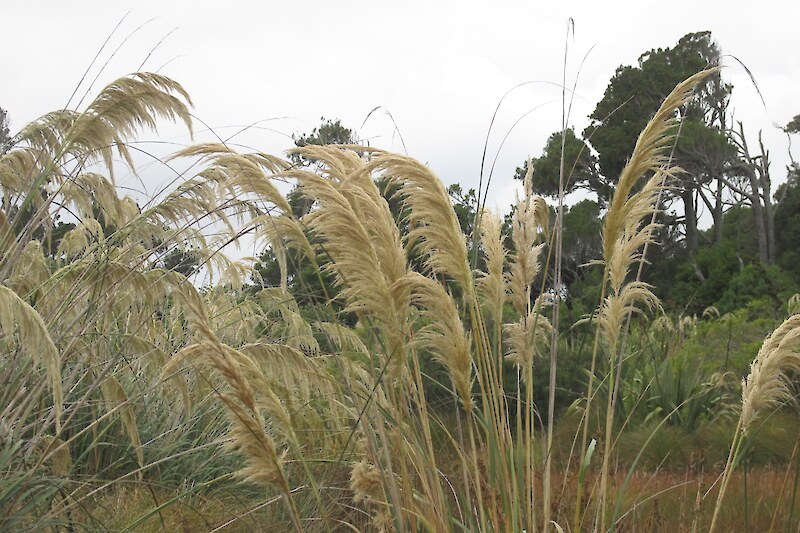
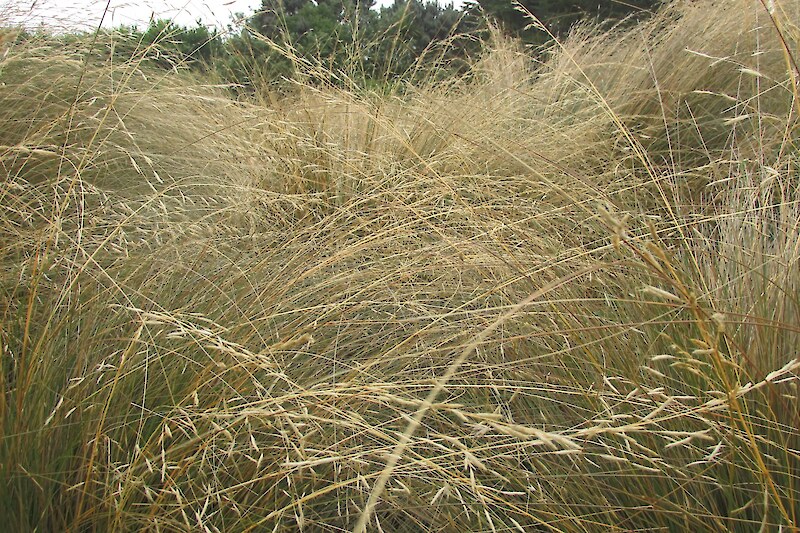
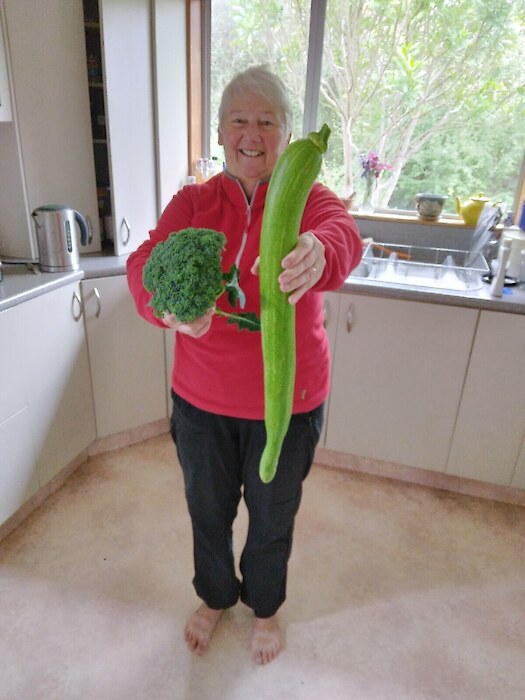
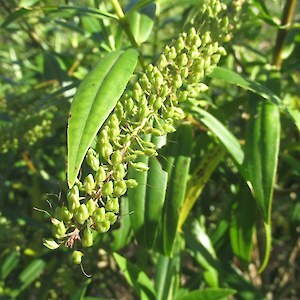
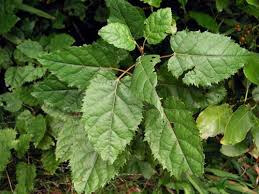
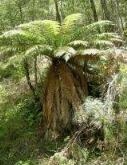
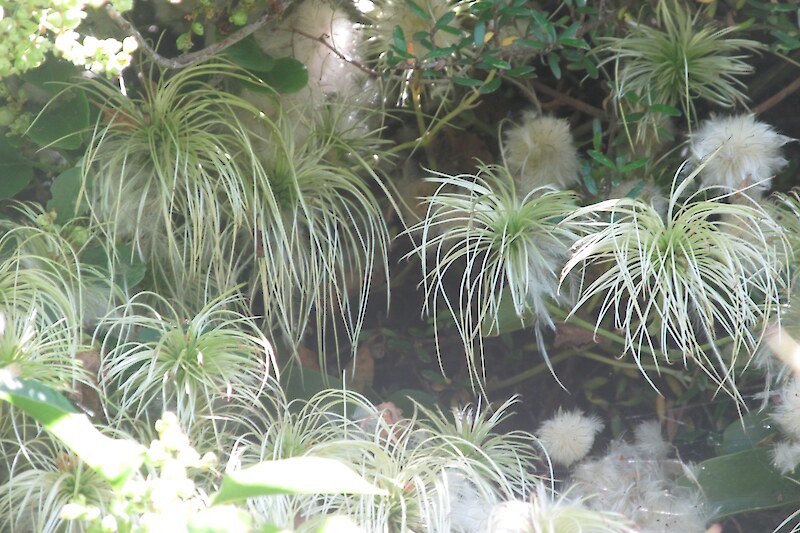
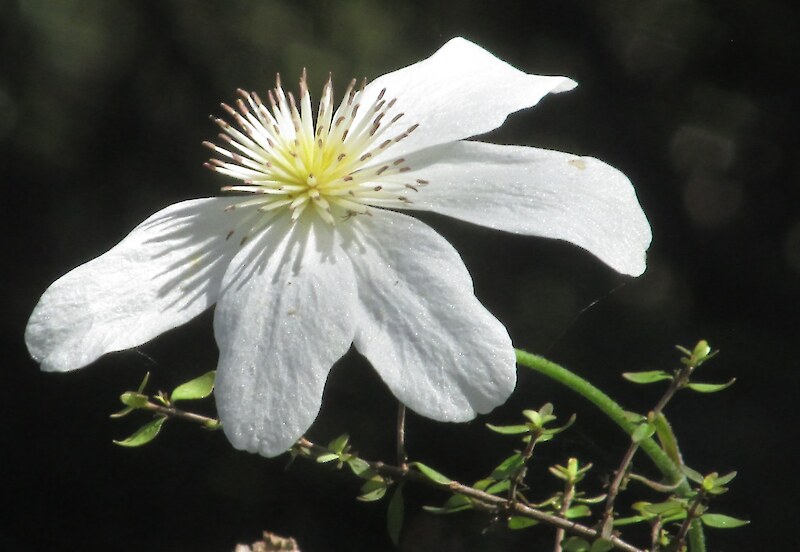
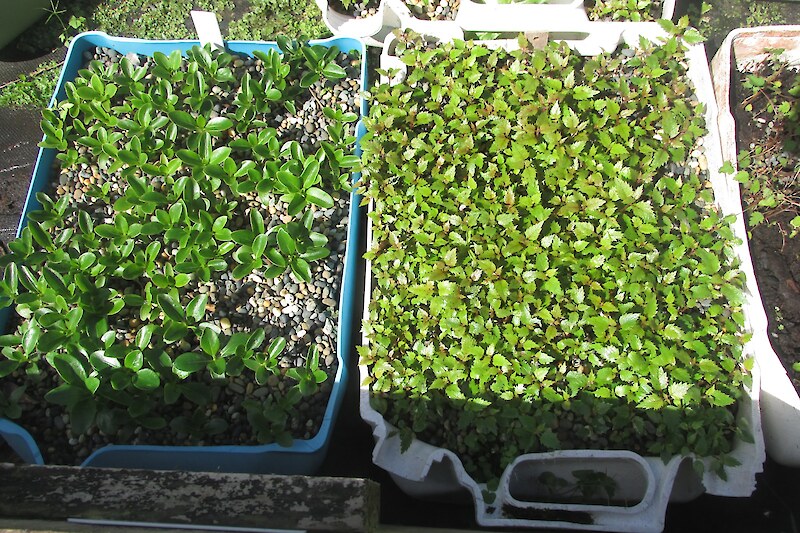
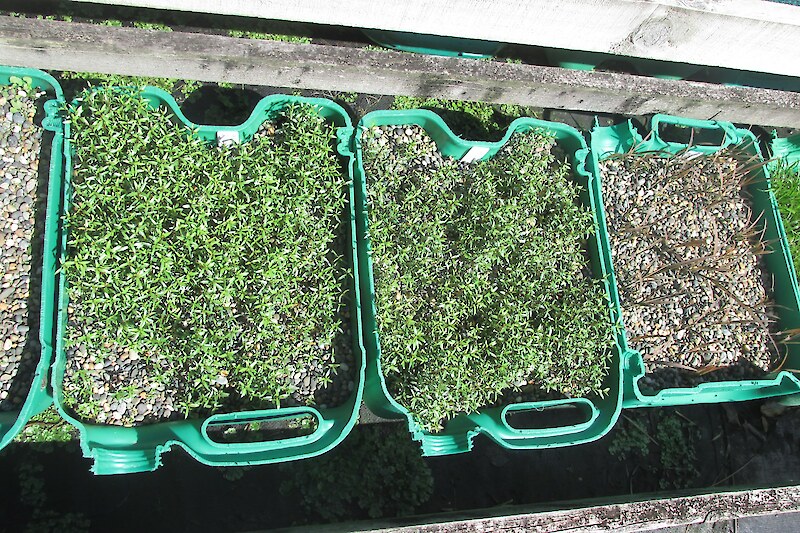
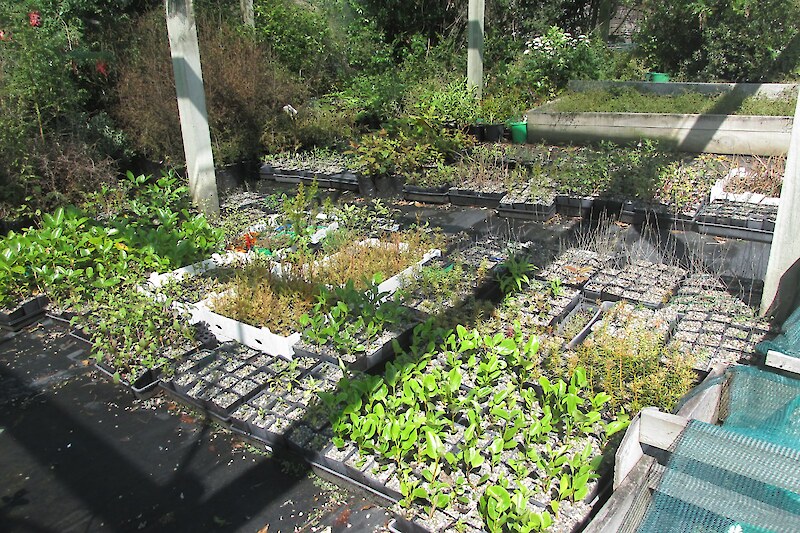
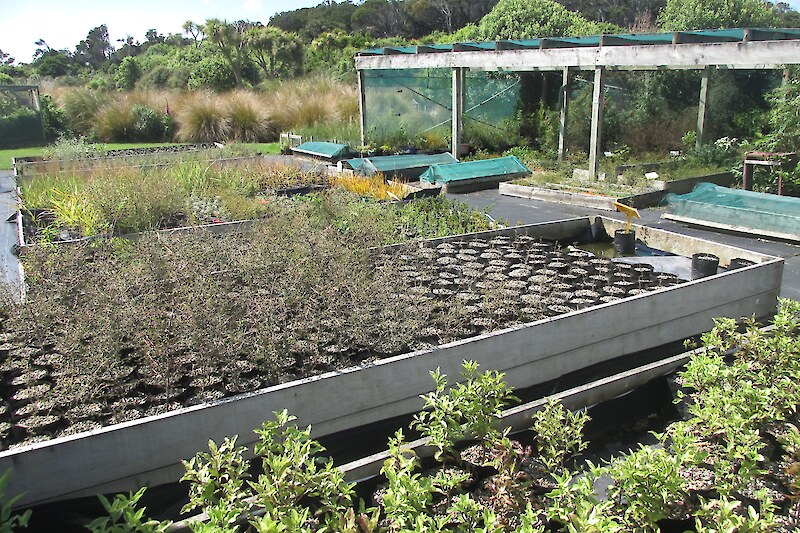
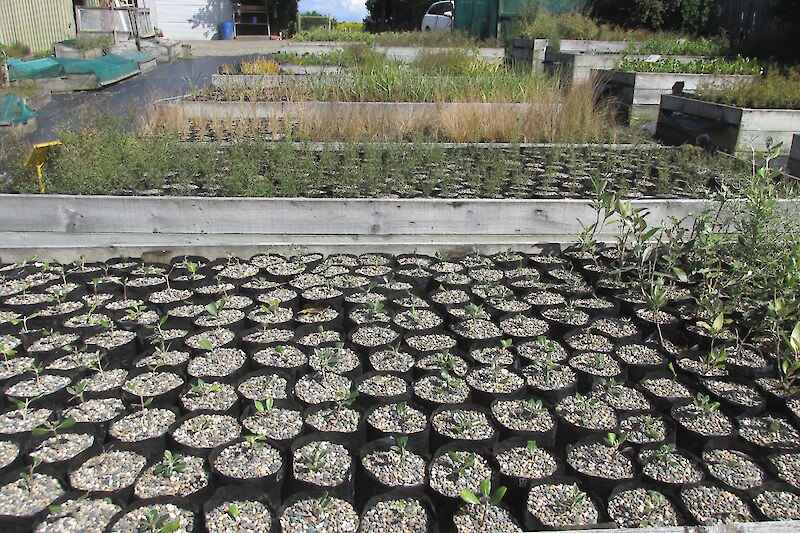
Over the holidays its been a case of watering, watering and more watering! Then weeding, weeding and more weeding! We have also taken the opportunity to plant out at our place – one of the advantages of living on a wetland in a dry summer! The warm dry spell looks set to continue. Because of the hot summer weather seed collecting has already begun – the fluffy seed of native Clematis has been collected, and the first tussock and toetoe has been collected after Chris observed waxeyes eating the toetoe seed (always a sign!!). Also collected salt-marsh ribbonwood seeds much earlier than usual – so keep a lookout for seed as the seed collecting season swings into action – its going to be a bumper one! We have also had a prolific veggie garden and I couldn’t resist a photo of two of my successes – the climbing zucchini (Z. ramplicant) and broccoli (normally a failure for us!).
I know you are all champing at the bit, but the Nursery will officially re-open on Friday 21 January 2022. If you are new to the Nursery, don’t forget to bring your Covid passport.
If anyone can help with watering in January please let me know as we have a few trips planned in the near future.
Chris
Posted: 10 January 2022
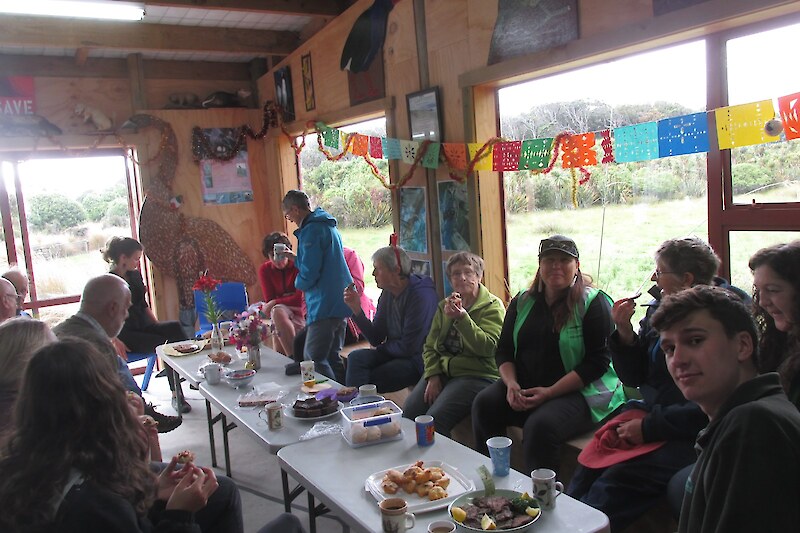
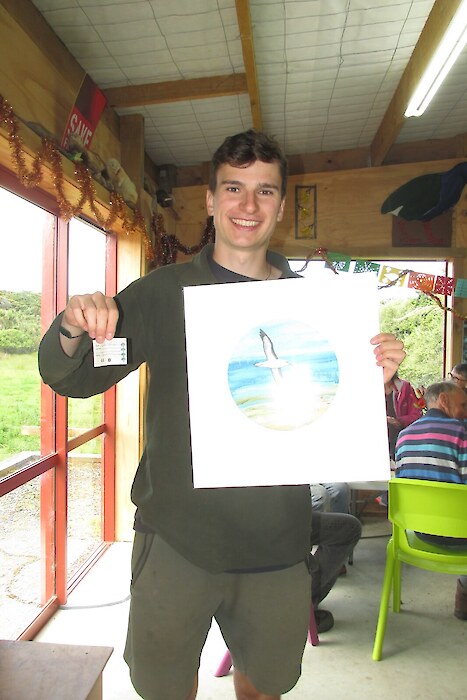
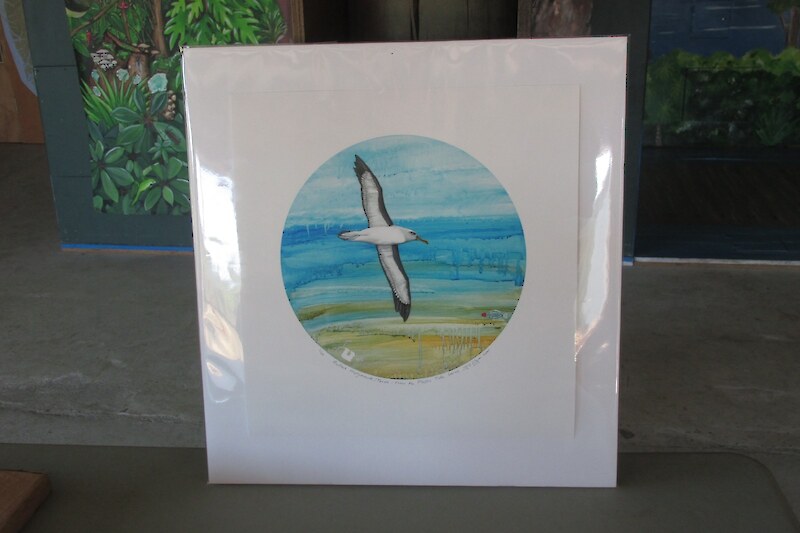
December was busy in the Nursery, building up to the holidays. We had our Christmas break-up on 17 December 2021, the highlight (as well as very good food and Honorleas natural body products) was the raffle draw for a painting generously donated by Jo Ogier – Lloyd Esler won the print and Daniel Cocker kindly accepted it for him on the day. The raffle made over $200 for the Nursery – thanks Jo!
As well as Bronwyns school visits documented earlier, during November and December Mark Oster lead three visits from a Pact youth group learning about bush – plants, animals and trapping and also encouraging them to help design the new outdoor education space that we are planning for 2022 – watch this space! “Thank you so much for your amazing energy and enthusiasm when teaching the kids, I know it was a highlight for them”.
To learn more about the work of Pact - http://www.pactgroup.co.nz/overview
Chris
Posted: 10 January 2022
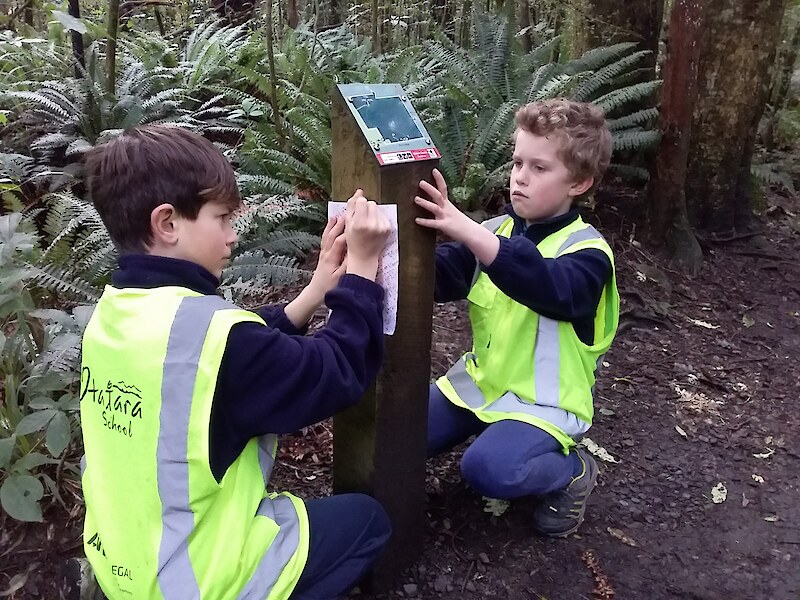
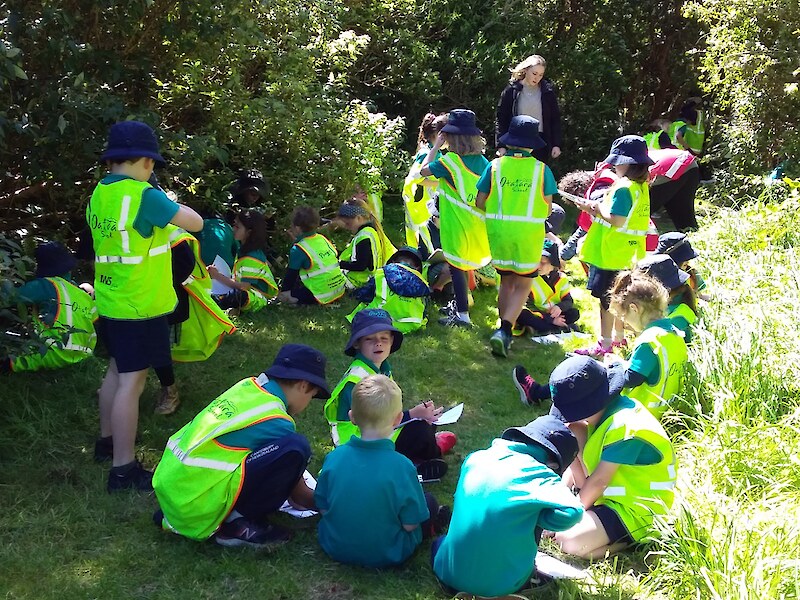
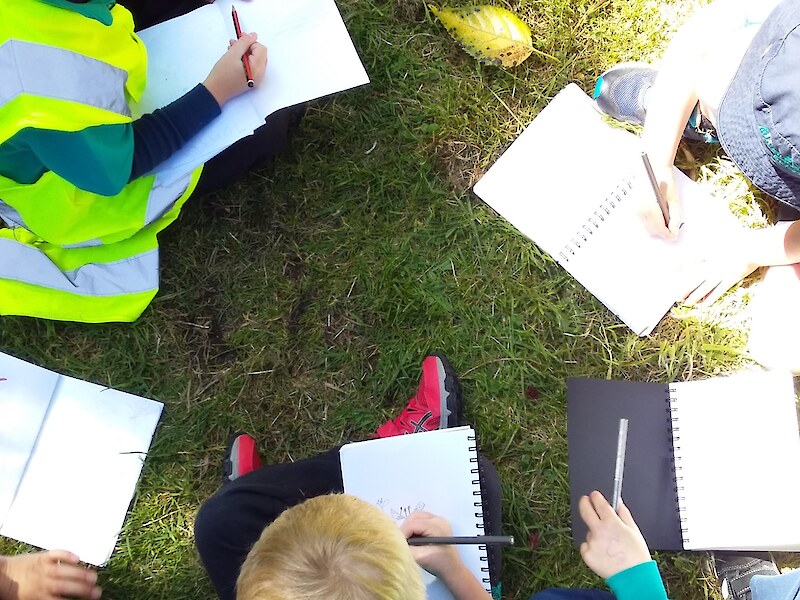
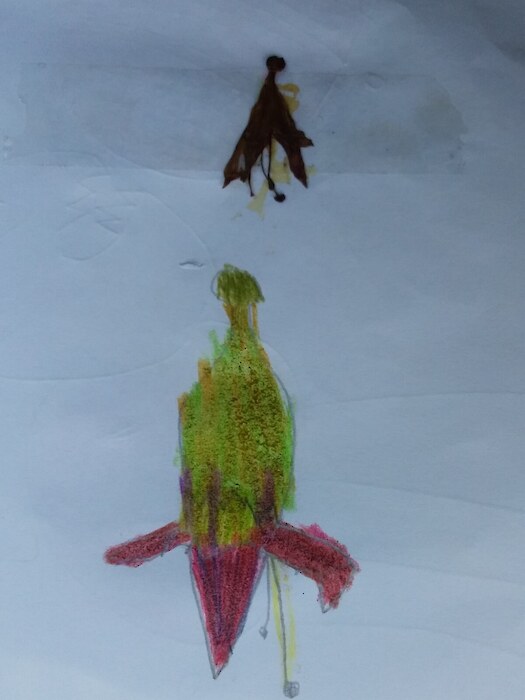
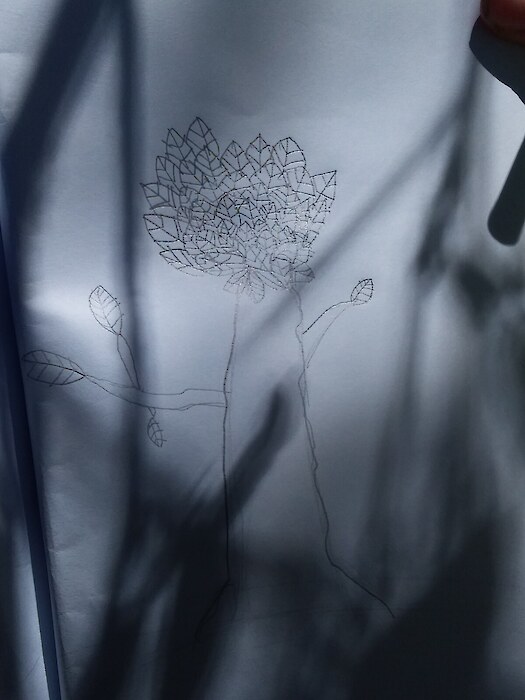
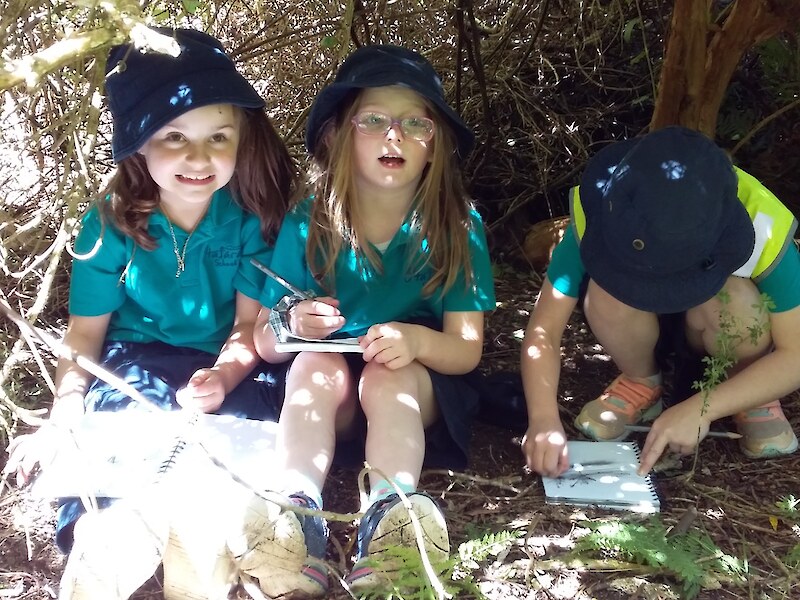
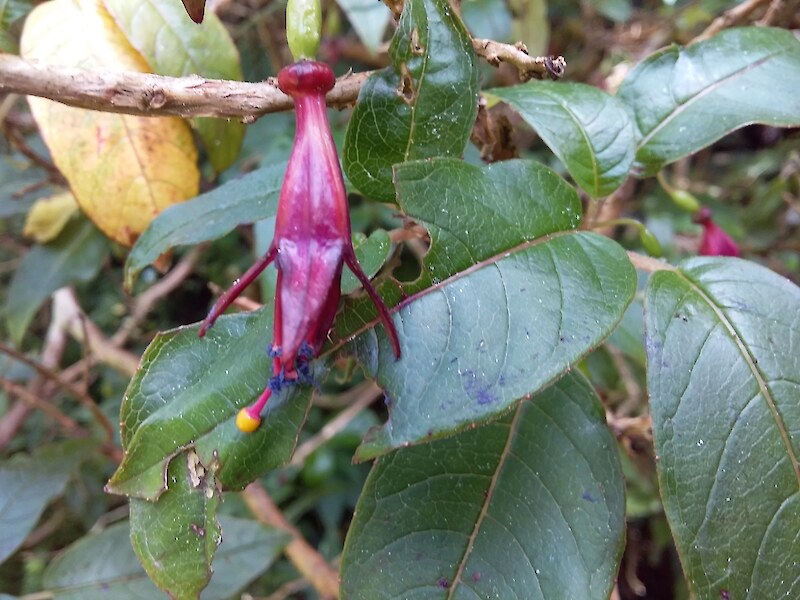
With the nursery still a no go for school class visits (only groups 10 or under can be inside the education centre and a max of 25 outside) I continued with outreach programmes to Otatara School during Term 4. Bush visits with the Kōtukutuku class continued with the students noticing week 1 (19 October) the changes in their class tree (still flowers but lots more leaf growth), and lots of wondering about how and why the flowers fall off. Green oval shaped remnants were noticed, along with the flowers of kōhuhu. Week 2 (26 October) Tōtara joined back in with us, and it was great to see the Kōtukutuku class members communicating what they have learnt and noticed in the time since Tōtara last joined us. The students have sound knowledge on how to identify the kōtukutuku and naming the different parts of the flowers. They have made great connections with the flowers and pollination by birds (like bellbird and tui and insects) and how each helps the other. Wonderings and observations have noticed what is left once the flowers fall, and how these will grow into fruit or konini that can be made into jam! (or eaten by birds which spread the seeds around the forest). 2 November (week 3) observing and drawing in nature journals was followed by trying the blue kōtukutuku pollen on for lipstick! 9 November it was close observation of the blue kōtukutuku pollen and what is happening at the site of the tōtara tree trunk removal from the reserve - lots of Chilean Flame Creeper. Lots of discussion followed around what is a native and what is introduced and what is a pest.
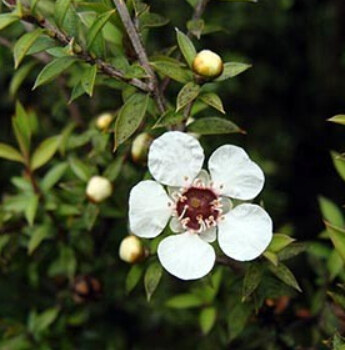
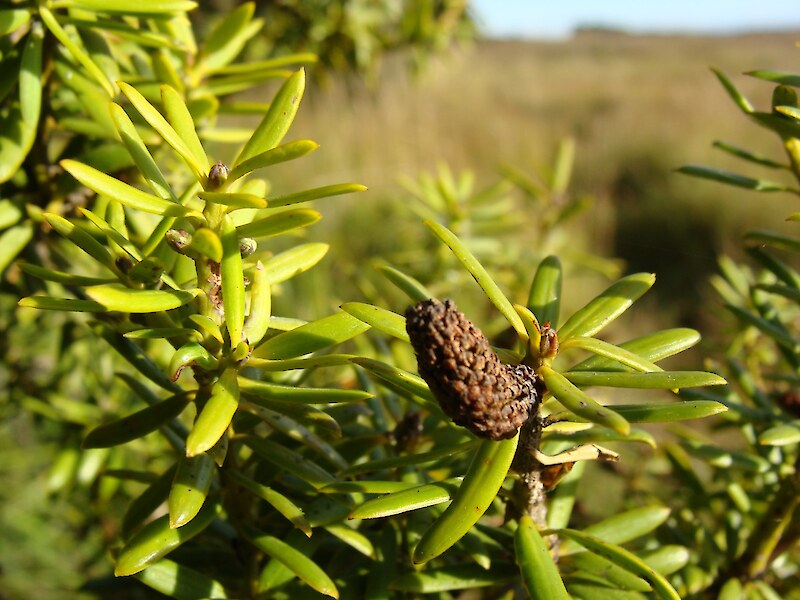
Week 5 (16 Nov) the classes started to plan out what would be needed to pass on the information they have learnt about their class trees this year - the tōtara and kōtukutuku. It was great to learn that they are now experts. Groups chose how they would pass this info on, whether via the newsletter, a book, Botany Whispers, oral histories, a map or fact sheets. Week 6 & 7 (23 & 30 Nov) we went into the reserve so the students could get the photos and other information they need for their displays and week 8 (7 December) the students worked on their displays - what knowledge they were presenting. 14 December ended the term with an awesome visit into the ngahere, noticing the petals of mānuka on the reserve track, hebe flowers starting to develop, tree ferns, the lighter green new growth and unfurling fronds of the understorey crown ferns, fruit on makomako, male cones from tōtara and the changing konini berries from the kōtukutuku. What wonder we find in nature. Otatara are an amazing school.
Bronwyn
Posted: 14 December 2021
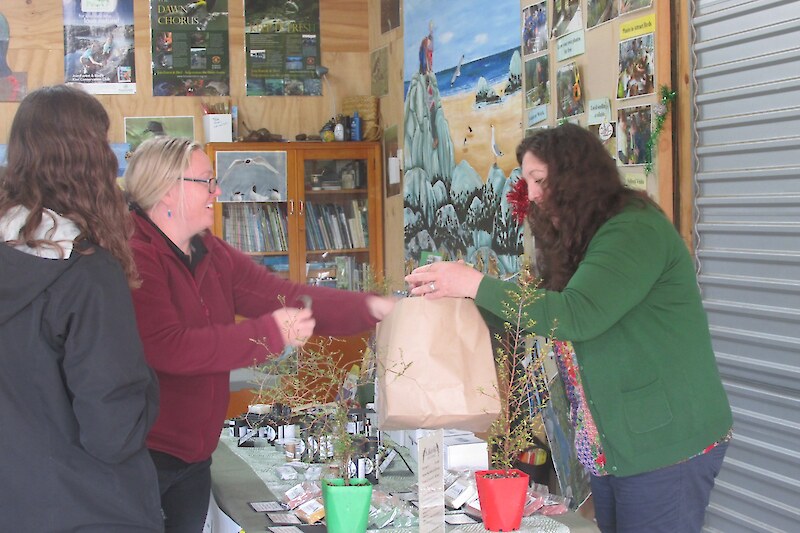
It’s the end of a difficult year and we will have a low key break up this year, but you are welcome to come along from 10am provided you have your covid passports, and more importantly some nice food!. Also bring cash – Honorlea will be here with her soaps and beauty products and we will draw the painting kindly donated by Jo Ogier as a fundraiser for the Nursery – Friday will be your last chance to buy a ticket!
Also, if you are thinking of planting over the holidays and need plants then notify me this week and we can make an arrangement for pick ups.
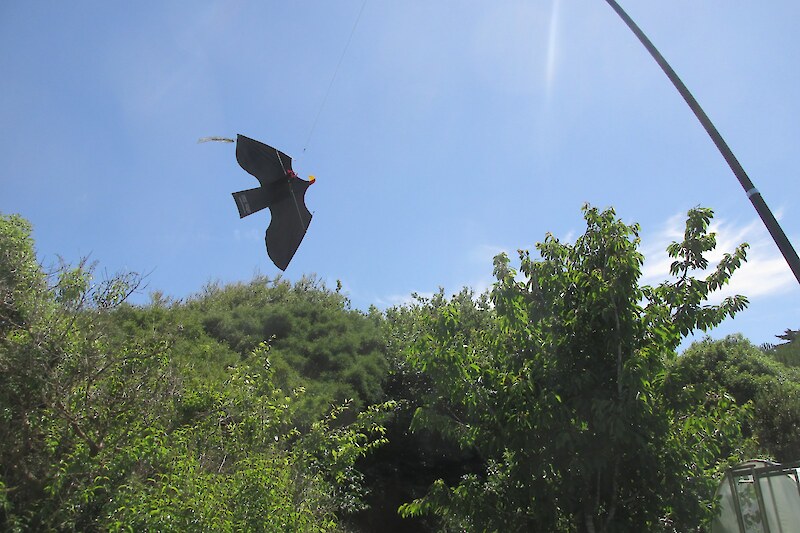
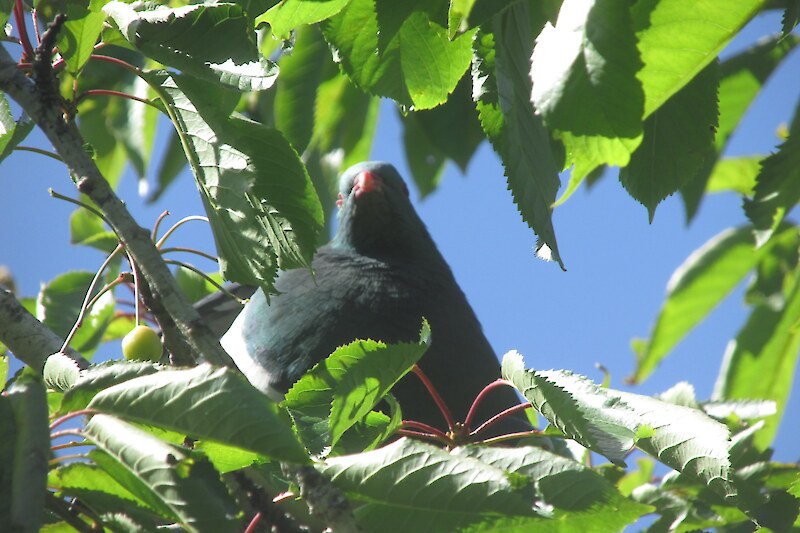
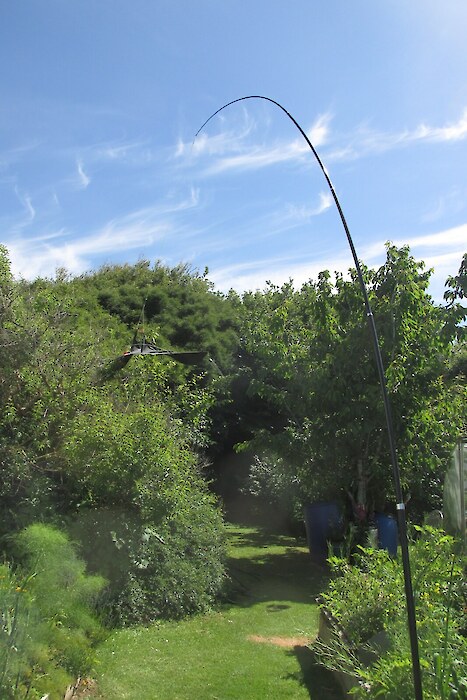
It has been a great growing season to date – lots of rain then lots of sun, so watering the nursery is top priority. If you might be able to help over the holidays please let me know. I have collected my first seeds already – Clematis paniculata – the native clematis. On the garden front my current challenge is keeping the kereru off the cherries – see my attempts with the sky crow below (limited success)!!
Thanks to everyone who has helped this year and if we don’t see you Friday, have a peaceful Christmas and we look forward to a New Year with positivity and kindness.
Nga mihi
Chris and Brian
Posted: 13 December 2021
Friday volunteer sessions have been busy and well attended with “everything” needing to be done at this time of year. Seed has germinated and needs pricking out, cuttings have rooted and need potting into PB3’s, seedlings in small pots need potting on into PB3’s, weeds are growing apace and watering is ramping up. So….. at this very busy time of year Chris and Brian went away on holiday for 2 weeks!! Our massive thanks to Linda and Ray and our volunteers for keeping the nursery running – organising Friday sessions, and a watering regime while we were away. Our Nursery is truly community based!
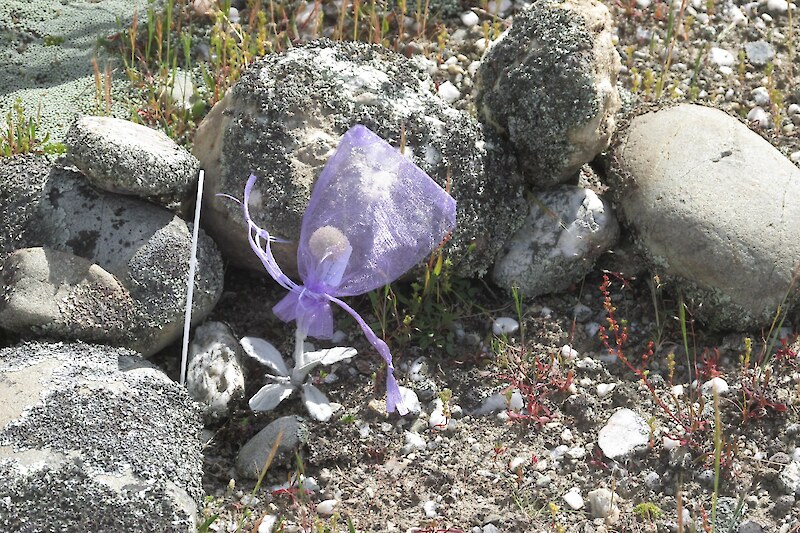
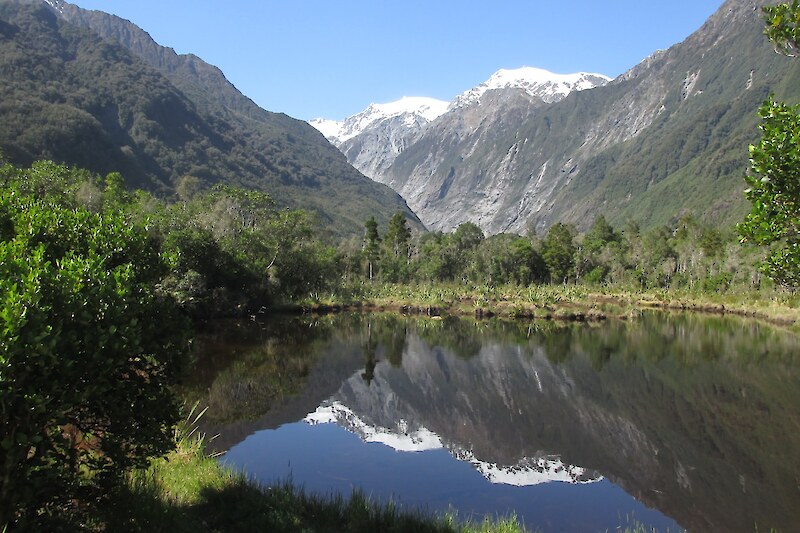
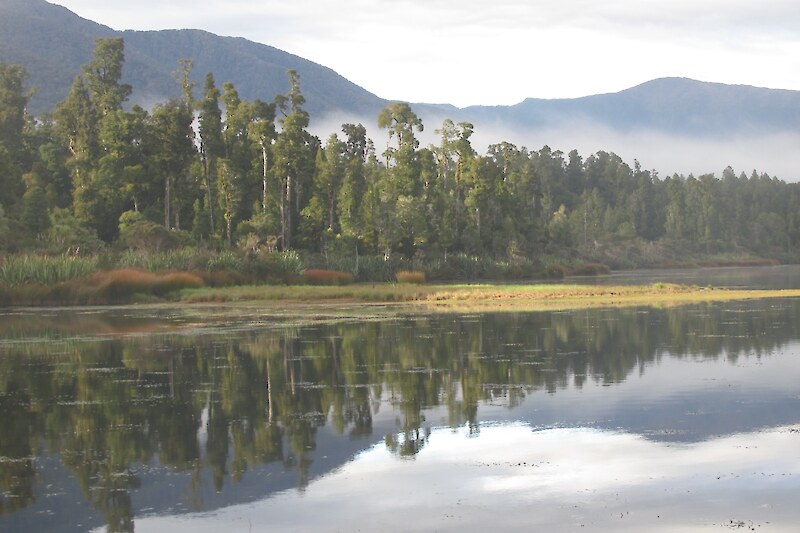
It wasn’t all holiday for us, some of it a busman’s holiday as we bagged (literally put a bag over) some rare plants to collect seed for DOC in Central Otago, Brian did some work inspections and some searches for rare plants on the West Coast – which he found. Sorry Liz we only made it as far north as Okarito, but thoroughly enjoyed the wild west coast, in magnificent weather!
On the way home we attended the opening of the Cromwell Community Nursery and the Hui for 7 other community nurseries from Wakatipu, Clyde, Glenorchy, Wanaka, Cromwell, Lake Ohai (apols from Lumsden). The rise of community nurseries across the country is great to see. In our own patch of Southland there are some new community nurseries being established under the Jobs4Nature initiative and that should result in massive numbers of native plants being planted in our environment and many more environmental champions. We are very happy to be able to support Estelle at Bluff Hill Motupohue Trust, Jana at Te Tapu o Tāne and Riki at Hokonui Runanga with our local knowledge and experience and look forward to working closely together and sharing knowledge in the future.
As you can see with many preceding stories Bronwyn and Mark are doing great things with education and lots of happy children’s faces getting outside the classroom for their nature experiences. Of course sale of our plants helps continue to fund this great work as well as Lotteries and some ICC funding this year.
Couldn’t resist including a few stunning photos of West Coast – nature is rejuvenating for us all in these testing times. Look out for flowering plants at the moment - we saw lots of different orchids on the coast but here our gem Olearia fragrantissima with its intense apricot scent is in full flower, as are the wonderfully scented Ti Kouka, the cabbage tree and many others.
We are planning the Community Nursery Christmas Break up Friday on 17 December 2021, put the date in your diary.
Chris
Posted: 15 November 2021