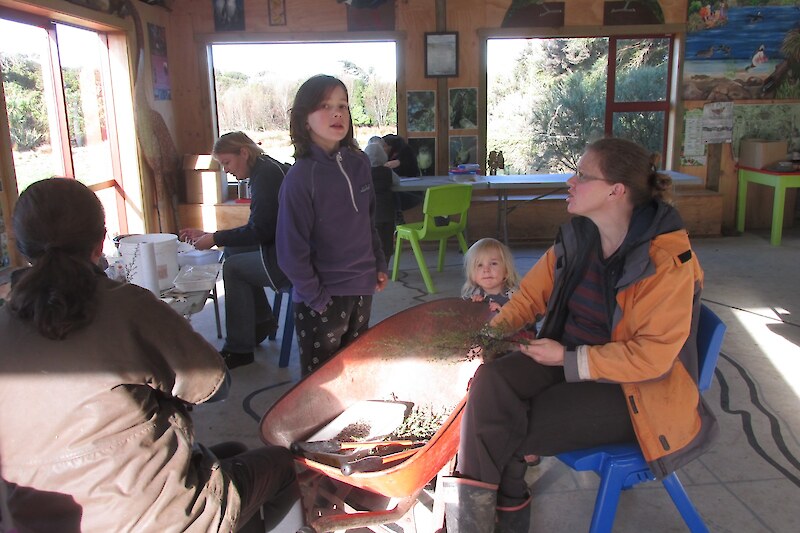
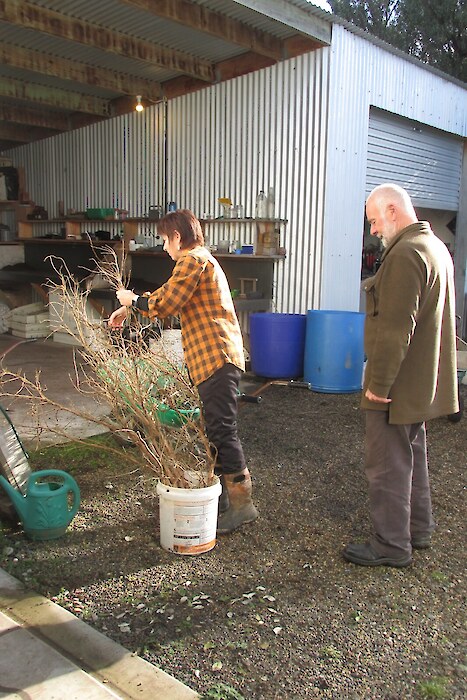
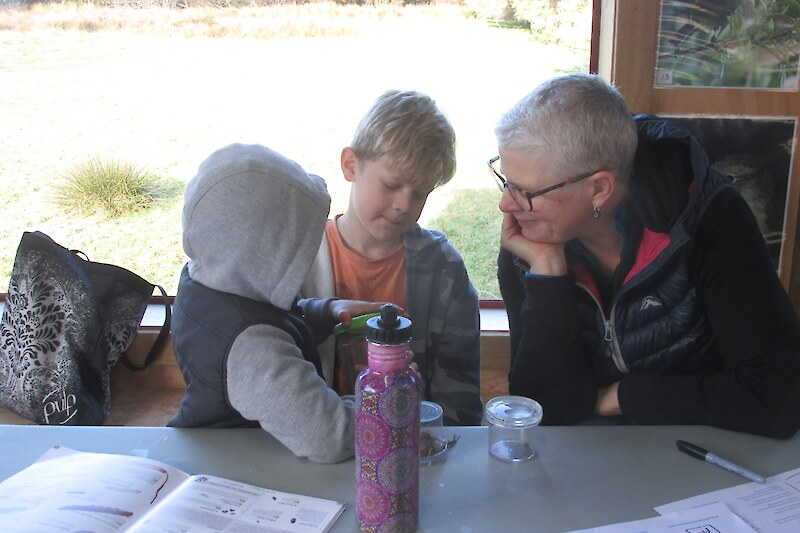
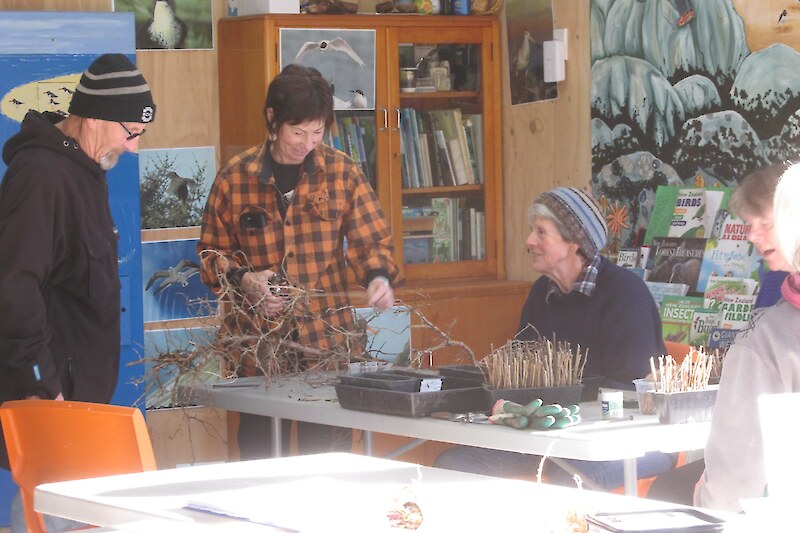
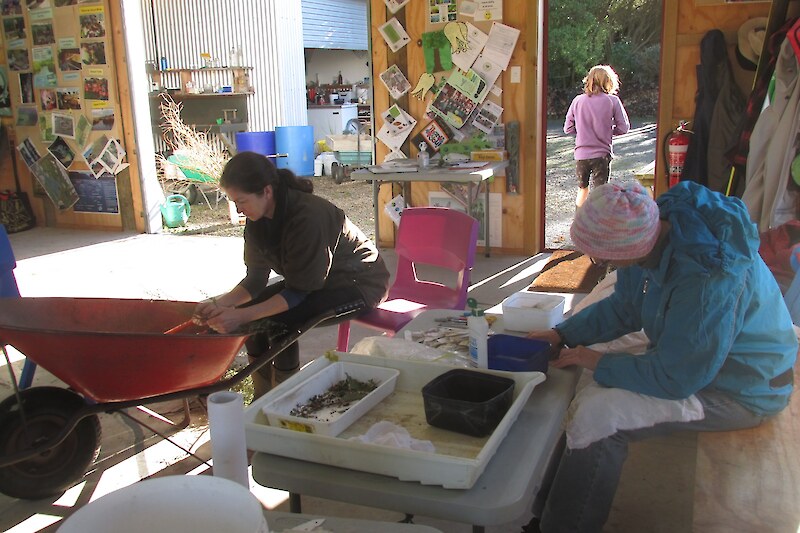
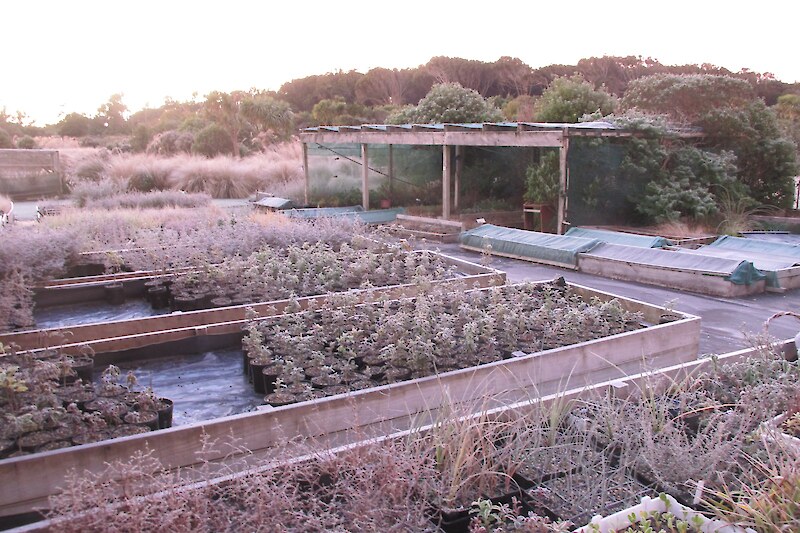
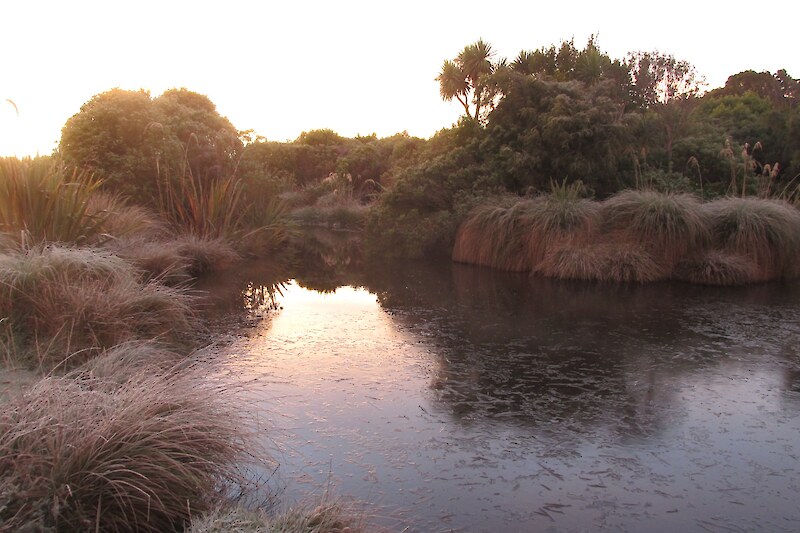
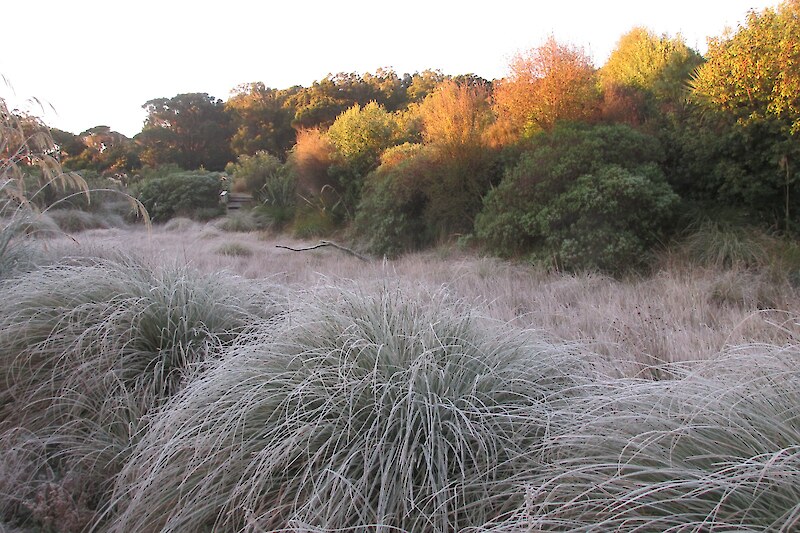
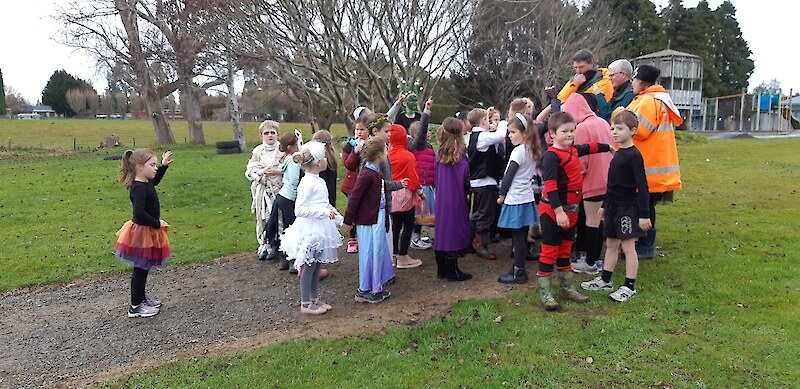
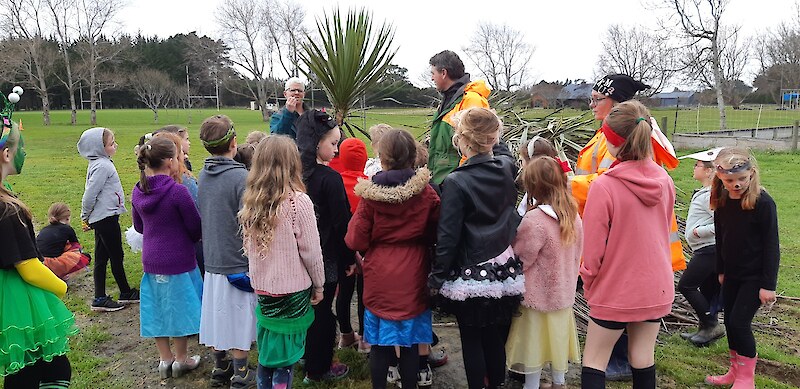
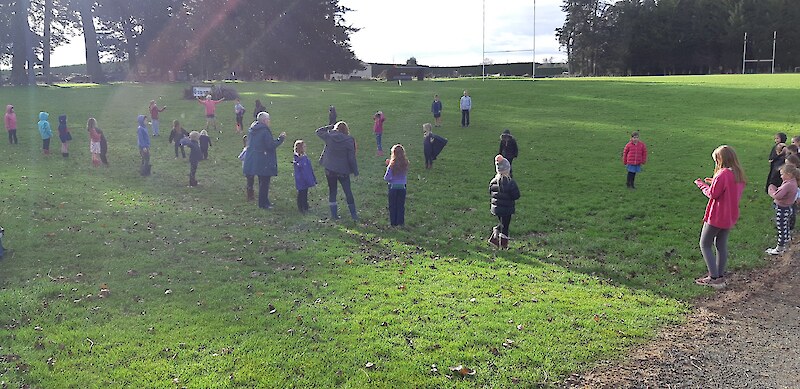
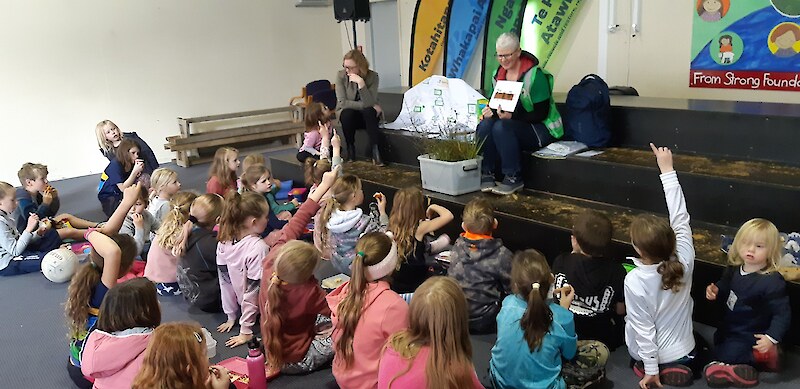
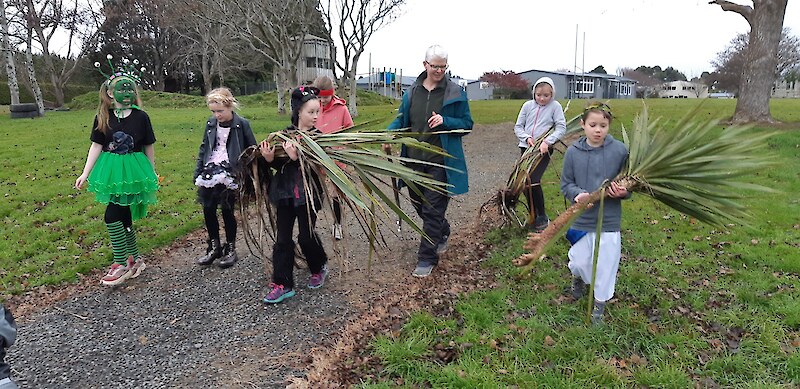
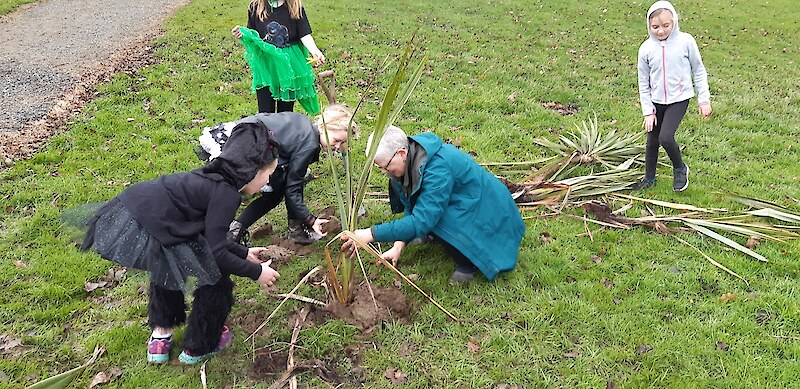
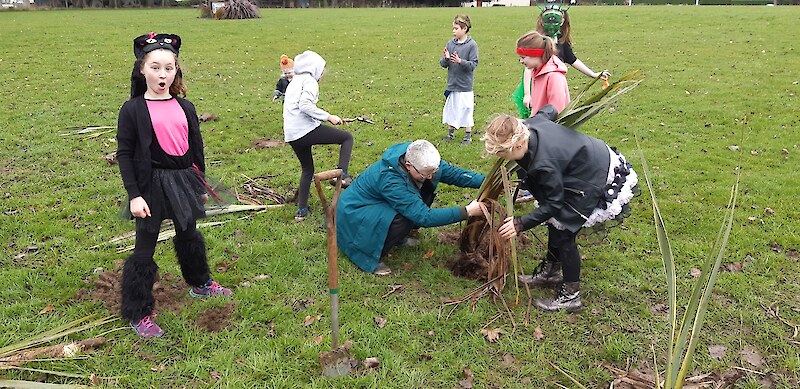
26 May I visited Salford School meeting with the school council reps. What a great bunch of students. They talked me through their ideas and plans before taking me on a tour of the school showing me where all their ideas and plans are going to take place. What wonderful places and spaces you have… On 18 June I returned on a frosty morning to help their school council students with their planting efforts. Their NZ native plant garden got added to as we learnt about native plants and how to plant them.
Bronwyn
Posted: 21 June 2021
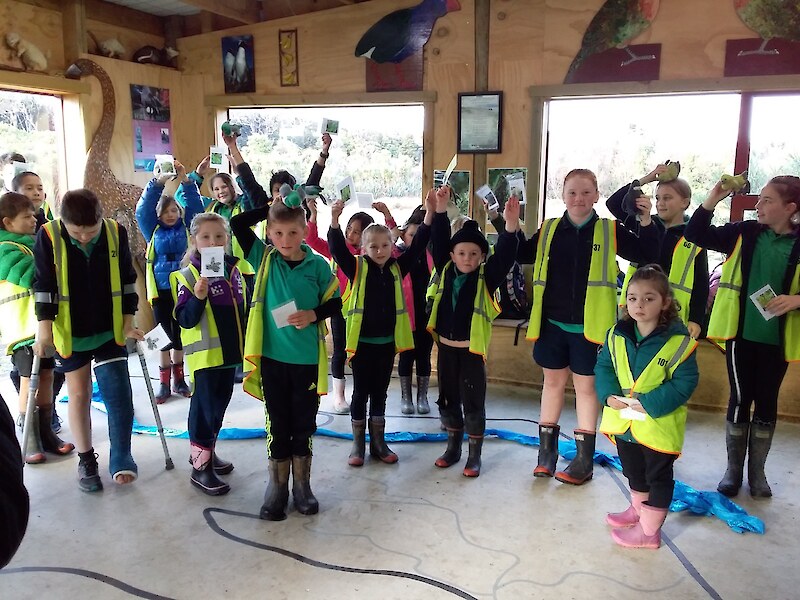
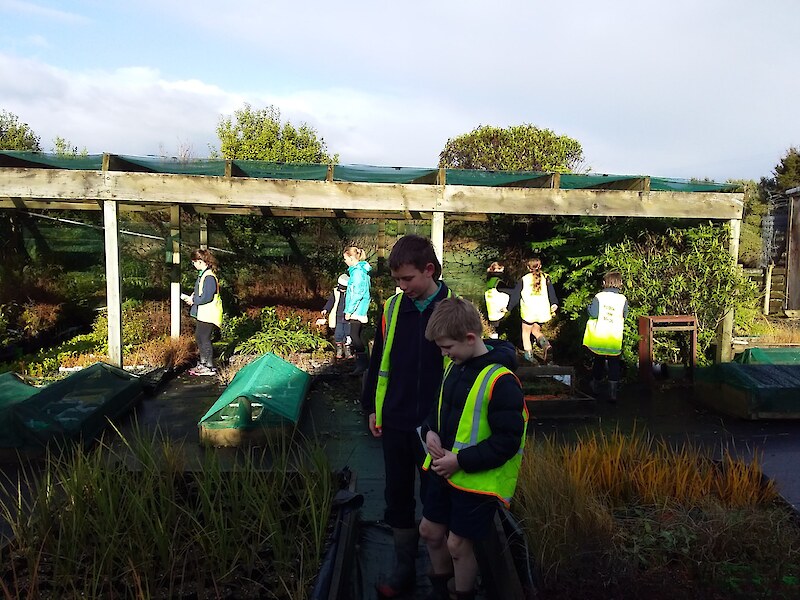
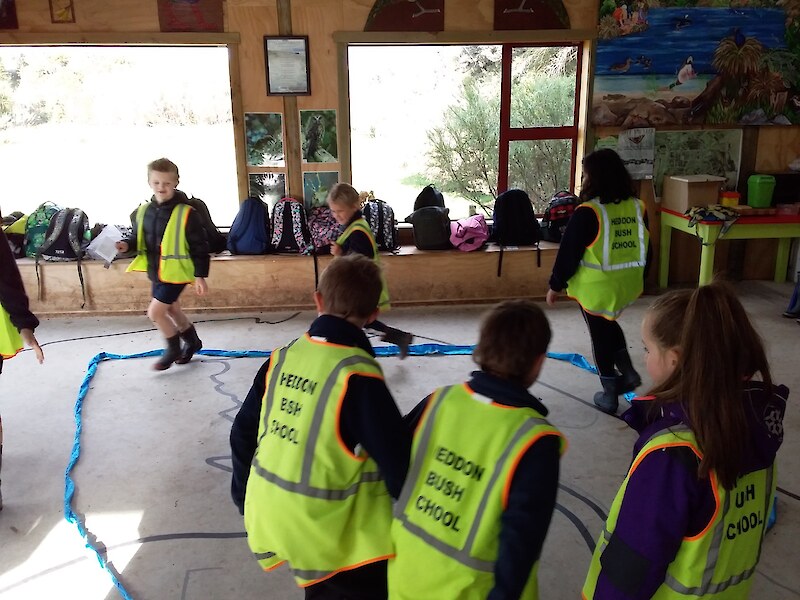
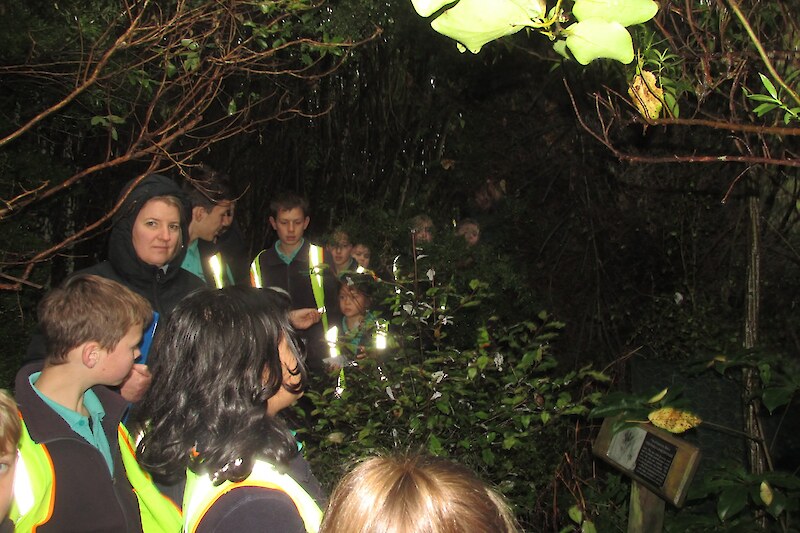
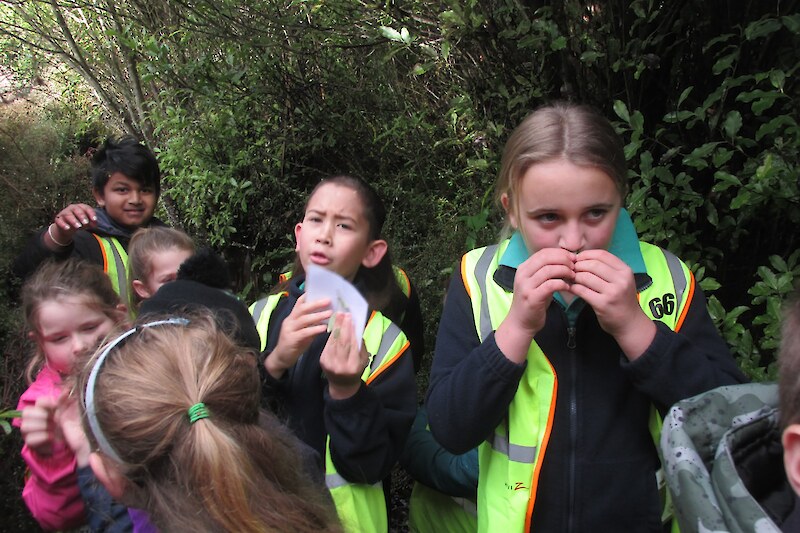
It was a great day hosting the whole school from New Entrants to Year 8 students, along with their enthusiastic teachers and parents. The school has been caring for many seedlings in their school nursery in readiness for planting out a native area in their school grounds. Today the students were learning more about native plants and how to identify them.
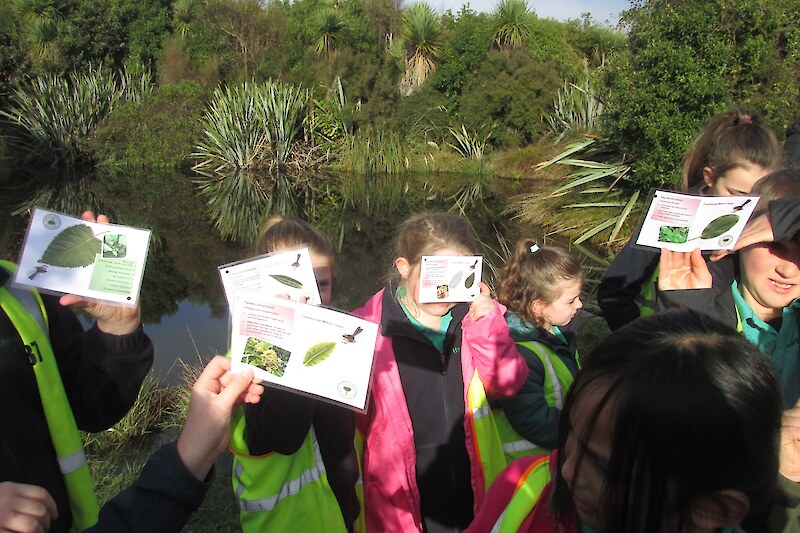
Out around the pond track Heddon Bush School were inspired, learning how a paddock can be transformed into a forest through restoration planting. The leaves of the plants growing were found and identified. Around the nursery (plant growing part of the Southland Community Nursery) the students went on a treasure hunt to match up a picture with the real plant, having to use their observation skills, and learning that most of the plants that are propagated and grown are colonising species. Learning about how a forest works and the process of succession extended on their new-found knowledge of plants. Planting colonising species to withstand the Southland climatic conditions was knowledge extended into initial planning for their upcoming term 3 planting. The importance of eco-sourcing of Southland natives and learning about the layers of a forest were also part of the day.
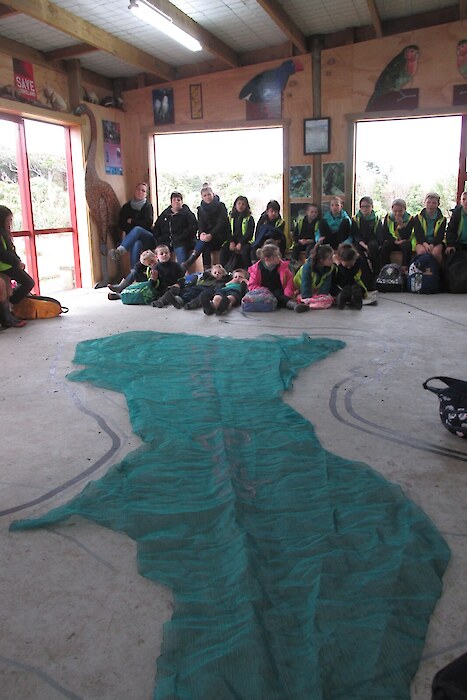
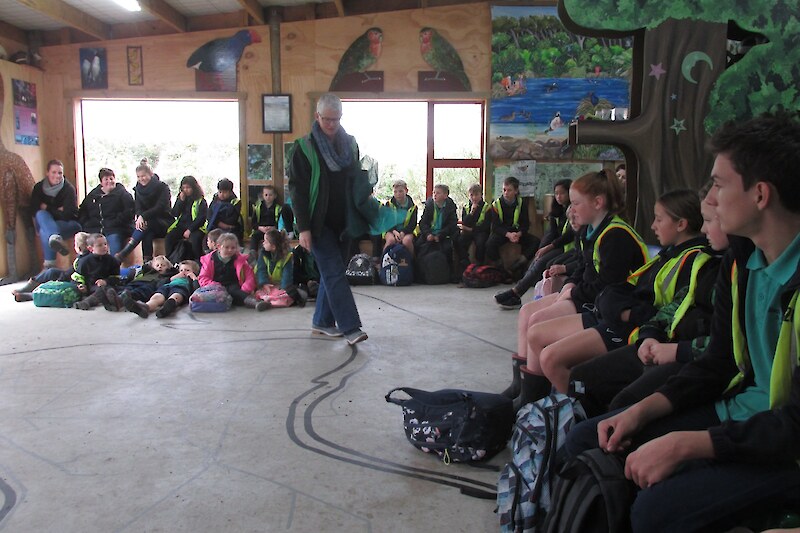
After lunch, a journey back in time to Gondwanaland and pre-human NZ and Southland highlighted the significance of our fauna and flora and why restoration is important. Listing all the Southland places with “bush” in the name was an interesting activity getting the students thinking about the stories of these places. With all this knowledge of plant and their identification the students were then able to easily name the previously unnamed NZ native plant species that they are growing and had bought to us for identification! Tumeke! We look forward to seeing their school restoration project thrive.
Bronwyn and Chris
Posted: 21 June 2021
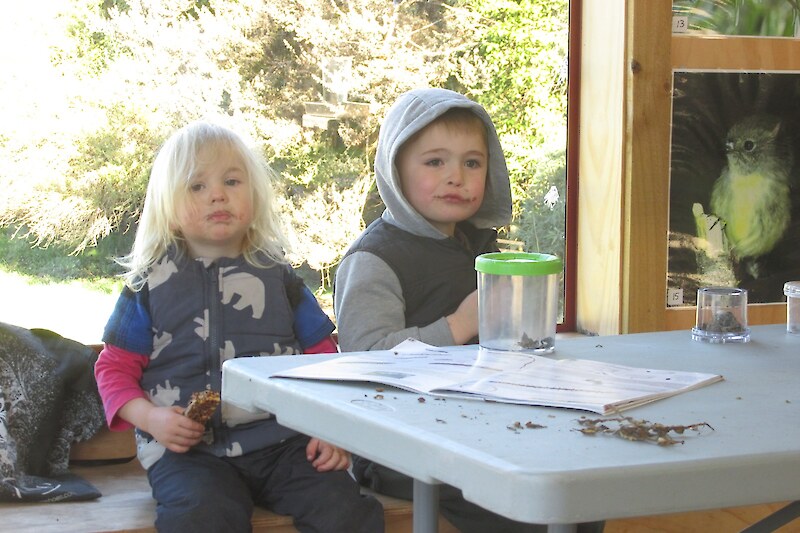
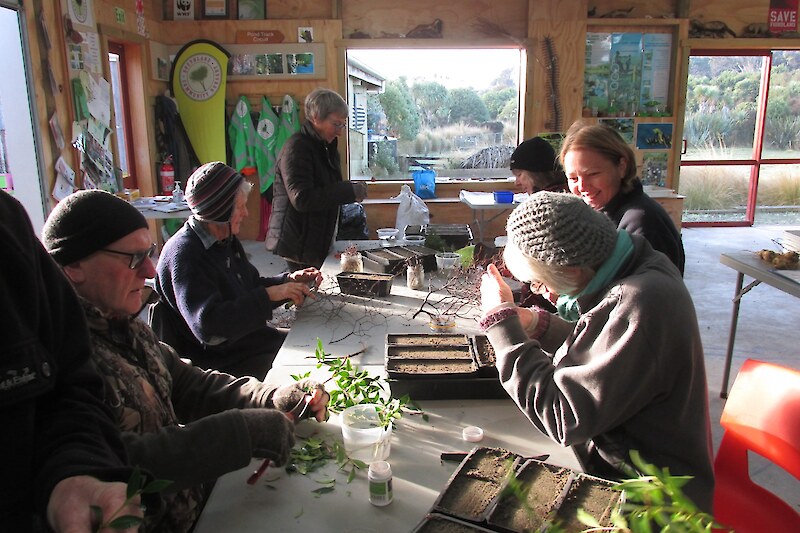
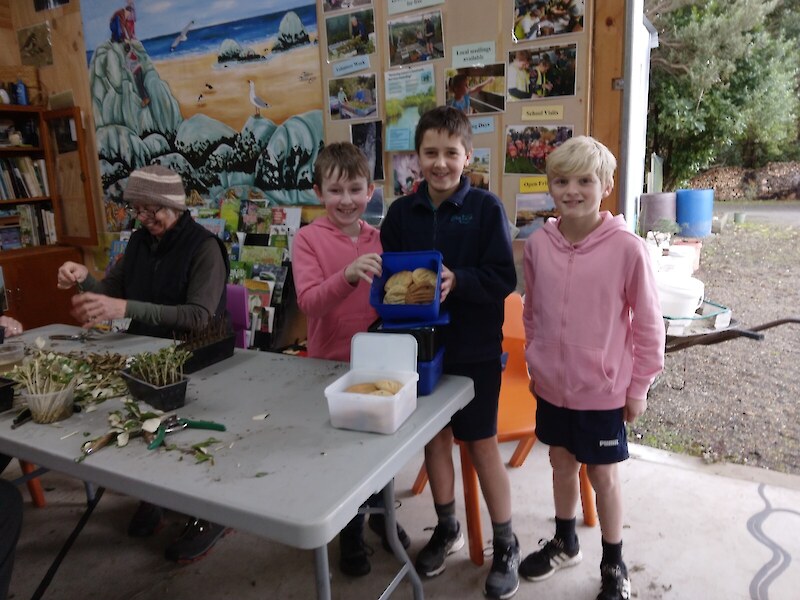
Matariki is a time for reflection on the past season and looking forward to the next season. At the Nursery, June has been a time for finishing collecting and sowing seeds and starting to do cuttings. Propagation from cuttings is a skill that’s great to learn as you can apply it to lots of different plants – including fruit bushes, as well as natives. On Fridays until the end of June we will continue to do cuttings as well as lots of tidy up jobs before closing for July and August. Although closed on Fridays we are hoping to run some Apple Pruning and Grafting workshops – so keep a lookout for notices on the News and Events page. Education is continuing with Bronwyn leading our education team – see recent school events at https://www.southlandcommunitynursery.org.nz/news-and-events/. We would also like to acknowledge Otatara Schoolchildren who presented volunteers with yummy biscuits made at the school on a Friday morning in May - see photo below.
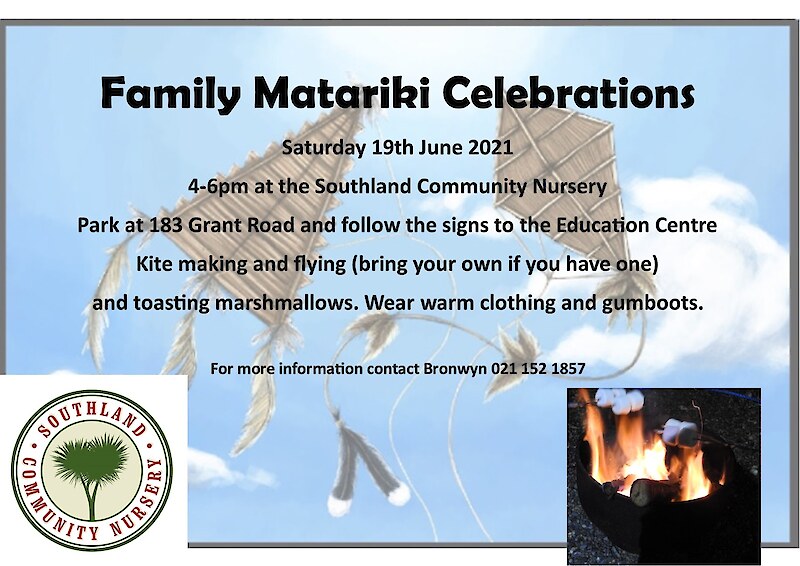
On 19 June 2021 we are having a Matariki Family kite making and flying event 4-6pm here at the nursery - we will also be toasting some marshmallows!! For more information contact Bronwyn 021 152 1857. So come along with your family and celebrate the occasion with us – see the poster below.
Chris
Posted: 14 June 2021
Following up on last years tree learning and class visits to the Southland Community Nursery I have spent a couple of sessions working alongside Myross Bush School at school on their planting project journey. On 3 June I met with the schools Envirogroup, looking at their plan for what they are wanting to do on site. I noticed they had “plants” written on part of their map, so I introduced them to 7 NZ native plants - weeping mapou, cabbage tree, kōwhai, ribbonwood, mingimingi, red tussock and mānuka - as the school has got some of these species to plant. Learn about these species at Wetlands Planting List • Southland Community Nursery. We wandered down to the project space and started to “see” their written and drawn plan in the actual planting space. Questions over how big the area might be, where they are planting, what they are planting and how it might look were discussed. The group learnt more about the plants - as they all grow to different heights - so this may help with the planning of the area. The Envirogroup learnt that the 7 species of plants that the school has to plant are great first planters and will be just perfect for this planting along with the harakeke that the school is rehoming - tumeke! Building a forest for kahikatea is hard work, but lots of fun in the mud!
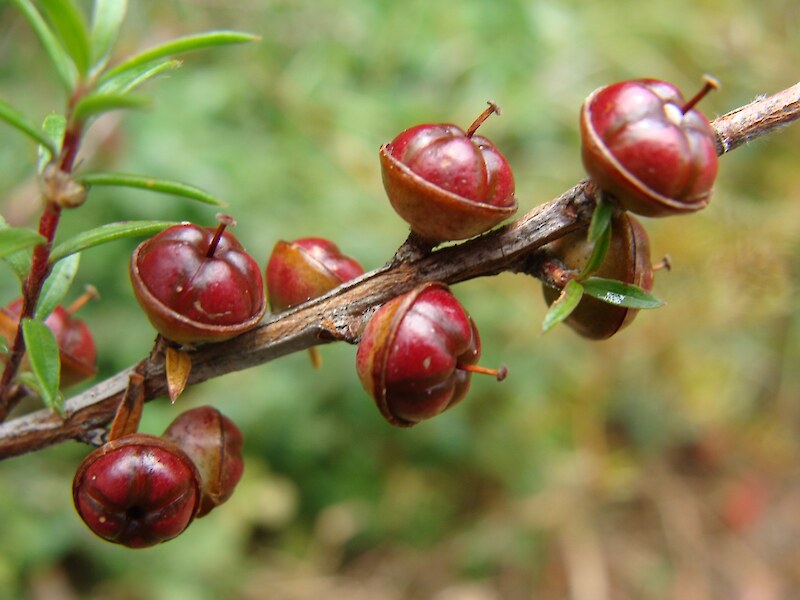
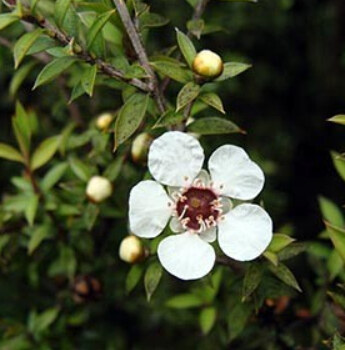
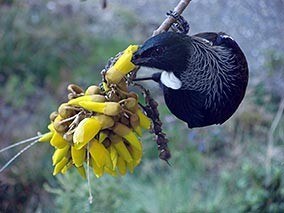
On 10 June I visited again, along with Josh (Enviroschools Facilitator, Environment Southland). The Envirogroup talked through the plan and map designed so far and how this plan for action changes as more information is learnt. Josh continued working on this plan with all the new ideas while I went and planted some of the flax waiting to be planted - to get this taoka in the ground so it can grow. And we found cabbage trees too! We talked about tap roots, and pondered whether the cabbage tree we planted would survive. We chose wet areas for the flax and cabbage tree as they don’t mind wet feet and are great first planters. The planting group learnt how to plant, and learnt about the different names these species have - common, Te Reo and scientific names. After planting I continued into the Mataī team - so that these new entrants could learn the names of the NZ native plants that will be planted - looking closely at a leaf, and noticing if it was the same or different to their neighbours leaves. We then looked really closely at kōwhai, as this is the tree that this team is learning all about. We looked at the small round paired leaves, the yellow flowers and the big hard yellow seeds. Watching some birds in the kōwhai tree, we found that tui and bellbirds have a tongue - a bit like a paintbrush that can slurp the tasty nectar from the base of the kōwhai flower. We also watched kereru eating the kōwhai tree. The kōwhai tree is great for birds, and the birds help the kōwhai tree by pollinating it as they move from flower to flower. After lunch the Kawaka team too learnt about the NZ native plants that will be planted - looking closely at leaves and their characteristics. We looked closely at the different seed types different plants have. While a smaller team went with Josh to plan out the path part of the plan, we looked closer at the cabbage tree learning how brown coloured the leaves are when they first germinate and grow, and then change to the green colour, then grow a trunk, and have spikey flowers. Having found the last of the season’s cabbage tree fruit, I described the fruit and squashed it to show a tiny black seed inside…which will grow into a brown leafed cabbage tree, completing the life cycle. The two groups presented back to each other sharing what they had done and learnt. Finishing the day in Rawe we focused on the magnificent mānuka. I introduced a mānuka to the class and they started telling me all about its life cycle - sharing their wonderful learning with me. Looking closely we saw how tiny the mānuka seeds are, and how lots of them come out of each hard pod. Hands on teamwork got some more seed out of some pods - but it was hard work. I explained how we collect and leave the seed pods in a tray to open up naturally in the heat and sun. The class is going to leave the mānuka pods in their classroom and watch the seeds be released, and then plant these and try to grow some mānuka. Looking at photos of the mānuka we counted 5 petals, and also counted 5 sections on each of the seed pods.
What a great day with Myross Bush School.
Bronwyn
Posted: 11 June 2021
Although our Community Apple pressing event did not happen this year, we have been testing out various new presses bought by members of our nursery community. Malcolm Mackenzie kindly gifted his amazing press to Riverton Environment Centre and they are willing to share this resource. However, this year it was a bit late to organise a community pressing as most apples had fallen and a bit of lead in time is needed for people to put apples into the freezer for pressing. Next year we will set a date early for people to aim for and we will aim to have lots of different presses here to try. We are sold on the freezing idea as it means you don’t need the chipper device on your press, you also get more juice and a more clear juice than chipped apples. However you cant beat freshly picked apples either!
In May we pressed frozen apples on Chris Andrews new press which works with water pressure. Its quite large and presses very quickly once brought up to pressure. There is a chipper as well and this works in the usual manual way. Then we tried Russel Grahams new press – a mix of a commercial hydraulic jack with custom made stainless barrel and tray. It also worked very well with minimum effort as the hydraulic arm does all the work. Our own small traditional design works well on small batches and much slower but has the advantage of pulling smaller batches out of the freezer to press rather than a big load at once. However, next to Russells press it did look like a childs version – any maybe next year we can use it as that! These new presses are very efficient but don’t hold a candle aesthetically to Malcolms press – not only is it very functional but it looks so beautiful too – its like a work of art!
Chris
Posted: 31 May 2021